In this article
- Quick answer
- The South Valley at a glance
- Map of the South Valley
- Tipón: the Inca temple of water
- Pikillaqta: a Wari city older than the Incas
- Andahuaylillas: the “Sistine Chapel of America”
- Huaro, Canincunca and Oropesa
- Raqchi: further south
- How to get to the South Valley
- Altitude and weather
- Practical tips
- Frequently asked questions
- Sources
The South Valley (Valle Sur) of Cusco runs south-east of the city along the road to Puno. In about 40 km it brings together three eras of Andean history: the Inca water temple of Tipón, the Wari city of Pikillaqta, older than the Incas, and the colonial church of Andahuaylillas, known as the “Sistine Chapel of America”. It is quieter than the Sacred Valley and stays close to Cusco’s altitude. This guide covers each site, tickets, opening hours, how to get there and the extensions to Huaro, Oropesa and Raqchi. Data checked on 9 November 2026.
Sources: Peru’s Ministry of Culture (DDC Cusco), COSITUC, the Andean Baroque Route, Mincetur, El Peruano, Andina, the American Society of Civil Engineers and academic studies on Tipón and Pikillaqta.
Quick answer
- Where: south-east of Cusco on the Cusco–Sicuani road. Tipón is about 17.5 km to its turn-off plus 4 km uphill, Pikillaqta 31.8 km and Andahuaylillas about 40 km from Cusco.
- Tickets: Tipón and Pikillaqta are on the Cusco Tourist Ticket (partial Circuit II, S/ 70 for foreign visitors, 2 days, or the full ticket, S/ 130, 10 days). The church of Andahuaylillas has its own ticket from the Andean Baroque Route (S/ 18 for the three South Valley churches).
- Hours: Tipón and Pikillaqta 07:00 to 16:30 (DDC Cusco); the church of Andahuaylillas 07:30 to 17:30 (Andean Baroque Route).
- Altitude: Tipón about 3,430 m, Pikillaqta 3,190 m and Andahuaylillas 3,121 m, close to or below Cusco (3,439 m).
- Time: the three sites fit into half a day from Cusco.
 Tipón, Pikillaqta and Andahuaylillas in half a day
South Valley Tour from Cusco: Tipón, Pikillaqta and Andahuaylillas
See itinerary & dates →
The South Valley at a glance
| Site | From Cusco | Altitude | Entrance | Hours |
|---|---|---|---|---|
| Tipón (Inca) | 17.5 km + 4 km | About 3,430 m | Tourist Ticket, Circuit II or full | 07:00–16:30 |
| Pikillaqta (Wari) | 31.8 km | About 3,190 m | Tourist Ticket, Circuit II or full | 07:00–16:30 |
| Andahuaylillas (church) | About 40 km | 3,121 m (town) | Andean Baroque Route ticket, S/ 18 | 07:30–17:30 |
| Raqchi (extension) | 117 km | About 3,480 m | Own ticket, S/ 20 | 07:00–17:00 |
Distances, altitudes and hours of the archaeological parks: DDC Cusco. Andahuaylillas: Andina, Mincetur and the Andean Baroque Route. Raqchi fee: Ministry of Culture price list (TUSNE 2025).
Map of the South Valley
Tipón: the Inca temple of water
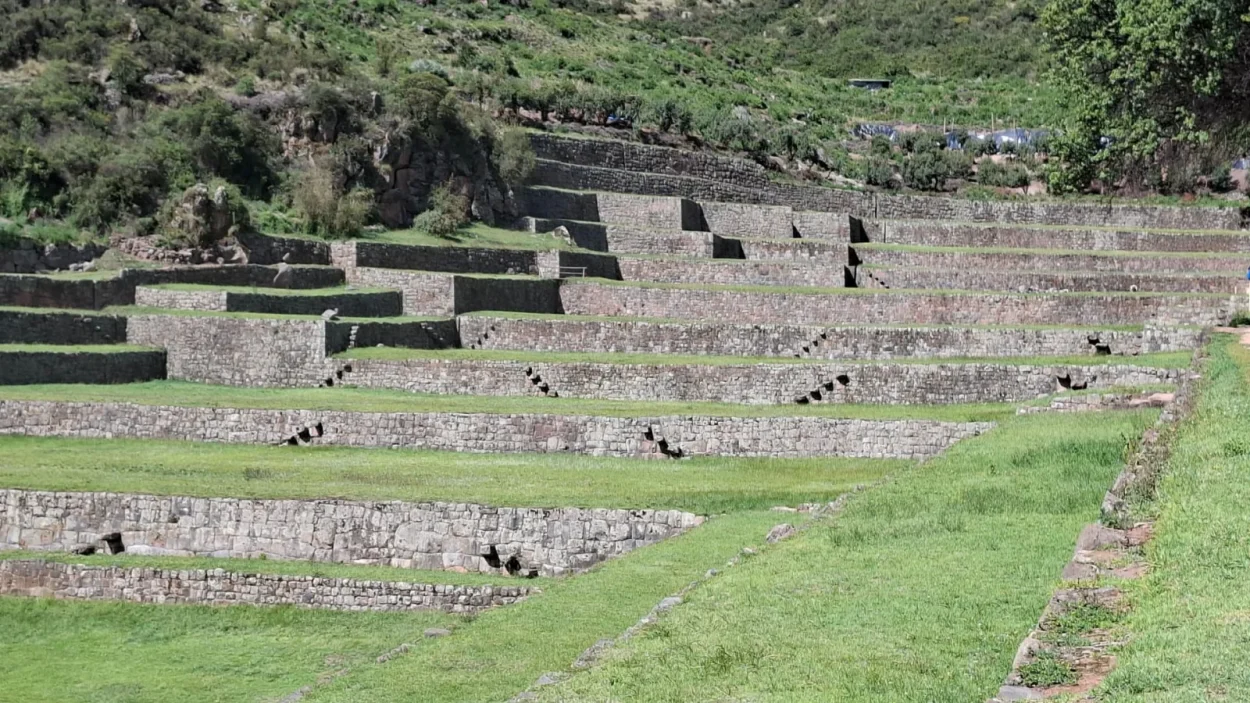
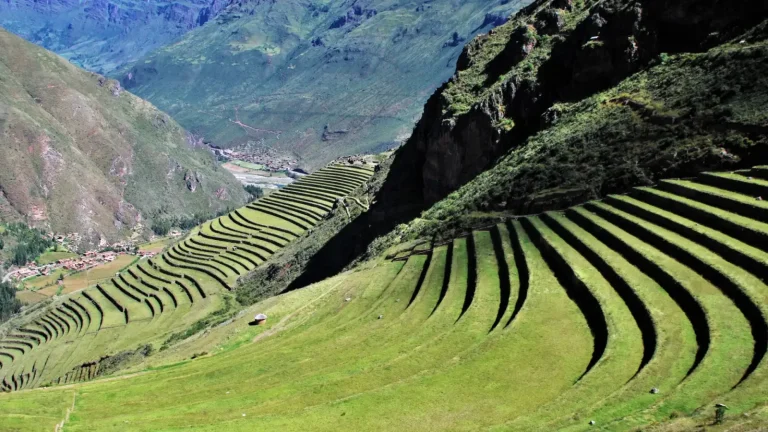
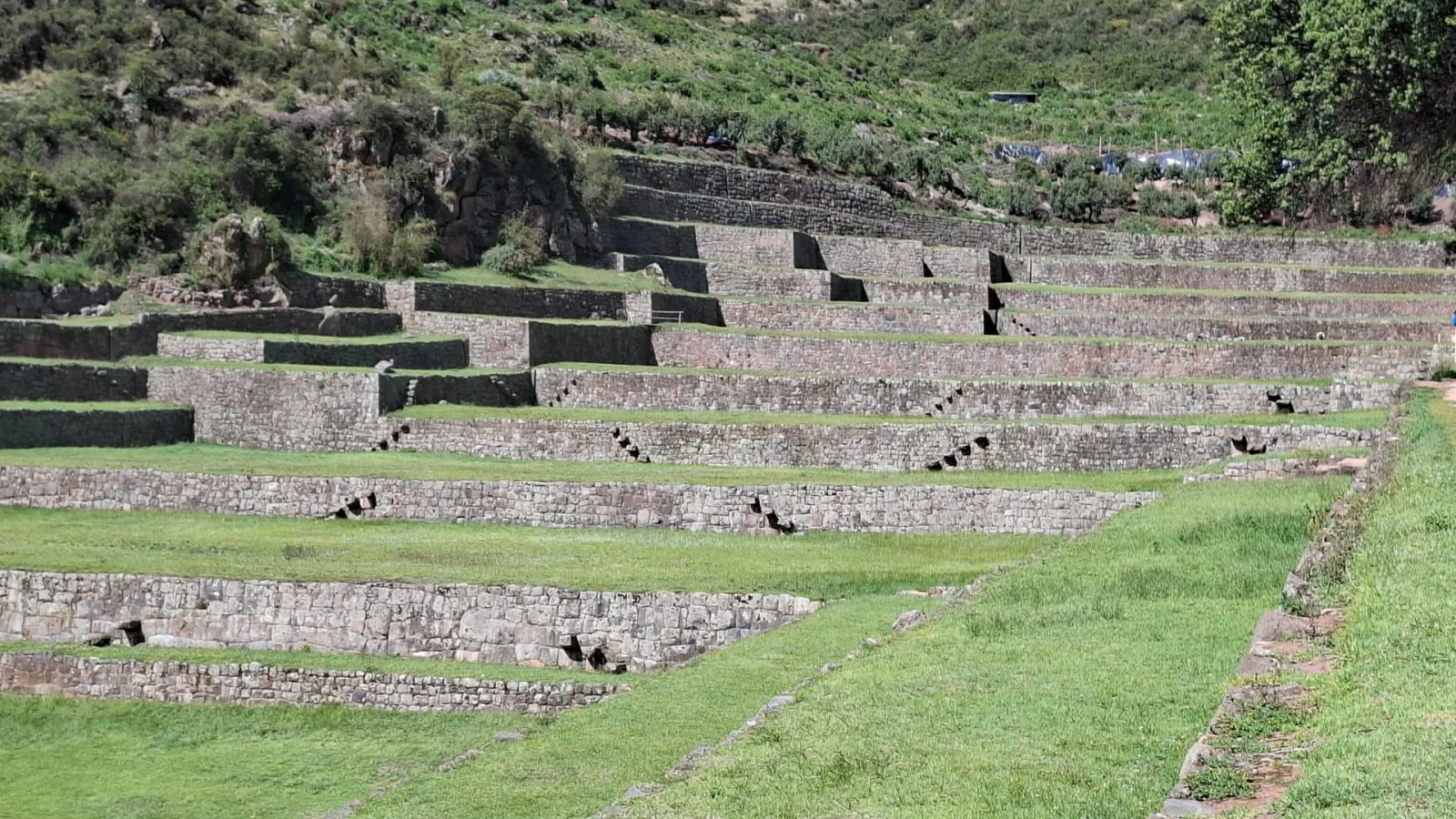
The Tipón archaeological park covers 239 hectares in the community of Choquepata, district of Oropesa, at an average altitude of 3,430 m. It was declared national heritage in 2002 (Resolución Directoral Nacional 393-2002). The DDC Cusco highlights its extensive network of channels, fountains and reservoirs and calls it the most significant sacred space of water worship.
- A civil engineering landmark: the American Society of Civil Engineers lists Tipón among its historic civil engineering landmarks, for its 13 integrated central terraces, its waterworks and its aqueducts.
- Who built it: the DDC Cusco says the Pinagua and Ayarmaca peoples occupied the area before the Incas and that the Inca Wiracocha later settled there. The archaeologist Jessica Christie describes Tipón as a Killke-period settlement that Wiracocha Inca turned into his royal estate.
- Restoration: in October 2022 the Ministry of Culture began restoring the Sinkuna Kancha, Hornopata and terrace sectors, with an investment of more than S/ 6.8 million, according to Andina. The DDC Cusco reported the project still under way in August 2026.
Getting in: from Cusco it is 17.5 km along the Cusco–Sicuani road to the Tipón stop, then about 4 km up a paved road through Choquepata to the site, according to the DDC Cusco. In July 2023 a landslide briefly closed that access road, so in the rainy season check the conditions before you go.
Pikillaqta: a Wari city older than the Incas
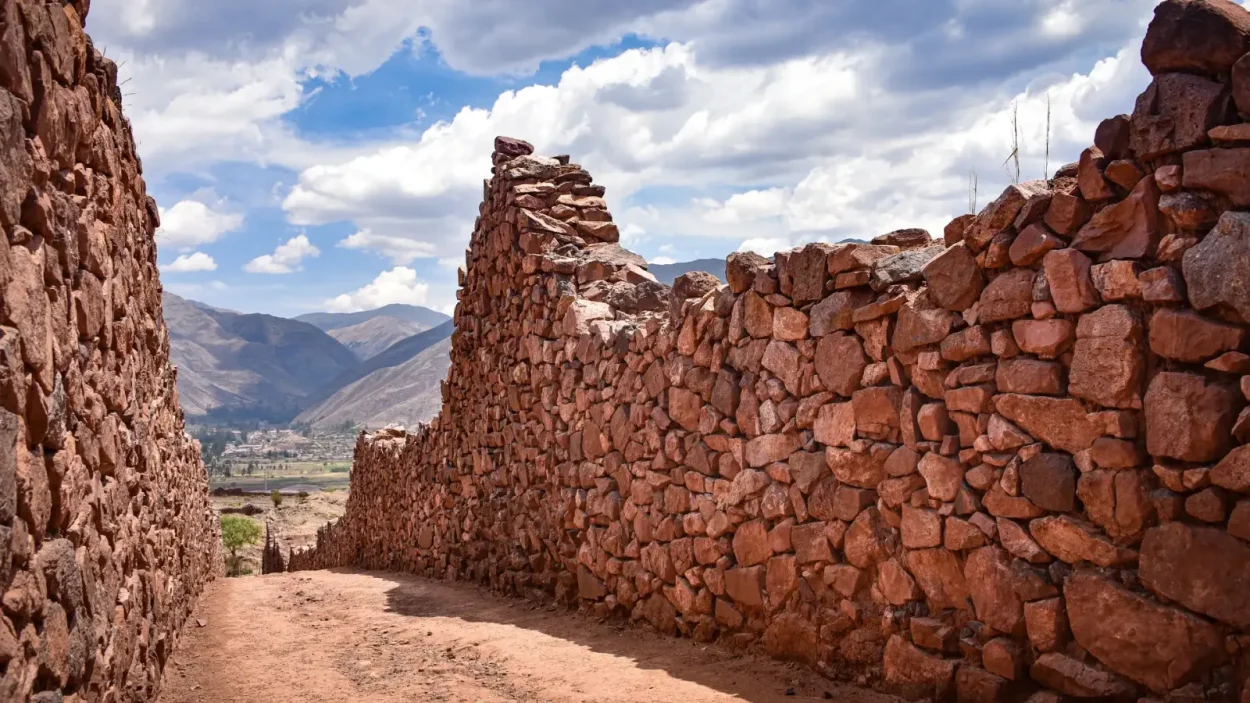
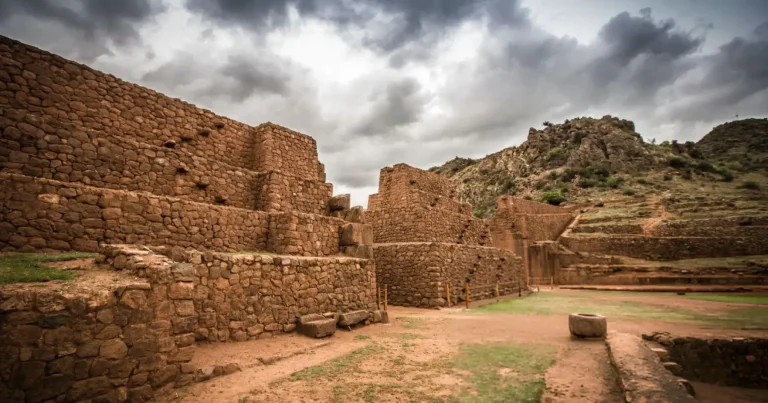
Pikillaqta was built by the Wari, an Andean empire centuries before the Incas. The DDC Cusco estimates it had about 700 buildings, 200 enclosures (canchas) and 508 storehouses, with a population of around 10,000 people. Its straight walls and grid of blocks look nothing like Inca stonework, so the contrast with Tipón is easy to see.
- When: the archaeologist Gordon McEwan places Pikillaqta in the Middle Horizon, the period of the Wari empire (about AD 540 to 900).
- Why it was abandoned: a 2025 study published in Geoarchaeology by a team including Spain’s Geological Survey (IGME-CSIC) found that two earthquakes shook the area between AD 770 and 988, and dated debris flows to between AD 766 and 900, matching the abandonment of Pikillaqta described by McEwan.
- The park: it covers 4,464 hectares across the districts of Oropesa, Lucre and Andahuaylillas, 31.8 km south of Cusco, at about 3,190 m. It was declared national heritage in 2002 (Resolución Directoral Nacional 396-2002).
Rumiqolqa: next to the road stands the great gate of Rumiqolqa, built with pyramid-shaped buttresses and linked to the aqueduct that brought water to Pikillaqta, according to Andina. The Inca road from Rumiqolqa to Chuspitakana is part of the Qhapaq Ñan, the Inca road system on UNESCO’s World Heritage List, and in 2017 the American Society of Civil Engineers recognized the Qhapaq Ñan in a ceremony at this gate.
Andahuaylillas: the “Sistine Chapel of America”
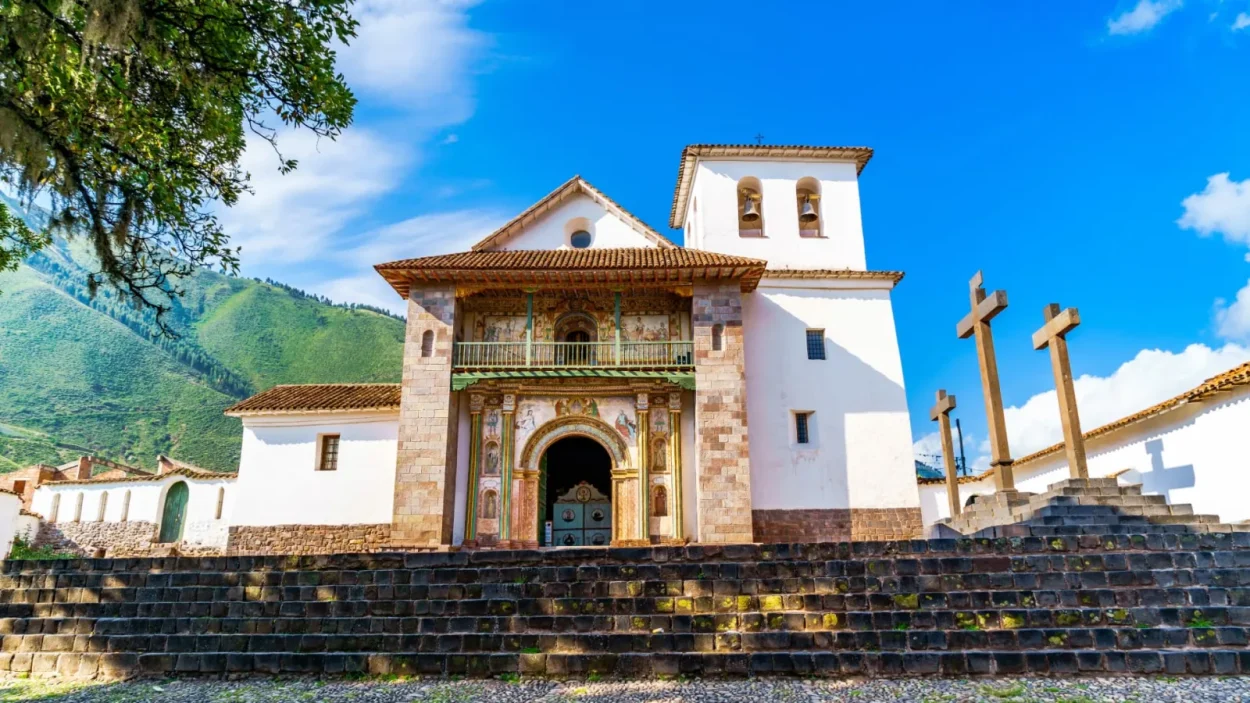
The church of San Pedro Apóstol in Andahuaylillas began to be built from 1610 at the initiative of the parish priest Juan Pérez de Bocanegra, according to Andina and the Andean Baroque Route. Its interior, covered with murals and gilded altarpieces, has earned it the name of the “Sistine Chapel of America”.
- The murals: Bocanegra commissioned the painter Luis de Riaño, from Lima. The PESSCA project of colonial art dates his Baptism of Christ, in the baptistery, to 1626.
- Recognition: in February 2026 Mincetur gave the church Jerarquía 4, Peru’s highest tourism distinction. According to the SEMPA Association, which promotes and conserves it, it received more than 100,000 visitors in 2025.
- Earthquakes: the church closed temporarily after the earthquakes of May 2024; Andina reported that it withstood them thanks to restoration work carried out in 2014.
Tickets and hours: the church is not on the Cusco Tourist Ticket. The Andean Baroque Route, promoted by the Society of Jesus, sells a South Valley ticket for its three churches (Canincunca, Huaro and Andahuaylillas) at S/ 18, or S/ 10 for students and Peruvian visitors, valid for seven days. You buy it at any of the churches. Andahuaylillas opens every day from 07:30 to 17:30.
Huaro, Canincunca and Oropesa
- Huaro: about 5 km beyond Andahuaylillas, the church of San Juan Bautista has walls and ceilings covered with murals by the Cusco painter Tadeo Escalante that show the last things of human life, according to the Andean Baroque Route. The PESSCA project dates them to the early 19th century. It opens from 08:30 to 16:30.
- Canincunca: the chapel of the Virgen Purificada stands by Urcos Lake, on top of an old Wari center, and dates from the early 17th century, according to the Andean Baroque Route. It opens from 08:30 to 16:30.
- Oropesa: a law of January 2022 (Ley 31389) named Oropesa the national capital of bread. Andina estimates that about 85% of its people make bread, and Tipón is about 7 km north of the town.
Raqchi: further south
Raqchi, which the Incas knew as Cacha, is in the district of San Pedro, province of Canchis, 117 km from Cusco on the Cusco–Sicuani road, according to the DDC Cusco. It is usually visited on the road between Cusco and Puno rather than on a half-day South Valley tour.
- What you see: a 14 m wall that held up the roof of a 92 m rectangular building, which the chronicler Garcilaso de la Vega identified as the Temple of Viracocha, and 152 circular storehouses. Some archaeologists question whether the building was a temple.
- The park: 1,097 hectares at about 3,480 m, declared national heritage in 2002 (Resolución Directoral Nacional 392-2002), open from 07:00 to 17:00.
- Entrance: it is not on the Cusco Tourist Ticket. The Ministry of Culture’s 2025 price list sets S/ 20 for the general ticket and S/ 10 for students.
How to get to the South Valley
- On a tour: our South Valley tour visits Tipón, Pikillaqta and Andahuaylillas in half a day, with transport and a guide.
- By public transport: the Andean Baroque Route says shared taxis to Urcos leave from Avenida La Cultura, opposite the university (S/ 8), and buses from opposite the Hospital Regional (S/ 5). For Tipón you get off at the Tipón stop and still have about 4 km uphill.
- By taxi: the Andean Baroque Route gives about S/ 40 to 50 from Cusco to the churches.
Altitude and weather
The South Valley stays at or below the altitude of Cusco (3,439 m), so it suits your first days while you acclimatize; see our guide to altitude sickness in Cusco. Most of the visit is outdoors. It rains more from December to March, when the paths and stone steps of Tipón can be slippery and the DDC Cusco issues rain alerts for the archaeological parks.
Practical tips
- Which ticket: if you also visit Sacsayhuamán or the Sacred Valley, the full Tourist Ticket (S/ 130) is cheaper than two partials. Compare them in our Cusco Tourist Ticket guide.
- Carry cash in soles for the Andahuaylillas church ticket and for bread in Oropesa.
- Combine it: the South Valley works well on the same day as the Qorikancha, whose site museum is also on Circuit II of the Tourist Ticket.
- Stay on the paths at Tipón and Pikillaqta, and do not climb the walls or terraces.
 Cusco and its Inca temples in one afternoon
Cusco City Tour: Qorikancha, Sacsayhuamán & 3 Inca Sites
See itinerary & dates →
Frequently asked questions
How far is Tipón from Cusco?
About 21.5 km: 17.5 km on the Cusco–Sicuani road to the Tipón stop and about 4 km uphill to the site, according to the DDC Cusco.
Is the South Valley on the Cusco Tourist Ticket?
Tipón and Pikillaqta are, on Circuit II (S/ 70 for foreign visitors, 2 days) or the full ticket (S/ 130, 10 days). The church of Andahuaylillas is not: it has its own Andean Baroque Route ticket (S/ 18 for three churches).
What are the opening hours of Tipón and Pikillaqta?
From 07:00 to 16:30, according to the DDC Cusco.
Why is Andahuaylillas called the Sistine Chapel of America?
Because its interior is covered with murals and gilded altarpieces. The church began to be built from 1610, and its murals were painted by Luis de Riaño; one of them is dated 1626.
Who built Pikillaqta?
The Wari, an Andean empire of the Middle Horizon (about AD 540 to 900), centuries before the Incas.
Is Raqchi part of the South Valley tour?
Usually not: it is 117 km from Cusco, much further than the other sites, and it is often visited on the road to Puno. It has its own ticket (S/ 20).
How long does a South Valley tour take?
Tipón, Pikillaqta and Andahuaylillas fit into half a day from Cusco.
Sources
- Ministry of Culture, DDC Cusco: Tipón archaeological park, Pikillaqta archaeological park and Raqchi archaeological park (area, altitude, access, declaration and hours), notes on the Pukara Alto sector of Tipón, the 2026 restoration workshops and rain alerts.
- COSITUC, price list of the Cusco Tourist Ticket; Ministry of Culture, Resolución Ministerial 000451-2024-MC (TUSNE 2025, Raqchi fee).
- Andean Baroque Route, useful information (tickets, hours, transport) and its pages on Andahuaylillas, Huaro and Canincunca.
- Andina: restoration works at Tipón (11 July 2023), the Qhapaq Ñan recognized at the Rumiqolqa gate (8 November 2017), why Andahuaylillas is famous (6 November 2025), Jerarquía 4 for Andahuaylillas (6 February 2026) and Oropesa, capital of bread (6 January 2022).
- Congress of Peru, Ley 31389, El Peruano, 6 January 2022: Oropesa, national capital of bread.
- American Society of Civil Engineers, Tipón, historic civil engineering landmark.
- Gordon F. McEwan (ed.), Pikillacta: The Wari Empire in Cuzco, University of Iowa Press, 2005; García et al., Geoarchaeology, 2025 (doi 10.1002/gea.70033), summarized by IGME-CSIC.
- Jessica Christie, “Walled Rock Wak’as on Inka Royal Estates in the Heartland”, Society for American Archaeology, 2021; PESSCA, Luis de Riaño, The Baptism of Christ and Tadeo Escalante in Huaro.
- Infobae, temporary closure of the church after the earthquakes (2 May 2024); Ministry of Culture, Historia y Cultura journal (Ballesteros, on Raqchi); map and road distances: © OpenStreetMap contributors.