In this article
- Quick answer
- Chinchero at a glance
- The Chinchero archaeological park
- The colonial church on Inca walls
- Weaving with natural dyes
- Varayoq and festivals
- Map of Chinchero
- How to get to Chinchero from Cusco
- Piuray Lake
- The Chinchero international airport
- Altitude and weather
- Practical tips
- Frequently asked questions
- Sources
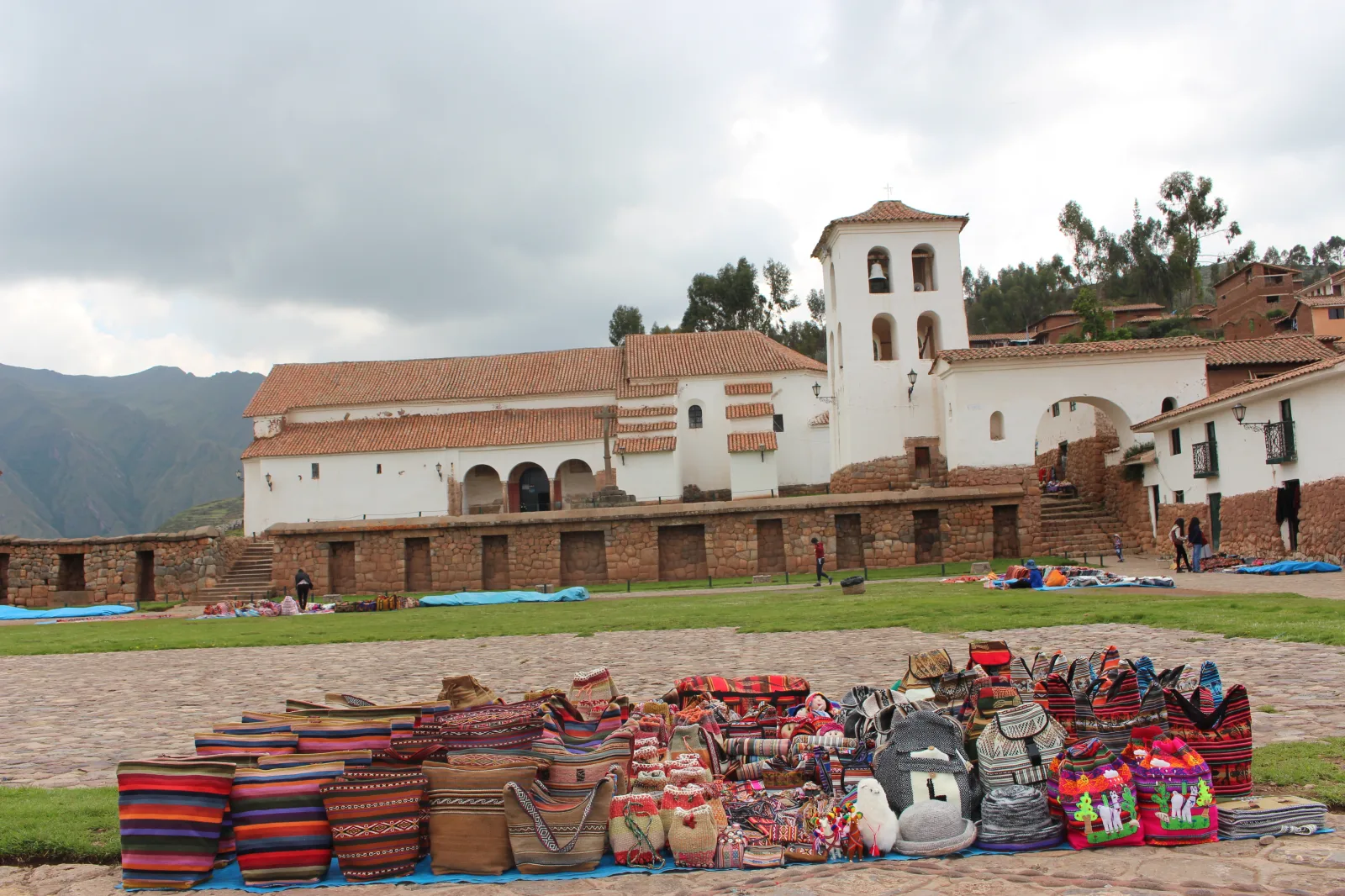
Chinchero is an Andean town on the high plateau between Cusco and the Sacred Valley, about 30 km from Cusco. It has three things in one place: the Inca royal estate of Túpac Inca Yupanqui, with its terraces and carved rocks; a colonial church built on Inca walls; and a living weaving tradition with natural dyes. At 3,759 m it is the highest stop on most Sacred Valley tours. This guide covers what to see, how to get there, the weaving, the festivals and what is happening with the new airport. Data checked on 7 November 2026.
Sources: Peru’s Ministry of Culture (DDC Cusco), COSITUC, INEI, El Peruano, Andina, SedaCusco, the Penn Museum and the excavations of the Spanish archaeological mission (Alcina Franch, 1970).
Quick answer
- Where: in the province of Urubamba, on the paved Cusco–Urubamba road, about 30 km from Cusco according to the DDC Cusco.
- Altitude: 3,759 m (INEI), about 320 m higher than Cusco.
- Entrance: the Cusco Tourist Ticket, partial Circuit III (S/ 70 for foreign visitors, 2 days, also covers Pisac, Ollantaytambo and Moray) or the full ticket (S/ 130, 10 days).
- Hours: 07:00 to 18:00, according to the DDC Cusco.
- What to see: the Inca terraces and palace walls, the colonial church on Inca foundations and the weavers’ work with natural dyes.
- The airport: the new Chinchero international airport is under construction near the town and is not open yet.
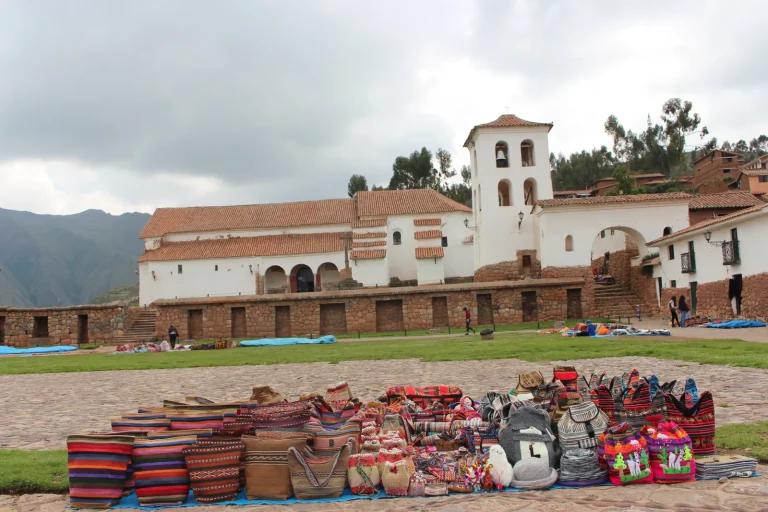 Chinchero, Moray and the Maras salt pans in half a day
Chinchero, Moray and Maras Salt Mines Half-Day Tour from Cusco
See itinerary & dates →
Chinchero at a glance
| Fact | Figure | Source |
|---|---|---|
| Distance from Cusco | About 30 km by road | DDC Cusco, COSITUC |
| Altitude | 3,759 m (12,333 ft) | INEI, Compendio Estadístico Cusco 2025 |
| Archaeological park | 43.10 hectares, national heritage since 2002 | DDC Cusco (Resolución Directoral Nacional 405/INC) |
| Historic town center | Monumental zone since 1972 | DDC Cusco (Resolución Suprema 2900-72-ED) |
| Built by | The Inca Túpac Inca Yupanqui | COSITUC, Penn Museum |
| Entrance | Tourist Ticket, Circuit III or full | COSITUC |
| Hours | 07:00–18:00 | DDC Cusco |
The Chinchero archaeological park
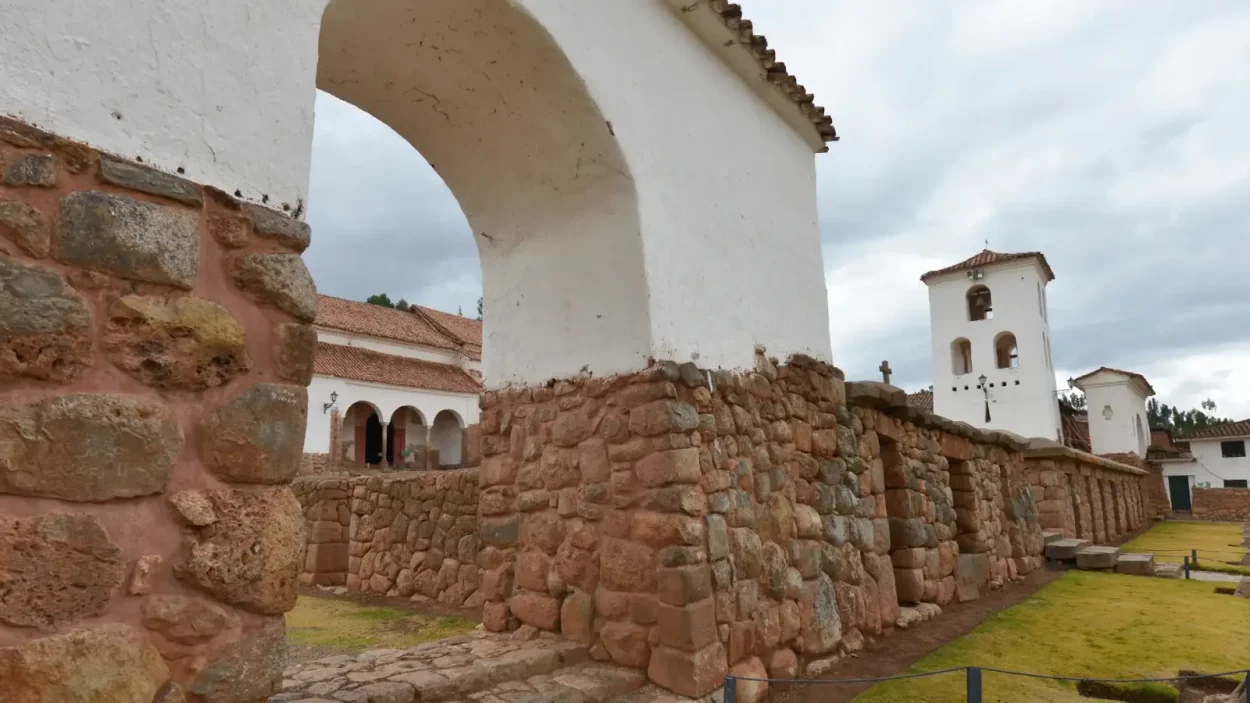
COSITUC describes the park as the remains of the royal estate of the Inca Túpac Inca Yupanqui, with a colonial church built on Inca foundations beside it. The archaeologist Susan Niles, writing for the Penn Museum, also attributes the halls and terraces of Chinchero to Topa Inca, son of Pachacuti. The DDC Cusco says the park has prehispanic roads, buildings, terraces, water channels and huacas (sacred places), and divides it into two large sectors:
- The urban sector: residential and ceremonial buildings for the Inca nobility, linked to the old town, which stood where the present town is.
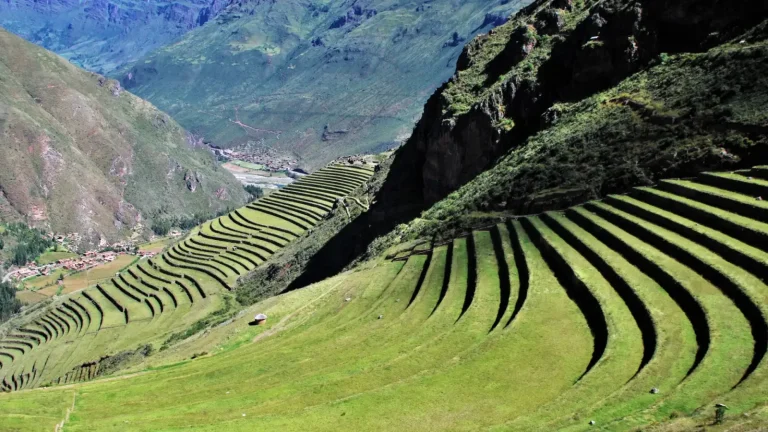
- The agricultural sector: the terraces (andenes) that step down the slope below the town. In 2018 the DDC Cusco reported finding buried terraces and buildings while restoring the Qentepata sector.
The park also has carved rocks that were huacas. The Spanish archaeological mission that excavated Chinchero in 1968 and 1969 describes Pumacaca (Pumaqaqa), with two carved pumas lying down, and Titicaca, the largest carved rock in the area, about 15 m high. The site museum is in a building that mission built in 1971; the DDC Cusco celebrated the museum’s 27th anniversary in 2023.
The colonial church on Inca walls
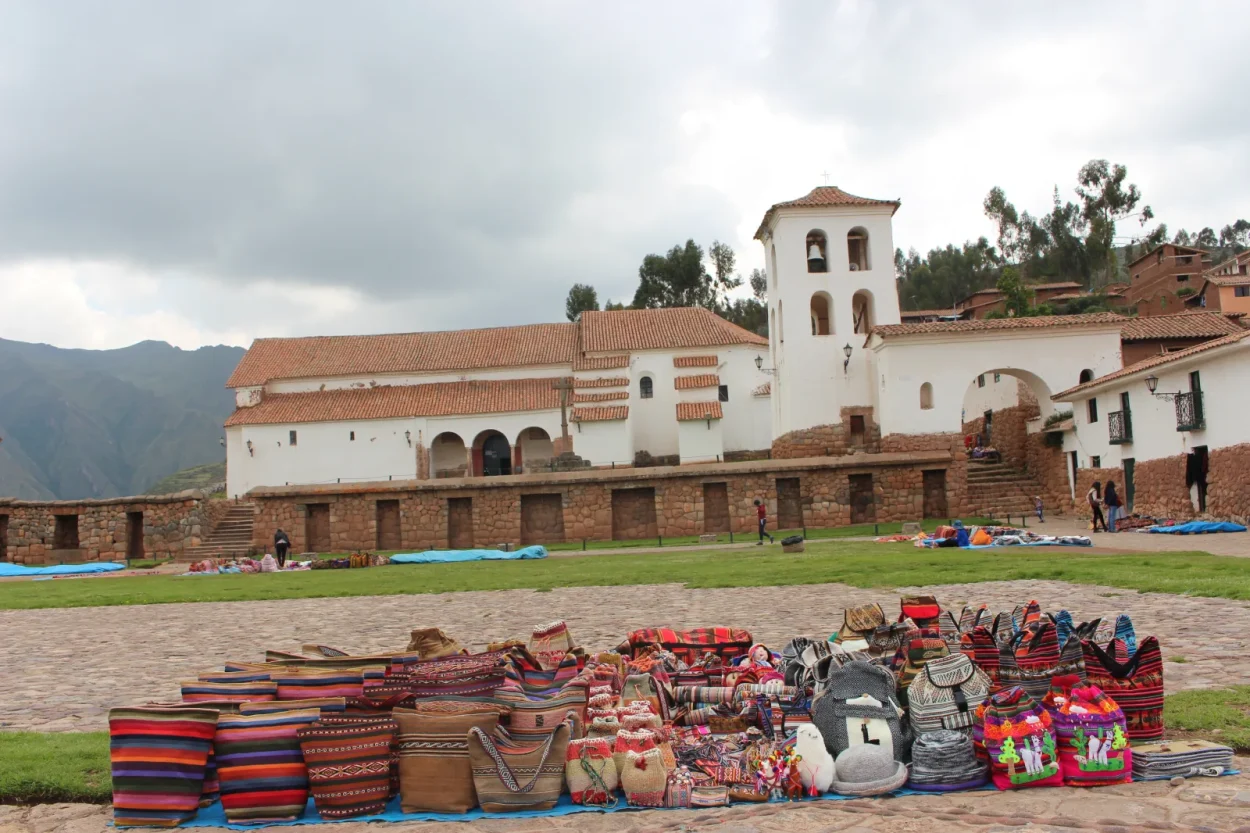
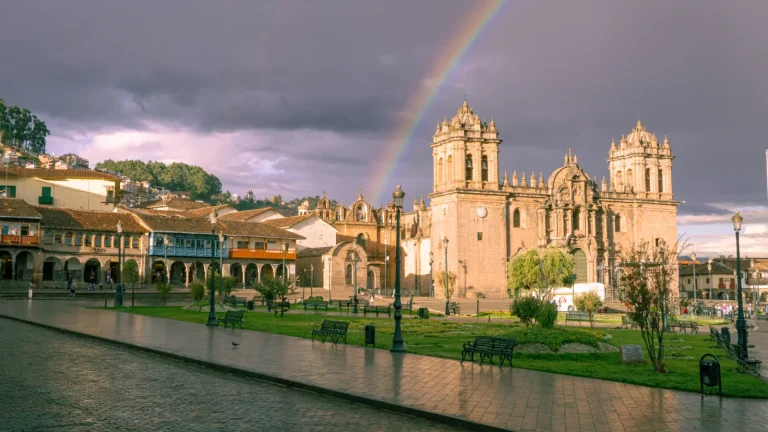
The church of Nuestra Señora de la Natividad, first called Nuestra Señora de Monserrat, stands on the main square, above the Inca wall with niches that holds up its atrium. The Spanish excavators wrote that it sits on an Inca building of the very first importance, still not identified. Inside, the DDC Cusco highlights paintings, sculptures, altarpieces and altars; one of the paintings, by the painter Chihuantito, is dated 1690.
The church is part of Chinchero’s monumental zone, declared historic heritage of Peru on 28 December 1972, which also includes the house of Mateo Pumacahua and other colonial and republican buildings. Ask at the entrance whether the church is open on the day of your visit.
Weaving with natural dyes
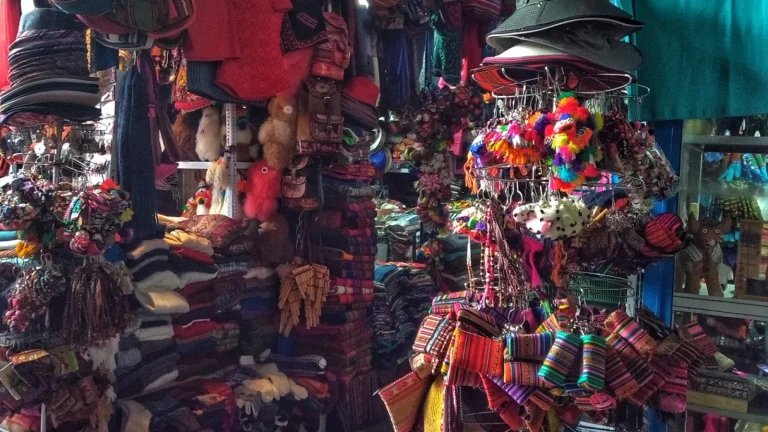
Chinchero is best known for its textiles. The DDC Cusco says its weavings keep Inca symbols and use natural dyes. The Center for Traditional Textiles of Cusco (CTTC) traces its origin to the 1970s, when Nilda Callañaupa and a group of women from Chinchero began meeting to spin and weave and to recover the old designs and techniques. On our tours you stop at a textile center in Chinchero to learn about the local weaving techniques and natural dyes.
The DDC Cusco also mentions that families still practice barter (trueque) to exchange products. On the church square you will find craft stalls; ask before you photograph people, and carry small notes and coins in soles.
Varayoq and festivals
In 2025 the Ministry of Culture declared the Varayoq of Chinchero national cultural heritage (Resolución Viceministerial 000075-2025-VMPCIC/MC). They are the traditional authorities of the communities of the district, with administrative, ceremonial and spiritual roles. According to the DDC Cusco, they organize the town’s main festivals:
- Corpus Christi Andino: on a movable date between May and June.
- Virgen Natividad of Chinchero: the feast of the Virgin to whom the church is dedicated.
- Qhapaq Niño Jesús and the Bajada de Reyes, and the linderaje, the walk that marks the boundaries of each community.
Map of Chinchero
How to get to Chinchero from Cusco
- On a tour: Chinchero is the first stop on our Chinchero, Moray and Maras half-day tour and the last stop of the classic Sacred Valley day tour, on the way back to Cusco.
- By road: it is on the paved Cusco–Urubamba road, about 30 km from Cusco, according to the DDC Cusco. The church and the archaeological park are about 1 km on foot from the main road, according to OpenStreetMap.
- By public transport: we have not found an official source for routes and fares between Cusco and Chinchero, so check locally before you go.
From Chinchero, the circular terraces of Moray are about 27 km by road and the Maras salt pans about 28 km, according to OpenStreetMap. Read our Moray and Maras guide.
Piuray Lake
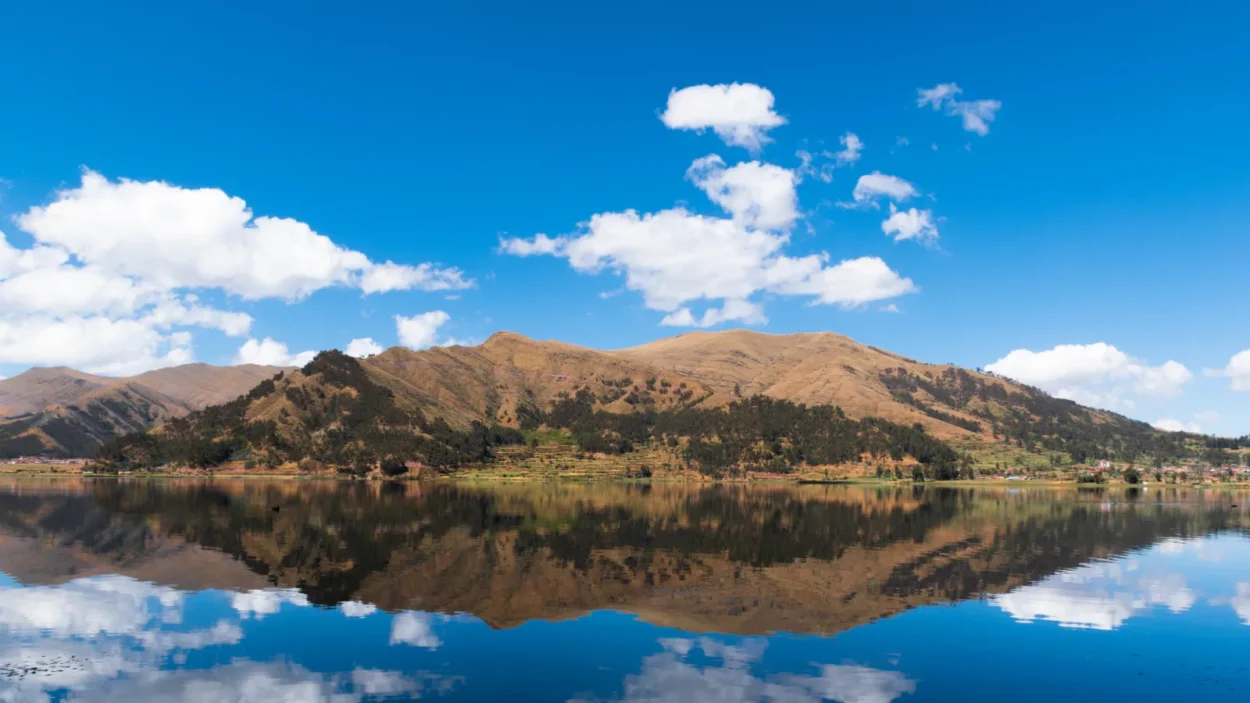
Piuray Lake, about 5 km by road from the town, is one of Cusco’s main water sources. SedaCusco, the city’s water company, said in 2022 that its Piuray system supplies about 38% of Cusco’s population, including the historic center. Our ATV tour crosses the Chinchero countryside to the lake and to the Abode of the Gods sculptures in Sencca.
The Chinchero international airport
The new Chinchero international airport is being built in the district, about 3 km by road from the town according to OpenStreetMap. Its opening date keeps moving:
- In January 2026 the Ministry of Transport (MTC) told Andina that the project was about 40% complete and should start operating at the end of 2027 or early 2028.
- In May 2026 Peru’s Comptroller General warned, as reported by Infobae, that the contractor intends to extend the completion date to 2028 without justification.
- In November 2026 the MTC inspected the start of work on the control tower.
Until it opens, all flights to Cusco land at the current Alejandro Velasco Astete airport in the city. We will update this section when there is an official opening date.
Altitude and weather
At 3,759 m, Chinchero is higher than Cusco (3,439 m) and the highest point of most Sacred Valley tours, so walk slowly on the terraces and stairs. PromPerú gives the Sacred Valley a range of about 1 °C to 20 °C, so bring a warm layer, a hat and sunscreen. It rains more from December to March. More in our guide to altitude sickness in Cusco.
Practical tips
- Buy the right ticket: if you will also visit Sacsayhuamán or the South Valley, the full ticket (S/ 130) is cheaper than two partials. See our Cusco Tourist Ticket guide.
- Carry cash in soles for the ticket and the textile centers.
- Respect the site: in August 2026 the DDC Cusco tightened control after a video showed tourists playing football inside the park. Stay on the paths and do not climb the walls or terraces.
- Combine it: Chinchero fits well with Moray and the Maras salt pans in half a day, or with Pisac and Ollantaytambo in a full day. See all the stops in things to do in the Sacred Valley.
 Pisac, Ollantaytambo and Chinchero in one day
Traditional Sacred Valley Tour from Cusco: Pisac, Ollantaytambo and Chinchero
See itinerary & dates →
Frequently asked questions
How far is Chinchero from Cusco?
About 30 km by the paved Cusco–Urubamba road, according to the DDC Cusco and COSITUC.
How much is the entrance to Chinchero?
There is no separate ticket: you need the Cusco Tourist Ticket. The partial Circuit III costs S/ 70 for foreign visitors and S/ 40 for Peruvians, is valid for 2 days and also covers Pisac, Ollantaytambo and Moray. The full ticket costs S/ 130 and is valid for 10 days.
What are the opening hours of Chinchero?
The archaeological park opens from 07:00 to 18:00, according to the DDC Cusco.
What is the altitude of Chinchero?
3,759 m (12,333 ft), according to INEI: about 320 m higher than Cusco.
Who built Chinchero?
The Incas. COSITUC and the archaeologist Susan Niles attribute the royal estate, its halls and terraces to the Inca Túpac Inca Yupanqui. The colonial church was built later on top of an Inca building.
Is the Chinchero airport open?
No. In January 2026 the MTC gave about 40% progress and an opening at the end of 2027 or early 2028, and the Comptroller General later warned of delays to 2028. Flights to Cusco still land at the city airport.
What is Chinchero known for?
For its Inca terraces and the royal estate of Túpac Inca Yupanqui, the colonial church on Inca walls and its weaving with natural dyes.
Sources
- Ministry of Culture, DDC Cusco: Chinchero archaeological park fact sheet (2021: declaration, area, sectors, church, monumental zone, textiles and barter), buried terraces in the Qentepata sector (23 January 2018), the Varayoq of Chinchero (2025), press notes on the site museum (September 2023) and opening hours.
- Ministry of Culture, Resolución Viceministerial 000075-2025-VMPCIC/MC, El Peruano, March 2025: the Varayoq of Chinchero as national cultural heritage.
- COSITUC, Chinchero and price list of the Cusco Tourist Ticket.
- Andina, Chinchero airport at 40%, says the MTC (15 January 2026) and control reinforced at Chinchero (August 2026).
- Infobae, Comptroller warns of delays at the Chinchero airport (11 May 2026); Energiminas, control tower works (2 November 2026).
- SedaCusco, press note 016-2022 (Piuray system).
- José Alcina Franch, “Excavaciones en Chinchero (Cuzco): temporadas 1968 y 1969”, Revista Española de Antropología Americana 5, 1970.
- Susan A. Niles, “Looking for ‘Lost’ Inca Palaces”, Expedition 30(3), Penn Museum, 1988.
- Center for Traditional Textiles of Cusco, About us.
- INEI, Compendio Estadístico Cusco 2025 (altitudes); map and road distances: © OpenStreetMap contributors.