In this article
- Quick answer
- Ollantaytambo at a glance
- The Ollantaytambo archaeological park
- Pinkuylluna: the free storehouses
- The living Inca town
- A short history
- How to get to Ollantaytambo
- What to see near Ollantaytambo
- Festivals
- Altitude and weather
- Practical information
- Visit Ollantaytambo with us
- Frequently asked questions
Ollantaytambo is a town and archaeological park in the Sacred Valley, in the province of Urubamba, at 2,871 m (9,419 ft). Its Inca fortress, built on two mountainsides, is one of the great sites of the Cusco region, and two of its Inca neighbourhoods are still lived in today. Trains to Machu Picchu also leave from its station. This guide covers the archaeological park and its ticket, the free Pinkuylluna storehouses, the living Inca town, how to get there in 2026, what to see nearby, the festivals and the practical details.
Sources: Peru’s Ministry of Culture (DDC Cusco), MINCETUR’s national inventory of tourist resources, INEI (Cusco statistical compendium 2025), the Cusco Regional Government, COSITUC, PeruRail, Inca Rail, the Municipality of Urubamba, Andina and El Peruano. Checked on 15 October 2026.
Quick answer
- Altitude: 2,871 m, about 570 m lower than Cusco (INEI).
- Ticket: the archaeological park is included in the Cusco Tourist Ticket: the full ticket (S/ 130) or the partial Circuit III ticket (S/ 70, valid 2 days) for foreign visitors.
- Hours: 07:00 to 16:30, every day of the year.
- Free: the Pinkuylluna storehouses above the town, 07:30 to 16:30.
- Getting there: about 60 to 75 km from Cusco by road, 1 h 30 to 2 h depending on the route; trains to Machu Picchu take about 1 h 30 to 2 h.
- Time needed: about 2 hours for the park, more if you climb Pinkuylluna.
Ollantaytambo at a glance
| Fact | Figure | Source |
|---|---|---|
| Location | District of Ollantaytambo, province of Urubamba, Cusco | INEI |
| Altitude of the town | 2,871 m (9,419 ft) | INEI, Cusco statistical compendium 2025 |
| Population of the district | 10,165 (2017 census); 12,154 projected for 2025 | INEI |
| Protection | Archaeological park declared national heritage (Law 23765, 1983) | Ministry of Culture |
| Recognitions | Best Tourism Villages 2021 (UN Tourism); Pueblo con Encanto 2022; highest tourism ranking, Jerarquía 4, for the town in 2025 | Andina; MINCETUR |
The Ollantaytambo archaeological park
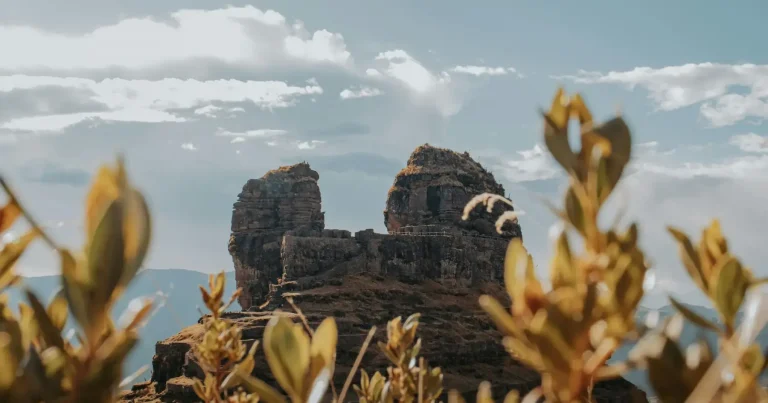
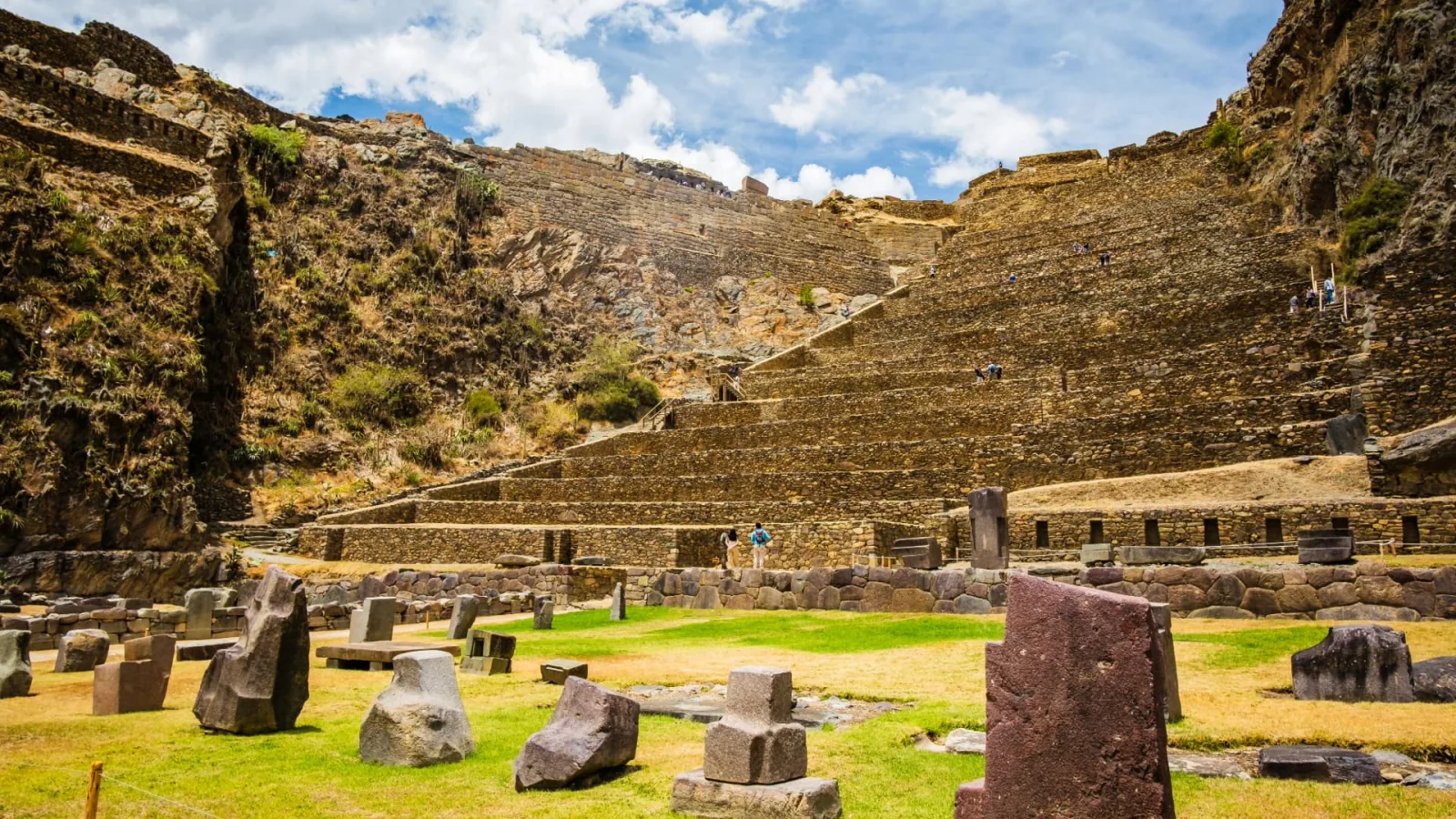
The Ministry of Culture’s Cusco office manages the park. MINCETUR describes it as a fortified city built by the Inca Pachacútec, a military, religious, administrative and farming complex on two mountains. The protected park covers 34,800 hectares with 204 sites; the monumental area open to visitors is about 18 hectares.
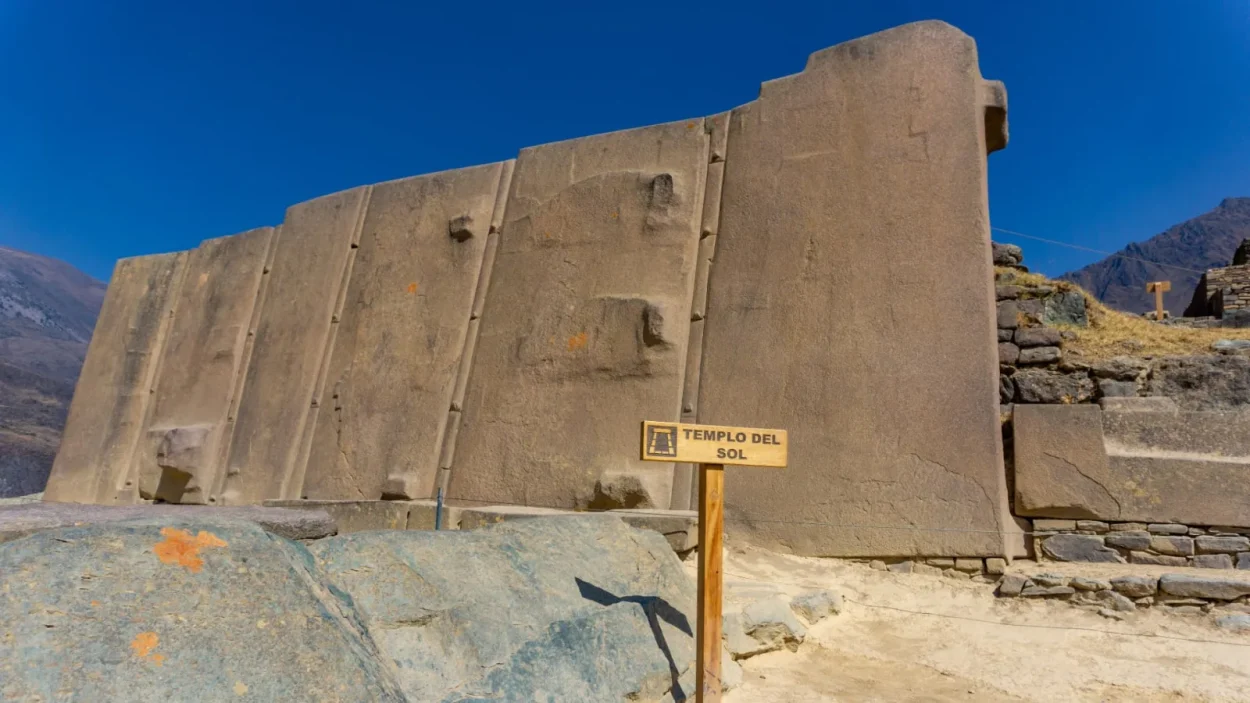
- Temple of the Sun: six monoliths of polished pink stone, between 3.32 and 4.20 m high, at about 2,792 m. The stone came from the Cachiccata quarries, about 4 km away across the river.
- Other sectors named by the park staff: the Water Temple, the ceremonial fountain and the Baño de la Ñusta, the pre-Inca sector, the Ten Niches, Inca Misana, the storehouses, Inka Watana and the military area.
- The terraces: the big staircase of terraces is the steepest part of the visit. In 2024 wooden steps were installed in one section because of falling rocks.
- Crowds: between 2,000 and 3,700 visits a day, with the most from June to December, and an average stay of about 2 hours (park coordinator, Andina 2024). In 2023 the park had 543,837 visitors.
Ticket and hours: 07:00 to 16:30, every day. You enter with the Cusco Tourist Ticket, full (S/ 130 for foreign visitors, valid 10 days) or partial Circuit III (S/ 70, valid 2 days), which also covers Pisac, Chinchero and Moray. Law 32586 of May 2026 allows single-site tickets, but its regulation was still a draft in October 2026, so for now the Tourist Ticket is the way in. Buy it at the entrance or at the COSITUC counter in Cusco.
Pinkuylluna: the free storehouses
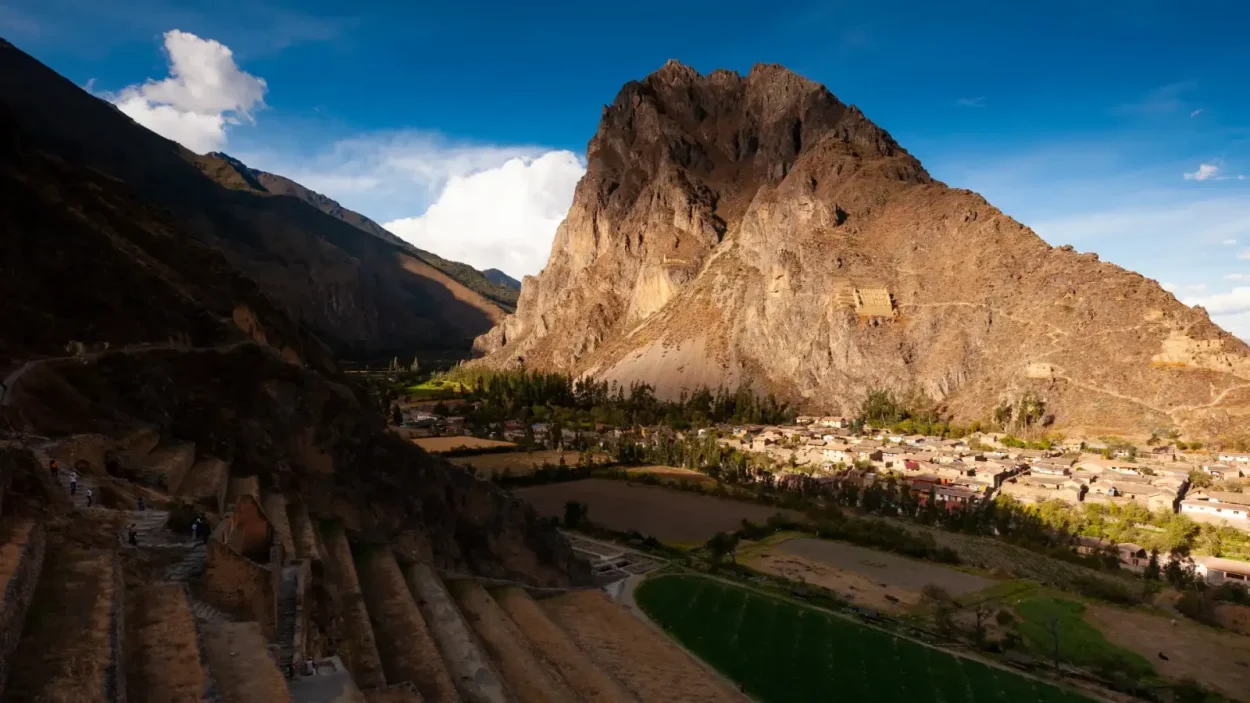
On the mountain facing the fortress, above the town, are the Inca storehouses of Pinkuylluna. MINCETUR records free entry, from 07:30 to 16:30, about 300 m and 20 minutes on foot from the town. The site is managed by the Ministry of Culture and the municipality and has two sectors: one with 12 rooms and another with three long buildings and eight terraces. On the same rock face is the carved figure known as Tunupa or Wiracochan. The path is steep and narrow: wear good shoes.
The living Inca town
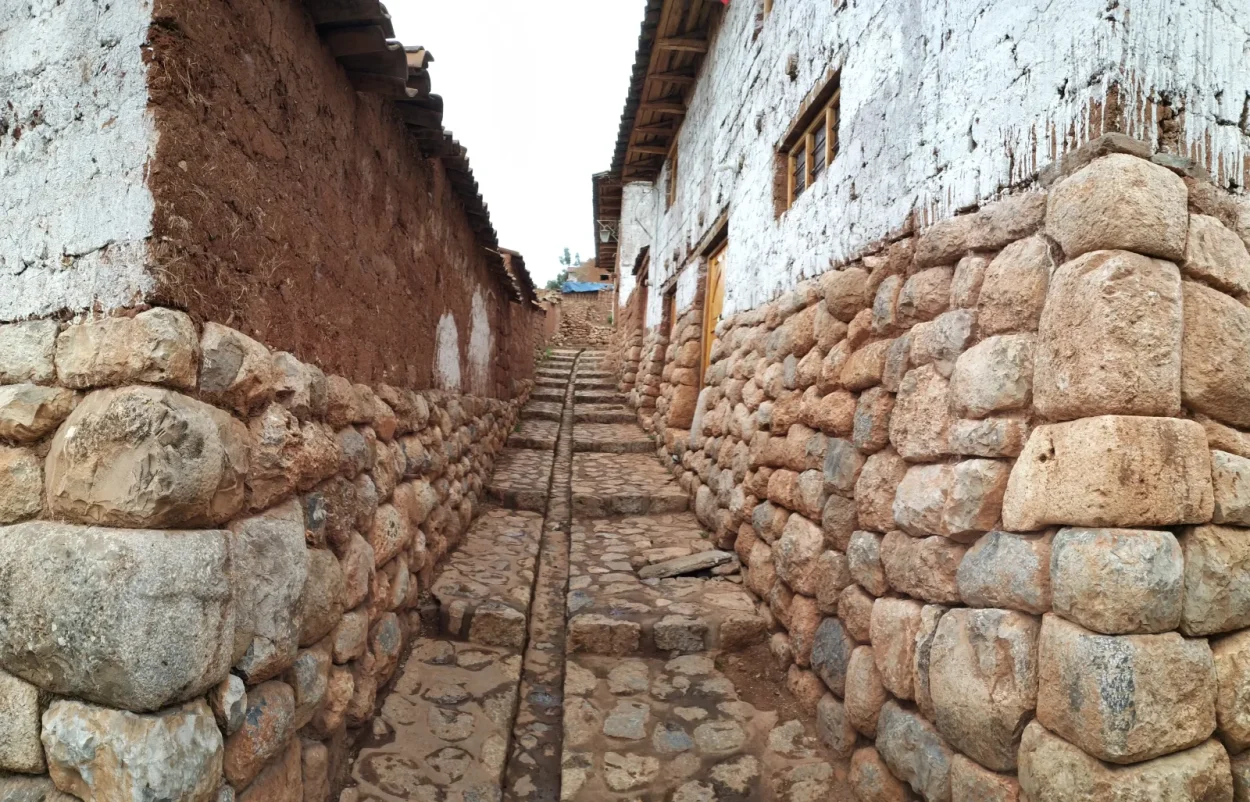
Ollantaytambo was never abandoned. Two Inca neighbourhoods, Qosqo Ayllu and Araqama Ayllu, are still used by local families (MINCETUR), and the Cusco Regional Government describes fifteen blocks of houses north of the main square, with colonial houses built on Inca walls. MINCETUR calls it the only living Inca city on the continent. Walk the narrow streets with their water channels, and please do not climb on or lean against the walls: in January 2026 the Ministry of Culture opened proceedings over damage to an Inca wall in Qosqo Ayllu.
A short history
- Built under Pachacútec, according to MINCETUR, and never finished: work stopped with the Inca civil war and the arrival of the Spanish.
- Manco Inca’s fortress: after the siege of Cusco, Manco Inca held Ollantaytambo, and in early 1537 his forces defeated Hernando Pizarro’s troops there, flooding the plain to stop the horses, according to archaeologist Arminda Gibaja, quoted by Andina.
- Continuous occupation: people have lived here from pre-Inca times to today.
How to get to Ollantaytambo
- By road from Cusco: about 60 to 75 km, 1 h 30 to 2 h by tourist bus, usually via Urubamba (MINCETUR). The Sacred Valley tours from Cusco stop here.
- Colectivos: shared vans leave from Pavitos street in Cusco. There are no official fares or timetables.
- Heavy vehicles: buses and trucks of 6,500 kg or more cannot drive through the town centre (municipal ordinance, ratified in March 2025). Strict enforcement began on 1 March 2026, so large tour buses use the bypass and you may walk a short stretch.
- Traffic in 2026: municipal road works started on 13 April 2026 for about eight months, and PeruRail changed the access route to the station. In August 2026 the press reported waits of up to 2 h 30 to enter or leave the district. If you have a train to catch, allow extra time.
Trains to Machu Picchu
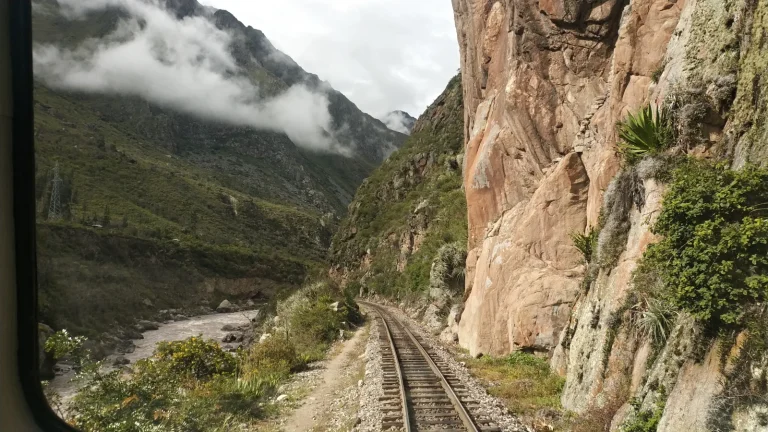
PeruRail and Inca Rail run from Ollantaytambo to Aguas Calientes in about 1 h 30 to 2 h. The Inca Rail station is on Avenida Ferrocarril, open from 06:00 to 19:30. Since September 2025 some PeruRail bus-and-train services from Cusco change at Pachar station instead. PeruRail stores luggage for free at Ollantaytambo station (04:15–21:00) for its passengers; Inca Rail only at its ticket office. Read more in how to get to Machu Picchu from Cusco and our Aguas Calientes guide.
What to see near Ollantaytambo
| Place | Altitude | Access | Entry |
|---|---|---|---|
| Pinkuylluna (storehouses) | above the town | 300 m, 20 min on foot | Free |
| Pumamarka (Inca site) | 3,427 m | 6 km northeast; about 30 min by car on a dirt road | Free, 08:00–16:00 |
| Cachiccata quarries | 3,886 m | Long hike: about 16 km (5 h 30) each way | Free |
| Perolniyoc waterfall | 3,514 m | Drive to Socma, then 3 km (45 min) on foot | Free |
| Ñaupa Iglesia | 2,850 m | Pachar, about 6.6 km (15 min) by road | Free |
| Patacancha and Willoq (weaving communities) | 3,821 m and about 3,525 m | 16–19 km up the Patacancha valley, about 35 min | — |
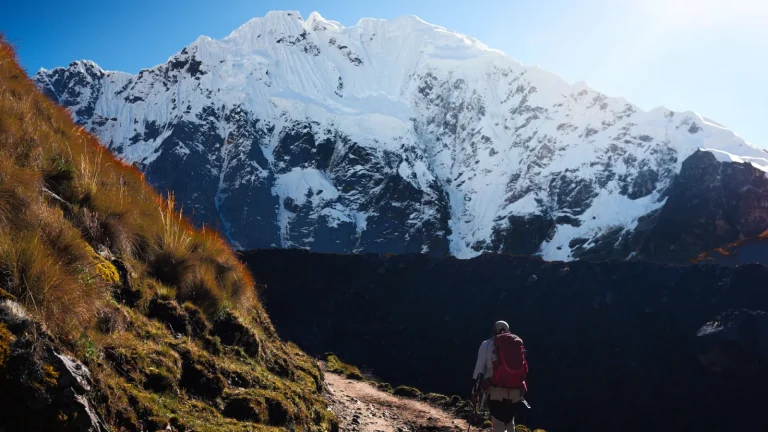
| Km 82, start of the Classic Inca Trail | about 2,650 m | 15–20 km, about 40 min | Permit required |
Altitudes, access and entry from MINCETUR’s inventory sheets (2024–2026). Km 82 is in the district of Ollantaytambo: see the Classic Inca Trail guide and Inca Trail permits.
Festivals
- Bajada de Reyes of the Niño Jesús de Marcaccocha, 5 to 9 January: declared national cultural heritage by the Ministry of Culture in 2021.
- Señor de Choquekillka, the town’s patron feast, four days around Pentecost (in 2027, Pentecost Sunday is 16 May): declared national cultural heritage in 2008.
- Ollantay Raymi, 29 June: a staging of the Quechua drama Ollantay in the town and the fortress, recognised by the Andean Parliament as a cultural reference of the Andean region.
- Wallata dance of the Patacancha valley: national cultural heritage since 2008.
Altitude and weather
At 2,871 m, Ollantaytambo is about 570 m lower than Cusco (3,439 m), which makes it a good place to sleep on your first nights: the US CDC suggests sleeping lower at first when you fly into Cusco. There are no official SENAMHI climate averages for the town itself. SENAMHI’s rainy season in Cusco runs from October to March, and MINCETUR lists the park as visitable all year. See our guides to altitudes from Lima to Machu Picchu and altitude sickness in Cusco.
Practical information
- Tourist information: the municipality runs a tourist information office.
- Money: there are ATMs and a currency exchange in the district (MINCETUR). Carry soles in cash for small purchases.
- Health and safety: there is a health centre and a tourist police (POLTUR) station in the district. For assistance, iPerú answers 24 hours on (01) 574-8000.
- Trains in 2025–2026: trains between Ollantaytambo and Machu Picchu were suspended on 4–5 August 2026 by a forest fire near km 107, and for about three days in September 2025 by road and rail blockades.
Visit Ollantaytambo with us
- Traditional Sacred Valley tour: Pisac, lunch in Urubamba, Ollantaytambo and Chinchero in one day.
- Sacred Valley with Maras and Moray: Chinchero, Moray, the salt pans, Ollantaytambo and Pisac.
- Machu Picchu and Sacred Valley, 2 days: the valley on day 1, the train from Ollantaytambo and a night in Aguas Calientes.
The Tourist Ticket is not included in our valley tours, so you can choose the ticket that suits your plans. See things to do in the Sacred Valley.
Frequently asked questions
Is Ollantaytambo worth visiting?
Yes. It combines one of the great Inca fortresses with a town where Inca streets are still lived in, and it is on the way to Machu Picchu by train.
Do I need a ticket for Ollantaytambo?
For the archaeological park, yes: the Cusco Tourist Ticket, full (S/ 130) or partial Circuit III (S/ 70). The town and the Pinkuylluna storehouses are free.
What are the opening hours?
The park opens every day from 07:00 to 16:30; Pinkuylluna from 07:30 to 16:30.
How high is Ollantaytambo?
2,871 m (9,419 ft), according to INEI: about 570 m lower than Cusco.
How long do I need in Ollantaytambo?
About 2 hours for the park. Add an hour for Pinkuylluna and a walk through the town.
How do I get from Cusco to Ollantaytambo?
By road, about 60 to 75 km and 1 h 30 to 2 h, on a tour, in a private car or by colectivo from Pavitos street.
Is Ollantaytambo a good place to stay before Machu Picchu?
Yes: it is lower than Cusco, which helps with the altitude, and the trains to Aguas Calientes leave from here.
Is the Inca Trail near Ollantaytambo?
Yes. Km 82, where the Classic Inca Trail starts, is in the district of Ollantaytambo, about 40 minutes away by road. You need a permit and a licensed operator.