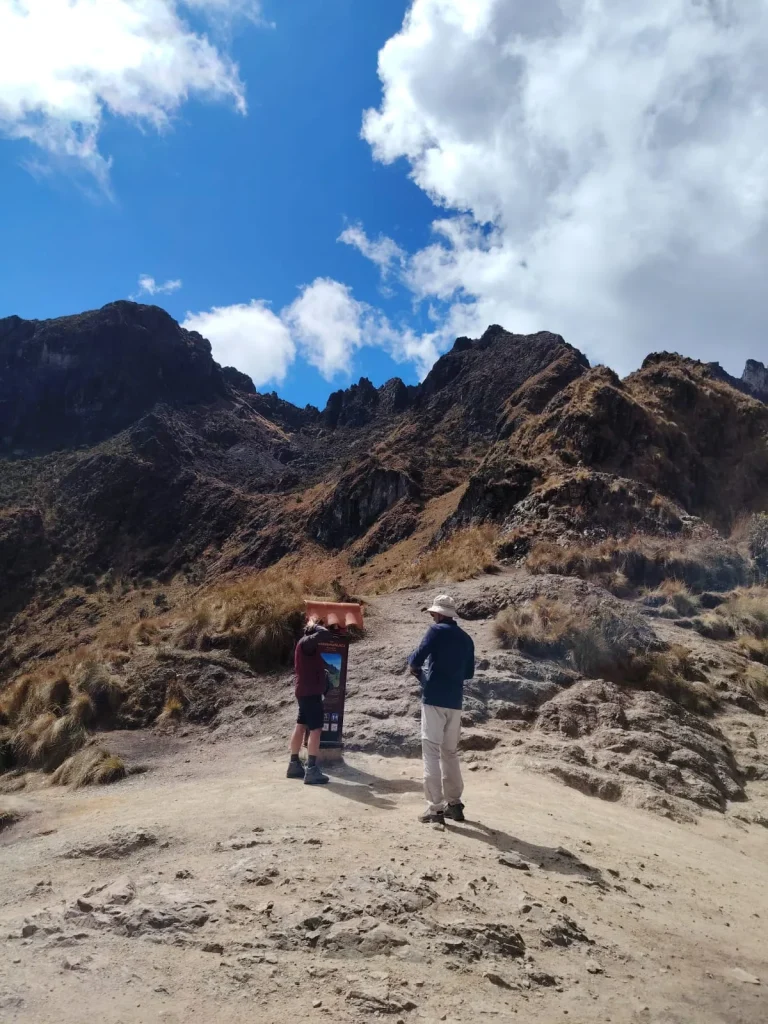
In this article
- Quick answer
- Aguas Calientes at a glance
- How to get to Aguas Calientes
- From Aguas Calientes up to Machu Picchu
- Buying Machu Picchu tickets in Aguas Calientes
- Things to do in Aguas Calientes
- Weather in Aguas Calientes
- Safety: what happened on the route in 2026
- Where to leave your luggage
- Should you spend a night in Aguas Calientes?
- Frequently asked questions
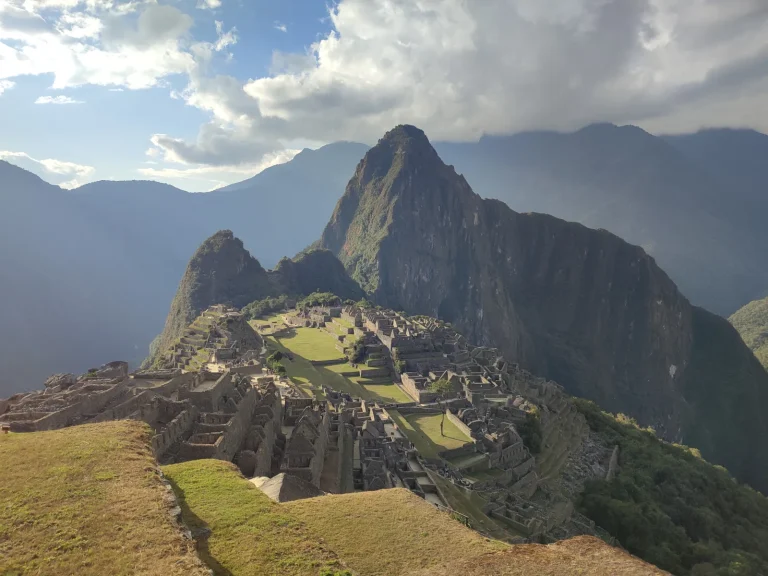
Aguas Calientes, officially Machupicchu Pueblo, is the town at the foot of Machu Picchu and the capital of the Machupicchu district, in the province of Urubamba. It sits at 2,092 m (6,864 ft), about 340 m below the citadel. No road reaches it from Cusco: you arrive by train or on foot from Hidroeléctrica, and from here buses climb to the ruins. This guide explains how to get there, how to go up to Machu Picchu, how buying tickets in town works in 2026, what to do, where to leave your luggage and what happened on the route this year.
Sources: INEI (Cusco statistical compendium 2025), Peru’s Ministry of Culture (RM 285-2025-MC, DDC Cusco, museos.cultura.pe), PromPerú, PeruRail, Inca Rail, Andina, El Peruano, the Machu Picchu Sanctuary master plan and the US CDC. Checked on 15 October 2026.
Quick answer
- Altitude: 2,092 m (6,864 ft), according to INEI. Machu Picchu is about 340 m higher, at 2,430 m.
- Getting there: by train from Ollantaytambo (about 1 h 30 to 2 h) or from Cusco (about 4 h in total), or by road to Hidroeléctrica and then a 30-minute train or a walk of about 2 h 30.
- Up to Machu Picchu: by bus on the Hiram Bingham road, or on foot in about 2 hours.
- Tickets in town: 1,000 Machu Picchu tickets a day are sold in person at the Centro Cultural, for the following days, not for the same day.
- Luggage: trains allow one small bag of about 8 kg; PeruRail stores larger luggage for free at its stations.
Aguas Calientes at a glance
| Fact | Figure | Source |
|---|---|---|
| Official name | Machupicchu (category: pueblo), capital of the Machupicchu district, created on 1 October 1941 (Law 9396) | INEI |
| Altitude | 2,092 m (6,864 ft) | INEI, Cusco statistical compendium 2025 |
| Population of the district | 5,347 (2017 census); 5,782 projected for 2025 | INEI |
| Road to the citadel | 8.4 km on the Hiram Bingham road | PromPerú map |
| Height difference to the citadel | about 340 m (Machu Picchu: 2,430 m) | INEI; UNESCO |
Older sources give 2,040 m (a PromPerú map from 2018) or 2,060 m (an earlier INEI compendium) for the town. We use INEI’s current figure.
How to get to Aguas Calientes
There is no road from Cusco to Aguas Calientes. Most travelers take the train, and some arrive the long way, by road to Hidroeléctrica.
By train
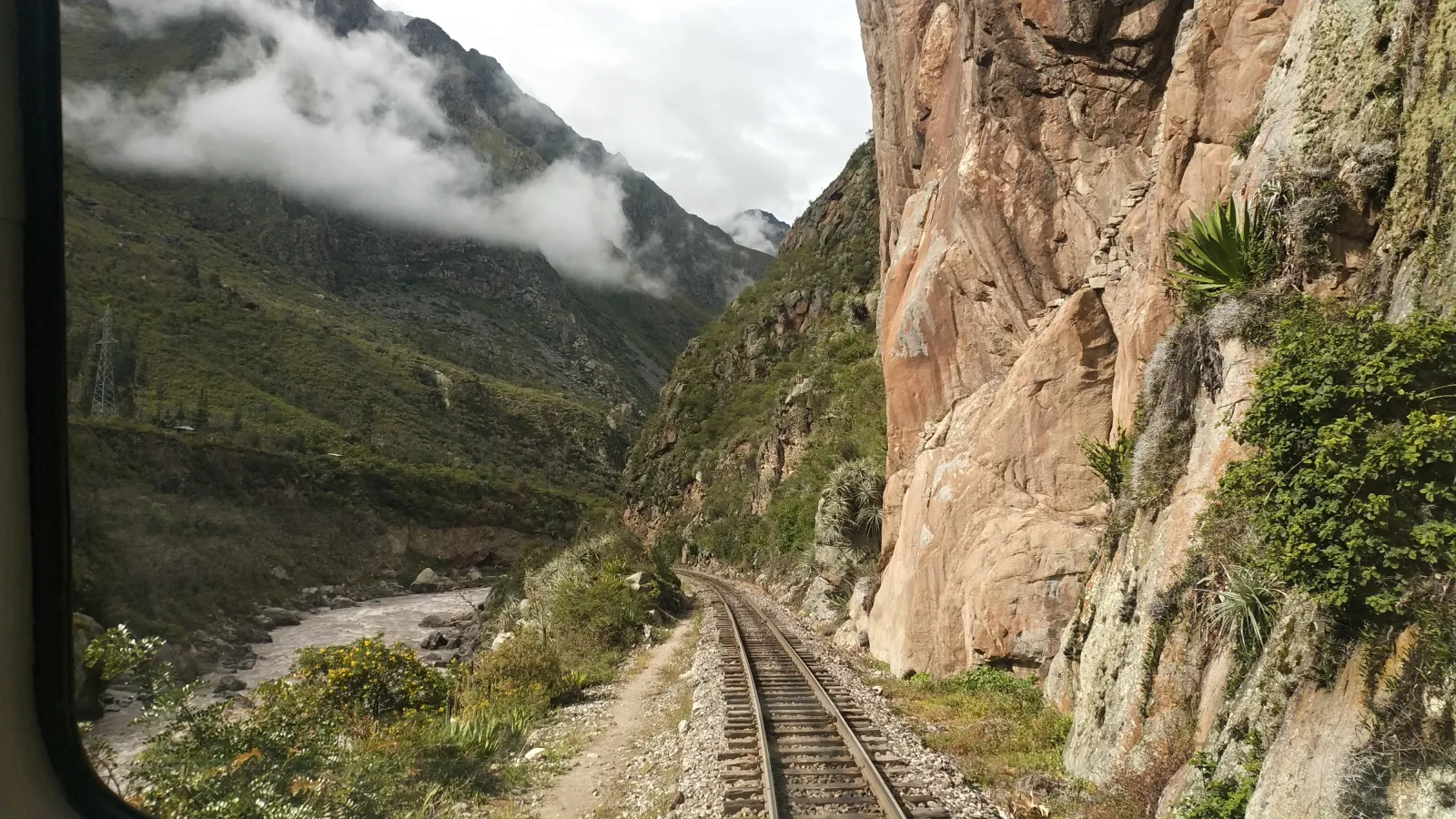
- PeruRail runs the Expedition, Vistadome, Vistadome Observatory and the Belmond Hiram Bingham to Machu Picchu station, with departures from Cusco (Wánchaq, San Pedro and Poroy), Ollantaytambo and Urubamba. Poroy operates from April to December, and some Cusco services combine bus and train.
- Inca Rail runs from Ollantaytambo, or from Cusco with a bus to Ollantaytambo and the train from there.
- Journey time: about 1 h 30 to 2 h from Ollantaytambo and about 4 h in total from Cusco, according to PeruRail.
- Luggage on board: PeruRail allows one backpack of up to 8 kg and 100 cm (height + length + width) or one carry-on of up to 12 kg and 115 cm; its travel recommendations page gives 8 kg and 115 cm. Inca Rail allows one bag of up to 8 kg and 118 cm. Pack light either way.
Read the full comparison in how to get to Machu Picchu from Cusco.
Via Hidroeléctrica
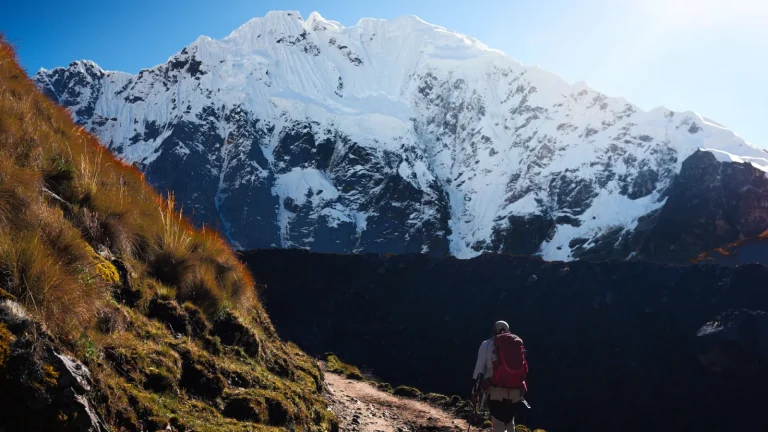
The road from Cusco goes through Santa María and Santa Teresa to Hidroeléctrica station. From there PeruRail says the train to Aguas Calientes takes about 30 minutes and the walk about 2 h 30. This is how the Salkantay Trek and the Inca Jungle Trek reach the town.
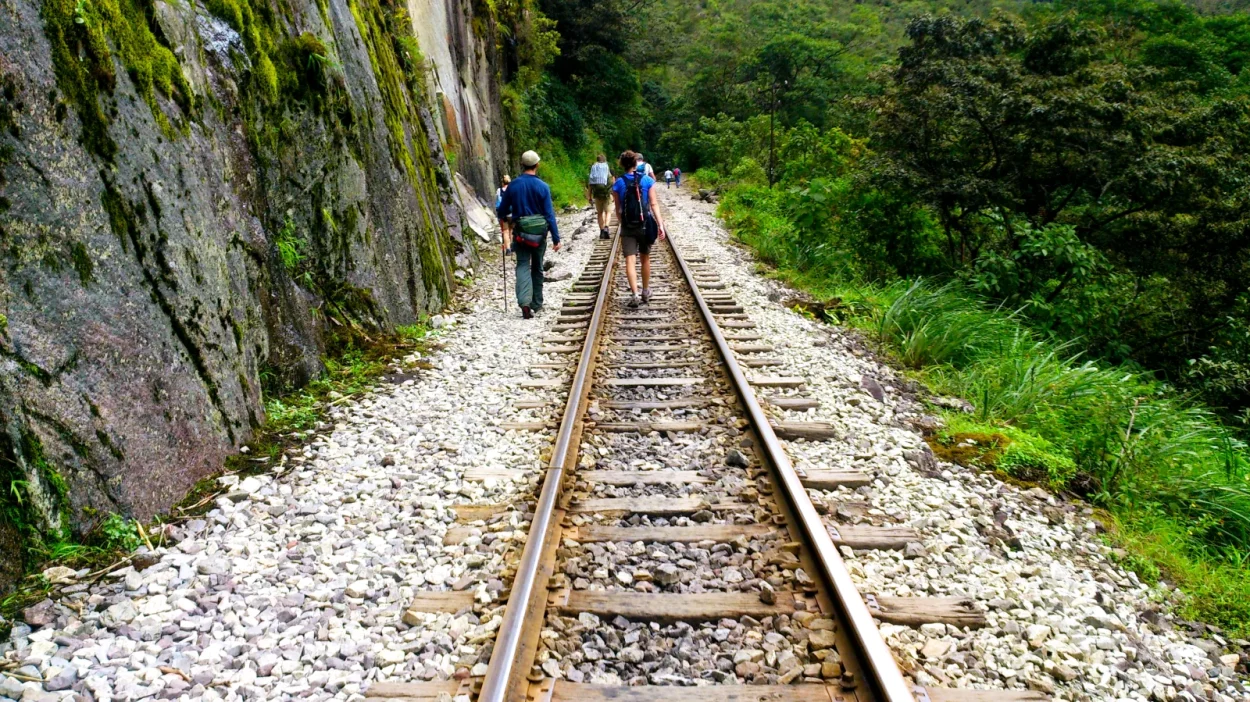
The path is exposed to landslides. In 2026 the Mandor sector closed the walk and the trains on 25 January and again from 30 March to 6 April. Check for notices before you go.
From Aguas Calientes up to Machu Picchu
- By bus: buses climb the zigzag Hiram Bingham road to the entrance. PeruRail gives the ride as about 20 to 30 minutes, with departures every 10 minutes.
- On foot: about 2 hours from town, according to PeruRail. The stone stairway from the old Puente Ruinas bridge takes 45 minutes to an hour, according to the Ministry of Culture’s Cusco office.
- Arrive on time: you can enter up to 30 minutes after the time on your ticket (RM 508-2023-MC).
The bus service in 2026: the Consettur concession ended on 4 September 2025 and the service has run on a provisional basis since then. A new tender for the route was relaunched in September 2026. There is no official fare page online; in January 2026 the press reported USD 24 return for foreign visitors and USD 15 for Peruvians. If you travel with us, the bus is included in our Machu Picchu tours.
Buying Machu Picchu tickets in Aguas Calientes
The Ministry of Culture keeps 1,000 tickets a day for in-person sale, in both low and high season (RM 285-2025-MC). They are sold at the Centro Cultural in town, usually from 15:00 to 22:00 according to the press, with your passport or ID.
| Route | In-person tickets a day |
|---|---|
| 2-A Classic designed route | 600 |
| 1-B Upper terrace | 100 |
| 2-B Lower terrace | 100 |
| 3-B Royalty designed route | 100 |
| 1-A Machu Picchu Mountain | 50 |
| 3-A Huayna Picchu | 50 |
Our calculation from the annex of RM 285-2025-MC. The high-season-only routes have no in-person quota.
- Not for the same day: in-person tickets are for the following days, so you need to sleep in town. Since May 2026 they can exceptionally be bought up to three days ahead.
- They sell out: the in-person tickets for 13 to 16 October 2026 were gone, and the Ministry ruled out adding more.
- Online: the official sale moved to a new system on 22 September 2026, with a 30-day trial period.
Buying in town is a backup, not a plan. See all routes, quotas and prices in our Machu Picchu tickets guide.
Things to do in Aguas Calientes
- Manuel Chávez Ballón site museum: run by the Ministry of Culture, by the old Puente Ruinas bridge at km 112 of the railway, about 2 km from town. Open daily from 9:00 to 16:00. Entrance S/ 22 for adults and S/ 11 for university students; free for ages 3 to 17, seniors, people with disabilities, Peruvians and foreign residents. A botanical garden sits next to it.
- Hot springs: the sulphur pools that gave the town its name are about 15 minutes’ walk from the plaza, at 32 to 37 °C, according to PromPerú. There is no official 2026 fee published; check at the entrance.
- Mandor gardens and waterfalls: a private nature reserve about 4.3 km from town along the railway (about 1 h 30 on foot). It was damaged by a flood in February 2024, so ask before you go.
- “Crónicas en Piedra”: 37 granite sculptures along the town’s streets, free at any time.
- Artisan market: next to the train station.
- Putucusi: the steep mountain facing the citadel has no official trail. The police had to rescue a tourist there on 11 October 2026. We do not recommend it.
Opening hours of the hot springs, Mandor and the market come from a 2018 PromPerú map and can change.
Weather in Aguas Calientes
There is no official climate data for the town itself. The Machu Picchu Sanctuary master plan gives the citadel, about 340 m higher, a mean annual temperature of 18 °C, very high humidity (80–90%) and about 2,010 mm of rain a year, with a dry season from April to August and the heaviest rain from January to March. Bring a rain jacket in any month. See the best time to visit Machu Picchu.
Safety: what happened on the route in 2026
- Landslides at Mandor: 25 January (walk and trains between Hidroeléctrica and Aguas Calientes closed; trains back on 26 January) and 30 March (about 400 m of track destroyed; trains back on 6 April).
- Forest fire at km 107: on 4 August 2026 falling rocks stopped the trains between Ollantaytambo and Machu Picchu; service resumed the next day.
- Rail accident: on 30 December 2025 two trains collided at km 94.4; one person died and at least 30 were injured.
- If the route closes: after the January and August closures, the Ministry of Culture’s Cusco office let affected visitors reschedule or get a refund for their Machu Picchu tickets.
Health and help: the US CDC says there is no malaria in Cusco or Machu Picchu and does not recommend the yellow fever vaccine if you only visit Cusco, the Inca Trail and Machu Picchu. A new health centre is under construction; meanwhile care is given at a temporary centre. iPerú, the official tourist assistance service, lists an office on Avenida Pachacútec (block 1) on PromPerú’s town map and answers 24 hours on WhatsApp +51 944 492 314.
Where to leave your luggage
- PeruRail: free luggage storage for its passengers at Machu Picchu station in Aguas Calientes (05:00–22:00) and at Ollantaytambo station (04:15–21:00).
- Inca Rail: storage only at its Ollantaytambo ticket office.
- Your hotel: if you sleep in town, ask it to keep your bag while you visit. Inside Machu Picchu only bags up to 40 × 35 × 20 cm are allowed: see what to wear and pack for Machu Picchu.
Should you spend a night in Aguas Calientes?
A night in town lets you take one of the first entry times, which start at 06:00, without a 4-hour train ride the same morning, and it is the only way to use in-person tickets. It also helps with altitude: at 2,092 m you sleep about 1,350 m lower than in Cusco. These tours include a night in Aguas Calientes:
- Machu Picchu and Sacred Valley, 2 days
- Short Inca Trail, 2 days
- Salkantay Trek, 5 days and Inca Jungle Trek, 4 days
If you only have one day, the Machu Picchu Day Trip from Cusco goes there and back by train. Compare the altitudes of the whole route in Machu Picchu elevation.
Frequently asked questions
Is Aguas Calientes the same as Machu Picchu Pueblo?
Yes. Machupicchu Pueblo is the official name of the town; Aguas Calientes is the popular name, after its hot springs.
How high is Aguas Calientes?
2,092 m (6,864 ft), according to INEI’s Cusco statistical compendium 2025. It is about 340 m below the Machu Picchu citadel and about 1,350 m below Cusco.
Can you drive to Aguas Calientes?
No. The road ends at Hidroeléctrica. From there you take the train (about 30 minutes) or walk (about 2 h 30).
How do you get from Aguas Calientes to Machu Picchu?
By bus on the Hiram Bingham road, which PeruRail times at about 20 to 30 minutes, or on foot in about 2 hours.
Can I buy Machu Picchu tickets in Aguas Calientes?
Yes, at the Centro Cultural, which has 1,000 tickets a day for the following days. They often sell out, so buy online or through your operator if you can.
How much are the Aguas Calientes hot springs?
There is no official 2026 fee published. Check at the entrance and carry soles in cash.
Where can I store my luggage?
PeruRail passengers can leave it for free at the stations in Aguas Calientes and Ollantaytambo. Inca Rail only stores bags in Ollantaytambo.
Is it worth staying a night in Aguas Calientes?
Yes, if you want an early entry, plan to buy tickets in person or want a calmer visit. With only one day, the train day trip from Cusco also works.