Salkantay Trek 5 Days / 4 Nights to Machu Picchu
5 Days
Up to 8 travelers
4,630 m
Challenging
Salkantay Trek 5 days: from the glaciers to Machu Picchu
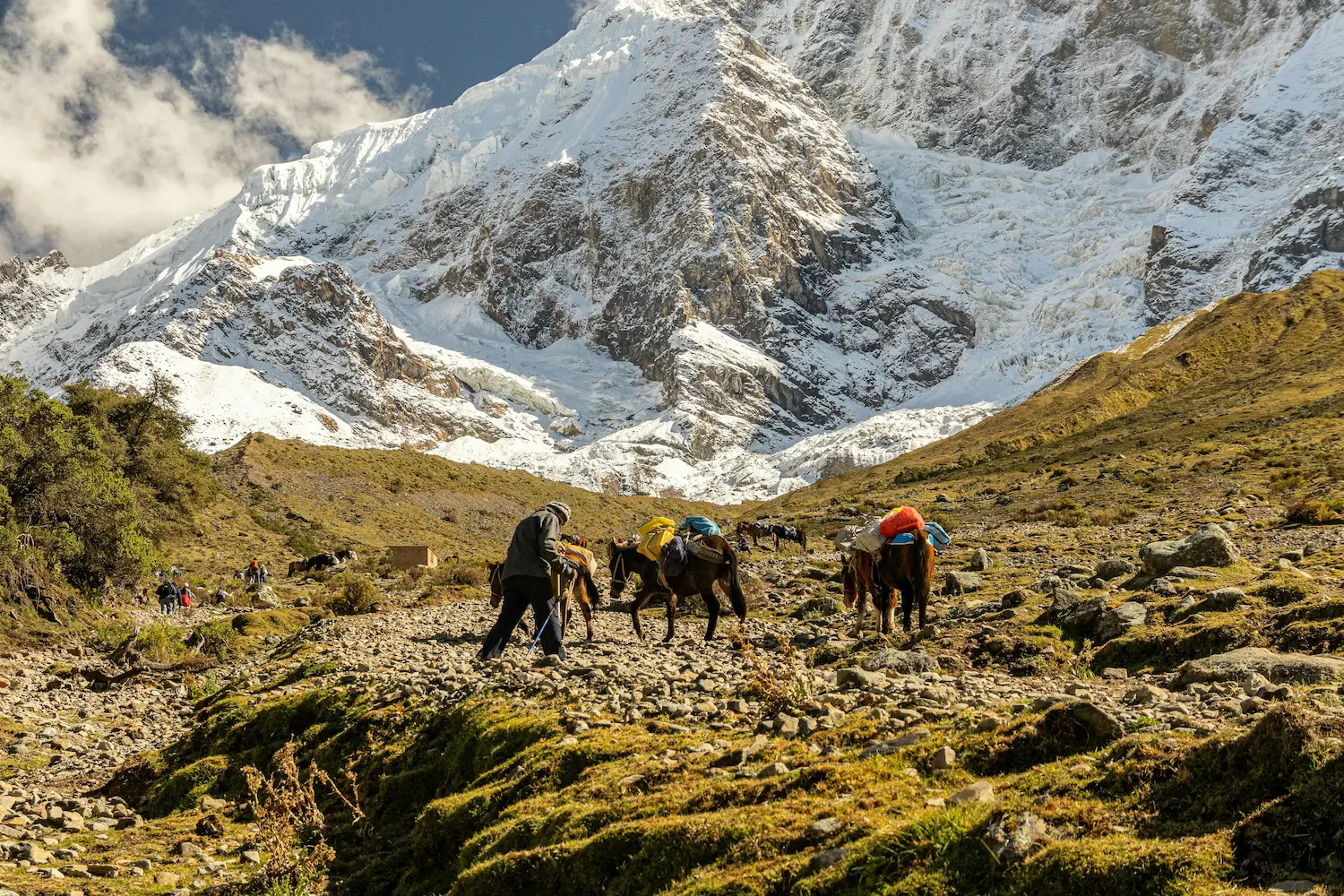
The Salkantay Trek is the best-known alternative route to Machu Picchu. In five days you walk from the glaciers of Nevado Salkantay (6,271 m / 20,574 ft), the highest peak of the Vilcabamba range, down into the cloud forest and coffee farms of the Santa Teresa valley, and you finish with a guided visit of Machu Picchu. Unlike the Classic Inca Trail, it needs no trail permit, so it is easier to book at short notice.
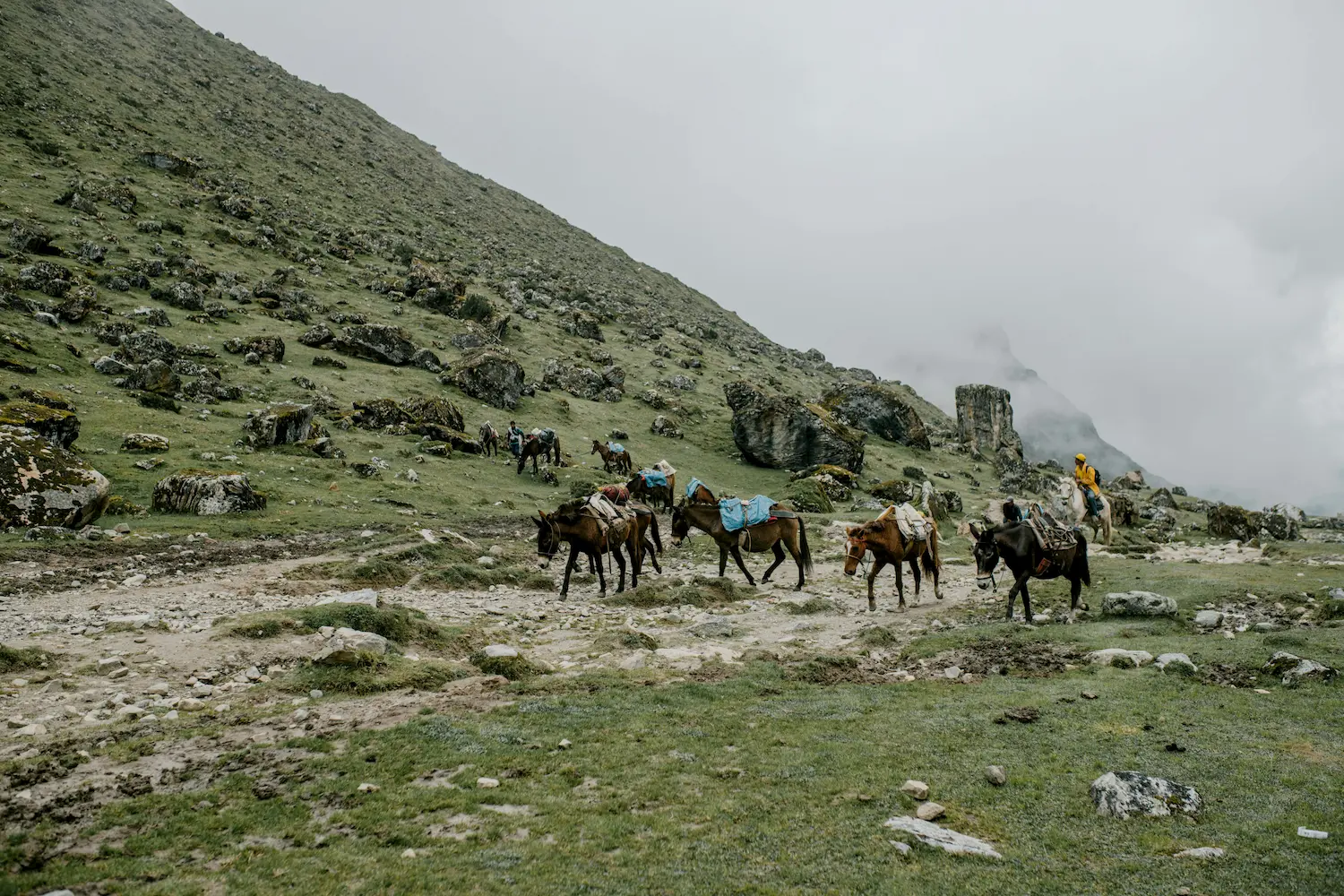
This tour follows the classic camping format, the most common mid-range option among Cusco operators: three nights in tents at Soraypampa, Chaullay and Lucmabamba, with a cook, and mules and muleteers carrying the camping equipment and up to 7 kg (15 lb) of your personal luggage. The fourth night is in a hotel in Aguas Calientes, so you reach Machu Picchu rested. Groups are small, with a maximum of 8 travelers per guide.
What’s included in the Salkantay Trek
Included 18
- Briefing session the evening before at 6:00 p.m. in our office (Av. El Sol 900, Cusco)
- Hotel pick-up in Cusco (Sacred Valley with prior coordination)
- Professional bilingual guide (English / Spanish), maximum 8 travelers per guide
- Tourist transport Cusco – Mollepata – Challacancha
- Entrance fees to Humantay Lake and the Salkantay trail
- Cook and meals as per itinerary: 5 breakfasts, 4 lunches and 4 dinners
- Boiled and filtered drinking water during the camping days
- Mules and muleteers to carry the camping and kitchen equipment
- Personal luggage up to 7 kg (15 lb) per person carried by the mules, including your sleeping bag if you rent one (handed back at the train station)
- Camping equipment: tents for two people, dining tent and kitchen tent
- Sleeping mat (insulating pad)
- 1 night in a hotel in Aguas Calientes (double or twin room with private bathroom)
- Machu Picchu entrance ticket
- Round-trip bus Aguas Calientes – Machu Picchu – Aguas Calientes
- Guided tour of Machu Picchu (about 2 hours)
- Train Aguas Calientes – Ollantaytambo and tourist transport to Cusco
- First aid kit and emergency oxygen
- Emergency horse
Not Included 6
- Lunch and dinner on day 5
- Sleeping bag (available for rent: US$20 per person)
- Trekking poles (available for rent: US$20 per person)
- Huayna Picchu or Machu Picchu Mountain (optional: US$80 per person)
- Travel insurance
- Tips for the guide, cook and muleteers
What Should You Bring? 12
- Original passport (needed for the Machu Picchu ticket and the train)
- Broken-in hiking boots
- Daypack (25–35 liters)
- Rain jacket or poncho
- Warm layers for the nights: fleece, down jacket, hat and gloves
- Light clothes for the cloud forest
- Sun hat, sunglasses and sunscreen
- Insect repellent
- Reusable water bottle
- Headlamp
- Personal medication and toilet paper
- Cash in soles for tips and extras
Salkantay Trek 5 Days Itinerary
1
Day 1
Cusco – Mollepata – Challacancha – Soraypampa – Humantay Lake
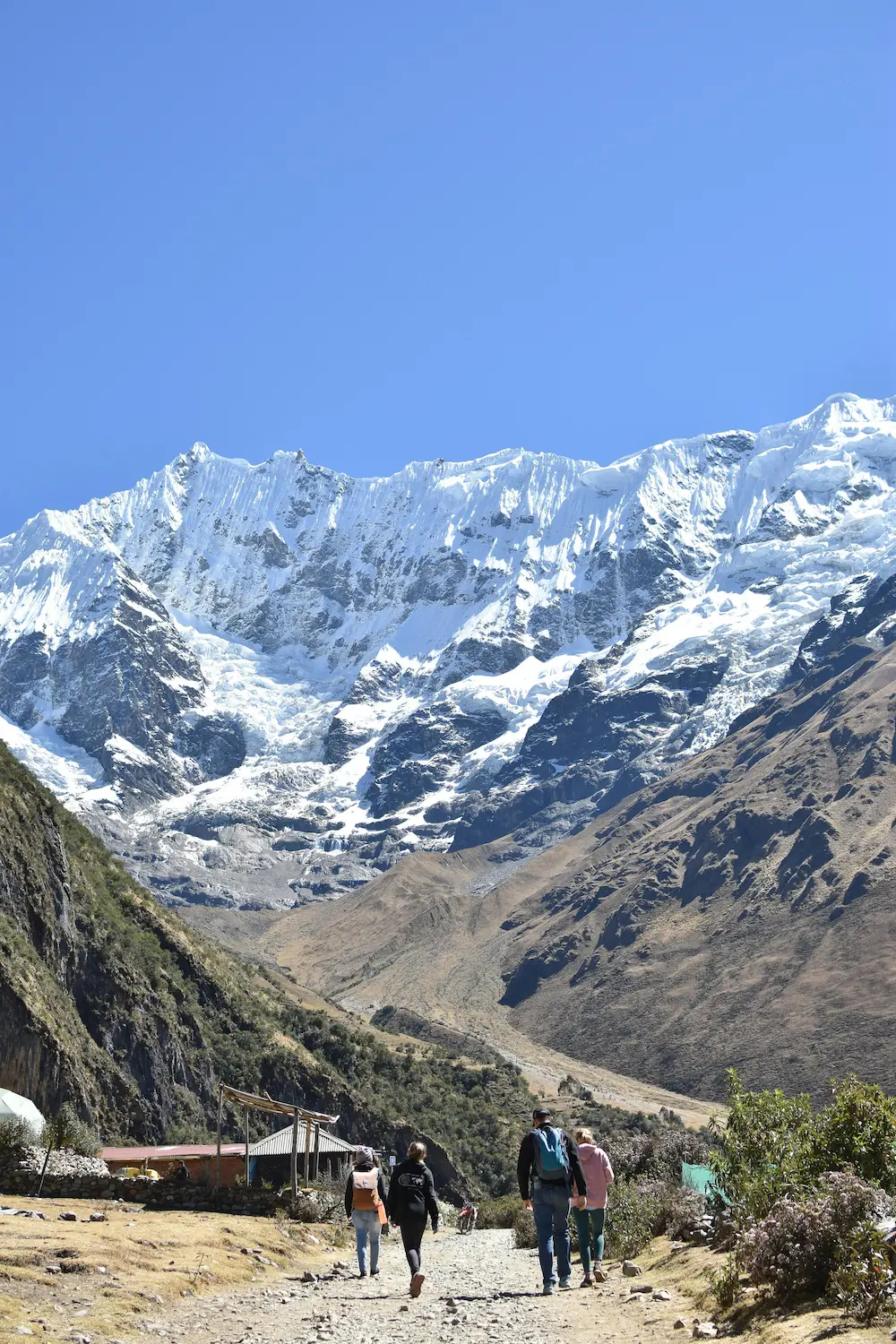
Early pick-up from your hotel in Cusco (around 4:30 a.m.) and drive in tourist transport to Mollepata (about 3 hours), where we stop for breakfast. Continue by road to Challacancha (3,650 m / 11,975 ft), where you meet the muleteers and start walking along a water channel with views of the snow-capped peaks to the camp at Soraypampa (3,900 m / 12,795 ft).
After lunch, hike up to Humantay Lake (4,200 m / 13,780 ft), at the foot of Nevado Humantay, and return to camp for dinner. This is the coldest night of the trek.
Hiking: about 10 km · steady uphill · 5–6 hours
2
Day 2
Soraypampa – Salkantay Pass – Wayramachay – Chaullay
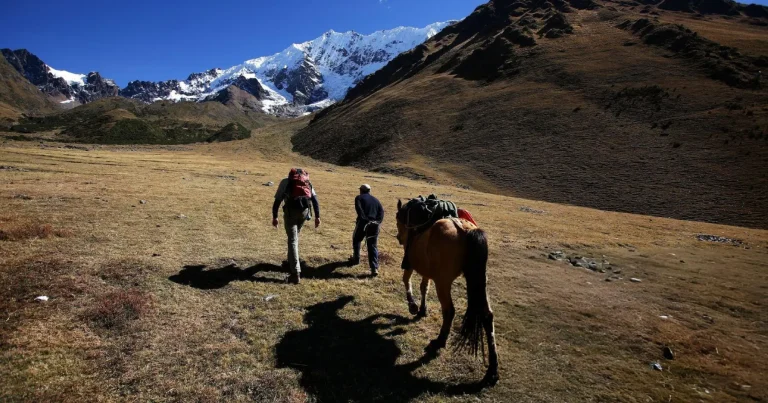
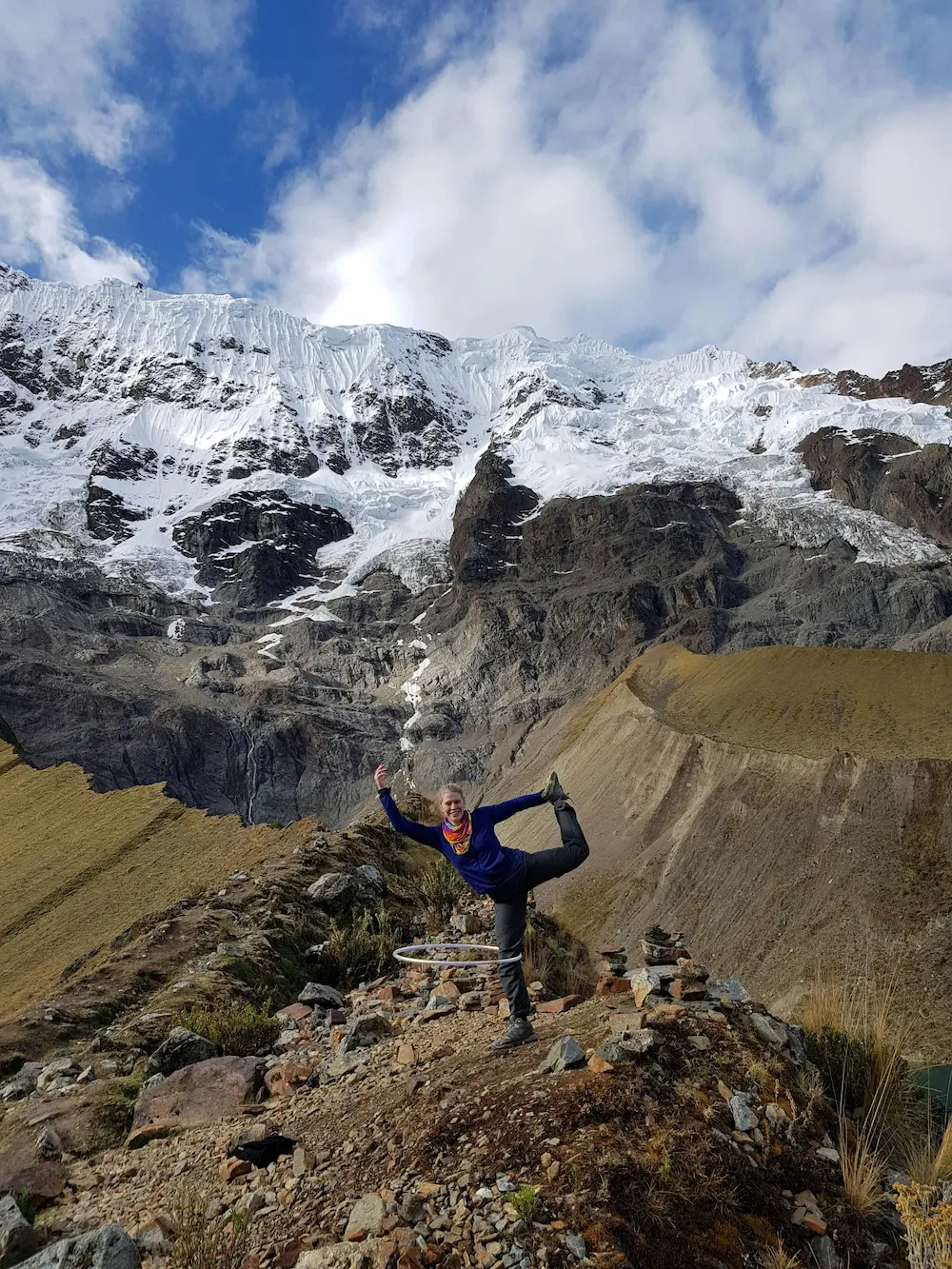
The hardest day starts before sunrise. A steep zigzag trail climbs to the Salkantay Pass (4,630 m / 15,190 ft), right below the glaciers of Nevado Salkantay (6,271 m / 20,574 ft). After a rest and photos, your guide explains the offerings that Andean communities still make to the mountain.
A long descent takes you to Wayramachay for lunch and then into the cloud forest, where the vegetation changes completely, down to the camp at Chaullay (2,850 m / 9,350 ft).
Hiking: about 19 km · 4–5 hours uphill, then a long downhill · 8–9 hours
3
Day 3
Chaullay – Santa Teresa river valley – La Playa – Lucmabamba
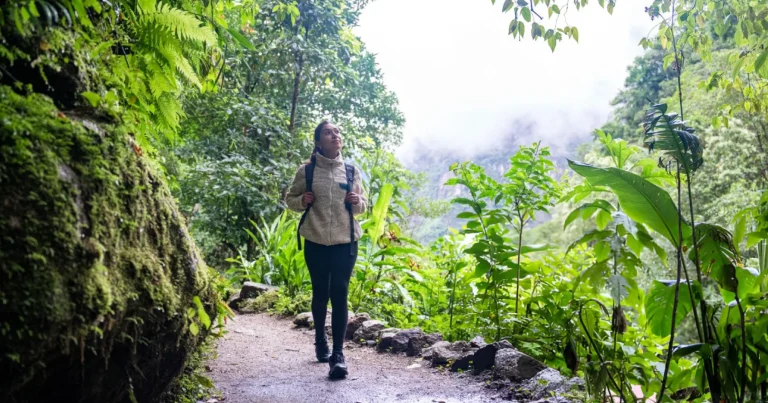
An easier day following the Santa Teresa river through the cloud forest, with waterfalls, orchids and small farms growing bananas, avocados and passion fruit. Lunch at La Playa (about 2,100 m / 6,890 ft).
In the afternoon, walk on to Lucmabamba (about 2,000 m / 6,562 ft), a community of coffee growers, where you can visit a local farm and see how the coffee is processed. Camp at Lucmabamba.
Hiking: about 17 km · mostly downhill and flat · 6–7 hours
4
Day 4
Lucmabamba – Llactapata – Hidroeléctrica – Aguas Calientes
Climb a section of Inca trail through coffee plantations and forest to Llactapata (about 2,750 m / 9,022 ft), an Inca site with a distant view of Machu Picchu on clear days. Then descend to the Hidroeléctrica station (about 1,800 m / 5,906 ft) for lunch.
The last stretch follows the railway tracks along the Urubamba river to Aguas Calientes (2,040 m / 6,693 ft). Night in a hotel, dinner in a local restaurant and a briefing from your guide for the Machu Picchu visit.
Hiking: about 21 km · 3 hours uphill, then downhill and flat · 7–8 hours
5
Day 5
Aguas Calientes – Machu Picchu – Ollantaytambo – Cusco
Early breakfast and bus up to Machu Picchu (2,430 m / 7,972 ft) for a guided tour of about 2 hours. Your entry time and circuit are assigned when the tickets are purchased. If you booked Huayna Picchu or Machu Picchu Mountain (optional, US$80), you climb it before or after the guided visit, depending on the time on your ticket.
Bus back down to Aguas Calientes, train to Ollantaytambo and tourist transport to your hotel in Cusco, arriving in the evening.
Hiking: about 3 km inside Machu Picchu · stairs · 2–3 hours
Salkantay Trek route & elevation profile
- 67.5 kmhiking distance (41.9 mi)
- 4,630 mhighest point: Salkantay Pass (15,190 ft)
- +2,270 melevation gain from Challacancha
- km 0 Challacancha Start of the hike
- km 6 Soraypampa Camp 1
- km 8 Humantay Lake Afternoon side trip on day 1
- km 10 Soraypampa (return) Back at camp 1
- km 15.5 Salkantay Pass Highest point of the trek
- km 29 Chaullay Camp 2 · cloud forest
- km 46 Lucmabamba Camp 3 · coffee farms, via La Playa
- km 51.5 Llactapata Inca site with a view of Machu Picchu
- km 57.5 Hidroeléctrica Lunch · start of the railway path
- km 67.5 Aguas Calientes Hotel · Machu Picchu on day 5
Good to know
Who is the Salkantay Trek for?
It is a challenging trek: about 67 km (42 mi) in four days of hiking, with the Salkantay Pass at 4,630 m (15,190 ft) on day 2, the longest and hardest day. You do not need technical experience, but you should be used to walking 6–9 hours a day on uneven trails. We recommend a minimum age of 12 and at least 2 days in Cusco before the trek to acclimatize.
Highlights of the route
- Humantay Lake (4,200 m / 13,780 ft): a turquoise glacial lake below Nevado Humantay, visited on the afternoon of day 1.
- Salkantay Pass (4,630 m / 15,190 ft): the highest point of the trek, right below the ice of Salkantay.
- Cloud forest and coffee farms: from Chaullay to Lucmabamba the trail drops into a warm valley with waterfalls, orchids and fruit and coffee plantations.
- Llactapata (about 2,750 m / 9,022 ft): an Inca site on a ridge with a distant view of Machu Picchu across the valley.
- Machu Picchu (2,430 m / 7,972 ft): a guided tour of about 2 hours on the last day.
Best time to do the Salkantay Trek
The dry season, from May to September, has the most stable weather and the clearest views of the mountains. June to August are also the coldest months, and nights at Soraypampa can be close to freezing. From November to March it rains often, the trail gets muddy and there can be snow at the pass; April and October are good shoulder months. The trek is possible all year and, unlike the Inca Trail, it does not close in February. Machu Picchu tickets sell out in high season, so book early.
Salkantay Trek FAQs
How difficult is the Salkantay Trek 5 days?
It is challenging. You hike about 67 km (42 mi) in four days, and day 2 crosses the Salkantay Pass at 4,630 m (15,190 ft) with about 19 km and 8–9 hours of walking. It is not technical, but you need good fitness and at least 2 days in Cusco to acclimatize before the trek.
What is the highest point of the trek?
The Salkantay Pass, at 4,630 m (15,190 ft). Humantay Lake is at 4,200 m (13,780 ft) and the highest camp is Soraypampa, at 3,900 m (12,795 ft). From the pass the route goes down to about 1,800 m (5,906 ft) at Hidroeléctrica.
Do I need a permit like on the Inca Trail?
No. The Salkantay Trek has no daily permit quota. What does sell out is the Machu Picchu entrance ticket, which is included and which we buy when you book, so reserve as early as possible, especially from May to September.
Where do we sleep?
The first three nights are in tents for two people at the campsites of Soraypampa, Chaullay and Lucmabamba, which have basic shared toilets. A sleeping mat is included and you can rent a sleeping bag for US$20. The fourth night is in a hotel in Aguas Calientes, in a double or twin room with private bathroom.
Who carries my luggage?
The mules carry the camping equipment and up to 7 kg (15 lb) of personal luggage per person, including your sleeping bag if you rent one; you only carry a daypack. The train back from Aguas Calientes allows limited hand luggage, so leave the rest of your things at your hotel in Cusco. We hand your bag back to you at the train station.
What if I feel sick from the altitude?
Your guide carries a first aid kit and emergency oxygen, and an emergency horse travels with the group on the high sections. Acclimatizing in Cusco, walking slowly and drinking plenty of water are the best prevention. Tell your guide about any symptoms as soon as you notice them.
When is the best time to do the Salkantay Trek?
From May to September, the dry season, when the views are clearest and the trails are dry. From November to March it rains often and the pass can have snow. The trek is possible all year and does not close in February like the Inca Trail.
Can I climb Huayna Picchu or Machu Picchu Mountain?
Yes, as an option for US$80 per person. Tickets are limited, so they must be booked together with your tour. You climb before or after the guided visit, depending on the time on your ticket.
Is there a minimum age or a discount for children and students?
We recommend this trek from 12 years old because of the altitude and the long hiking days. For children (2–11) and students (12–17), contact us to ask about discounts and whether the trek suits your family.
How do I pay for the tour?
You pay a deposit when you book. The balance is paid up to 2 days before departure, in cash (US dollars or soles) at our office on Av. El Sol 900, Cusco, or by card or PayPal with a 5% surcharge.