In this article
- Quick answer
- Inca Trail vs Salkantay vs Inca Jungle vs Lares at a glance
- Classic Inca Trail 4 days: the original route
- Short Inca Trail 2 days: the Sun Gate without camping
- 1-day Inca Trail: the fastest way to hike in
- Salkantay Trek 5 days: glaciers, cloud forest and no permit
- Inca Jungle Trek 4 days: bike, raft and hike
- Lares Trek 4 days: villages, hot springs and a high pass
- Salkantay vs Inca Trail: the key differences
- Is the Salkantay trek worth it?
- How to choose your trek to Machu Picchu
- Frequently asked questions
Four trekking routes take you from Cusco to Machu Picchu: the Inca Trail, the Salkantay Trek, the Inca Jungle Trek and the Lares Trek. They differ in permits, altitude, distance, where you sleep and how you reach the citadel. Below we compare the six versions we run and answer the two questions we hear most: Salkantay vs Inca Trail, which one should you pick, and is the Salkantay trek worth it?
Quick answer
- You want to walk into Machu Picchu through the Sun Gate: only the Inca Trail does that. Pick the Classic Inca Trail 4 days (from USD 780) if you have the time and fitness, the Short Inca Trail 2 days (from USD 569) for one day of hiking and a hotel, or the 1-day Inca Trail (from USD 399).
- Inca Trail permits are sold out, or you are booking late: the Salkantay Trek 5 days (from USD 585). No trail permit and the biggest mountain scenery.
- You want variety and less hiking at altitude: the Inca Jungle Trek 4 days (from USD 549), with biking, rafting, hot springs and hostels.
- You want Andean villages and a less-traveled trail: the Lares Trek 4 days (from USD 690), with the highest pass of the four.
Inca Trail vs Salkantay vs Inca Jungle vs Lares at a glance
| Feature | Classic Inca Trail | Short Inca Trail | 1-day Inca Trail | Salkantay Trek | Inca Jungle Trek | Lares Trek |
|---|---|---|---|---|---|---|
| Duration | 4 days / 3 nights | 2 days / 1 night | Full day | 5 days / 4 nights | 4 days / 3 nights | 4 days / 3 nights |
| Hiking distance | 40 km (24.9 mi) | 11 km (6.8 mi) | 11 km (6.8 mi) | 67.5 km (41.9 mi) | About 23 km (14.3 mi), plus 50–60 km by bike | About 33 km (20.5 mi) |
| Highest point | 4,215 m (13,829 ft), Dead Woman’s Pass | 2,720 m (8,924 ft), Sun Gate | 2,720 m (8,924 ft), Sun Gate | 4,630 m (15,190 ft), Salkantay Pass | 4,316 m (14,160 ft), Abra Málaga, by vehicle | 4,680 m (15,354 ft), Condor Pass |
| Nights and accommodation | 3 nights camping | 1 night in a hotel in Aguas Calientes | None | 3 nights camping + 1 hotel night in Aguas Calientes | 3 nights in simple hostels or lodges | 2 nights camping + 1 night in a 3-star hotel in Aguas Calientes |
| Permits needed | Inca Trail permit (500 people per day, staff included) | Km 104 permit (250 people per day, staff included) | Km 104 permit (250 people per day, staff included) | No trail permit | No trail permit | No trail permit |
| Arrival at Machu Picchu | On foot through the Sun Gate, early on day 4 | On foot through the Sun Gate on day 1, guided tour on day 2 | On foot through the Sun Gate, guided tour the same day | Walk from Hidroeléctrica to Aguas Calientes, bus up on day 5 | Walk from Hidroeléctrica to Aguas Calientes, bus up on day 4 | Train from Ollantaytambo to Aguas Calientes, bus up on day 4 |
| Difficulty | Challenging | Moderate | Moderate | Challenging | Moderate | Difficult |
| Price from | USD 780 | USD 569 | USD 399 | USD 585 | USD 549 | USD 690 |
Prices are per person. All six tours include the Machu Picchu entrance ticket and a guided tour of the site.
Classic Inca Trail 4 days: the original route
Who it suits: fit hikers who want the full Inca experience and can book months ahead. We recommend it from 8 years old.
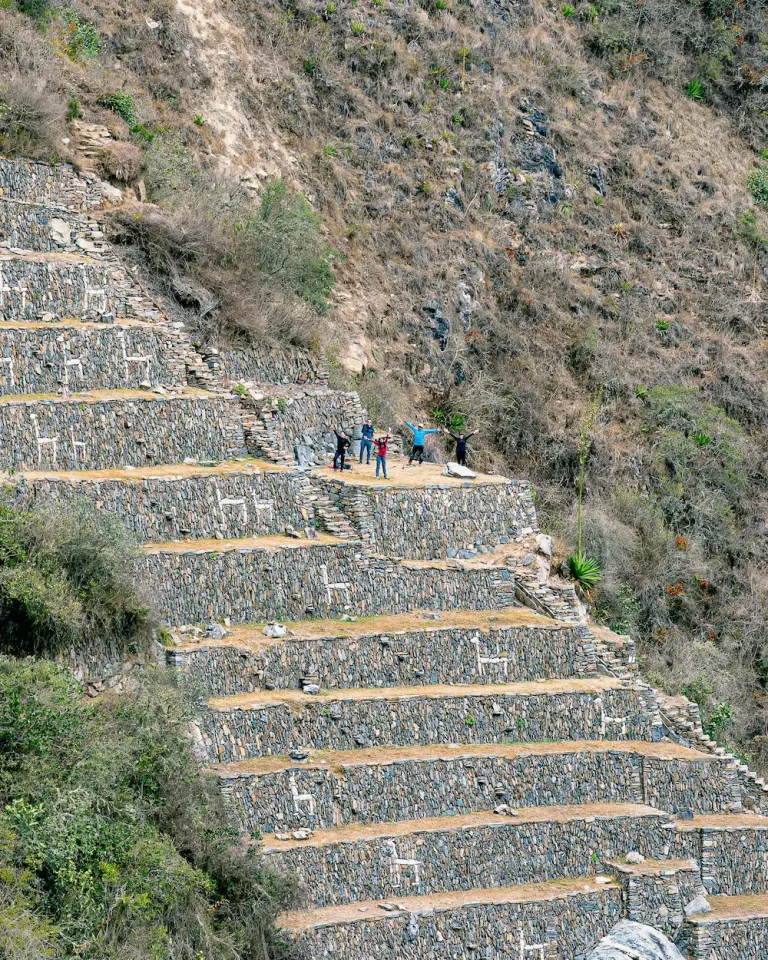
Highlights: from Km 82 the trail follows original Inca stone paths past Patallacta, Runkurakay, Sayacmarca, Phuyupatamarca, Intipata and Wiñay Wayna. Day 2 crosses Dead Woman’s Pass (4,215 m), about 10 km and 8–9 hours of walking. On day 4 you reach the Sun Gate (Inti Punku) at around 6:50 a.m., with Machu Picchu below you. Porters carry the camping gear, and an extra porter carries up to 7 kg (15 lb) of your things.
Trade-offs: only 500 people per day are allowed on the trail, including guides, porters and cooks, and dates from May to August sell out months ahead. Permits are issued for one date and one passport and cannot be changed, transferred or refunded. The trail closes every February. On day 4 everyone wakes up around 3:30 a.m. so the porters can catch the only early train, and the sunrise usually happens before you reach the Sun Gate. See the Classic Inca Trail 4 days itinerary.
Short Inca Trail 2 days: the Sun Gate without camping
Who it suits: travelers who want to arrive through the Sun Gate without tents or a 4,000 m pass, including families (we recommend it from 7 years old).
Highlights: a train from Ollantaytambo drops you at Km 104 (2,170 m). You walk about 11 km in 6–8 hours, past Chachabamba and Wiñay Wayna, the most impressive ruins on the trail, up to the Sun Gate (2,720 m) by mid-afternoon. You sleep in a hotel in Aguas Calientes and return on day 2 for a guided tour of about two hours, so you see Machu Picchu twice. Groups have up to 8 travelers.
Trade-offs: the Km 104 route has a quota of 250 people per day, staff included, so you still need a permit and should book early. There are no porters: you carry a light daypack. See the Short Inca Trail 2 days itinerary, and our Short Inca Trail vs Classic Inca Trail guide compares the two in detail.
 Short Inca Trail 2 days · permits and hotel included
Short Inca Trail to Machu Picchu: 2 Days / 1 Night
See itinerary & dates →
Short Inca Trail 2 days · permits and hotel included
Short Inca Trail to Machu Picchu: 2 Days / 1 Night
See itinerary & dates →
1-day Inca Trail: the fastest way to hike in
Who it suits: travelers with one free day. Highlights: the same 11 km route from Km 104, with Wiñay Wayna and the Sun Gate, and a guided tour of Machu Picchu the same day.
Trade-offs: it is a long day. The return train usually leaves Aguas Calientes at 6:20 p.m. (it varies by season) and you reach Cusco late at night. There is no time for Huayna Picchu. See the 1-day Inca Trail tour and our 1-day Inca Trail guide.
Salkantay Trek 5 days: glaciers, cloud forest and no permit
Who it suits: strong hikers who want high mountain scenery, travelers without an Inca Trail permit and anyone traveling in February. We recommend it from 12 years old.
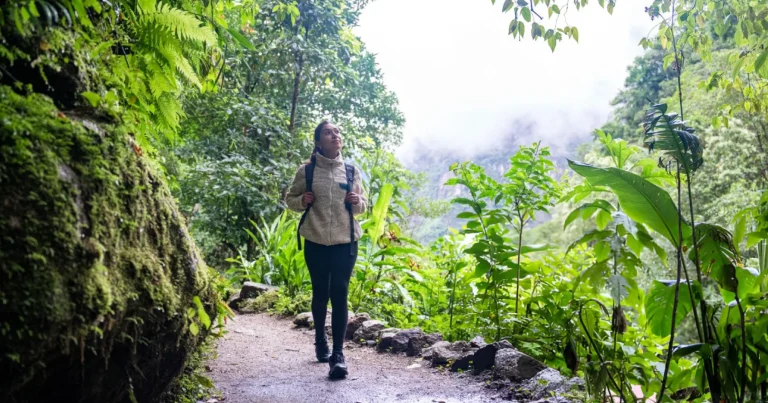
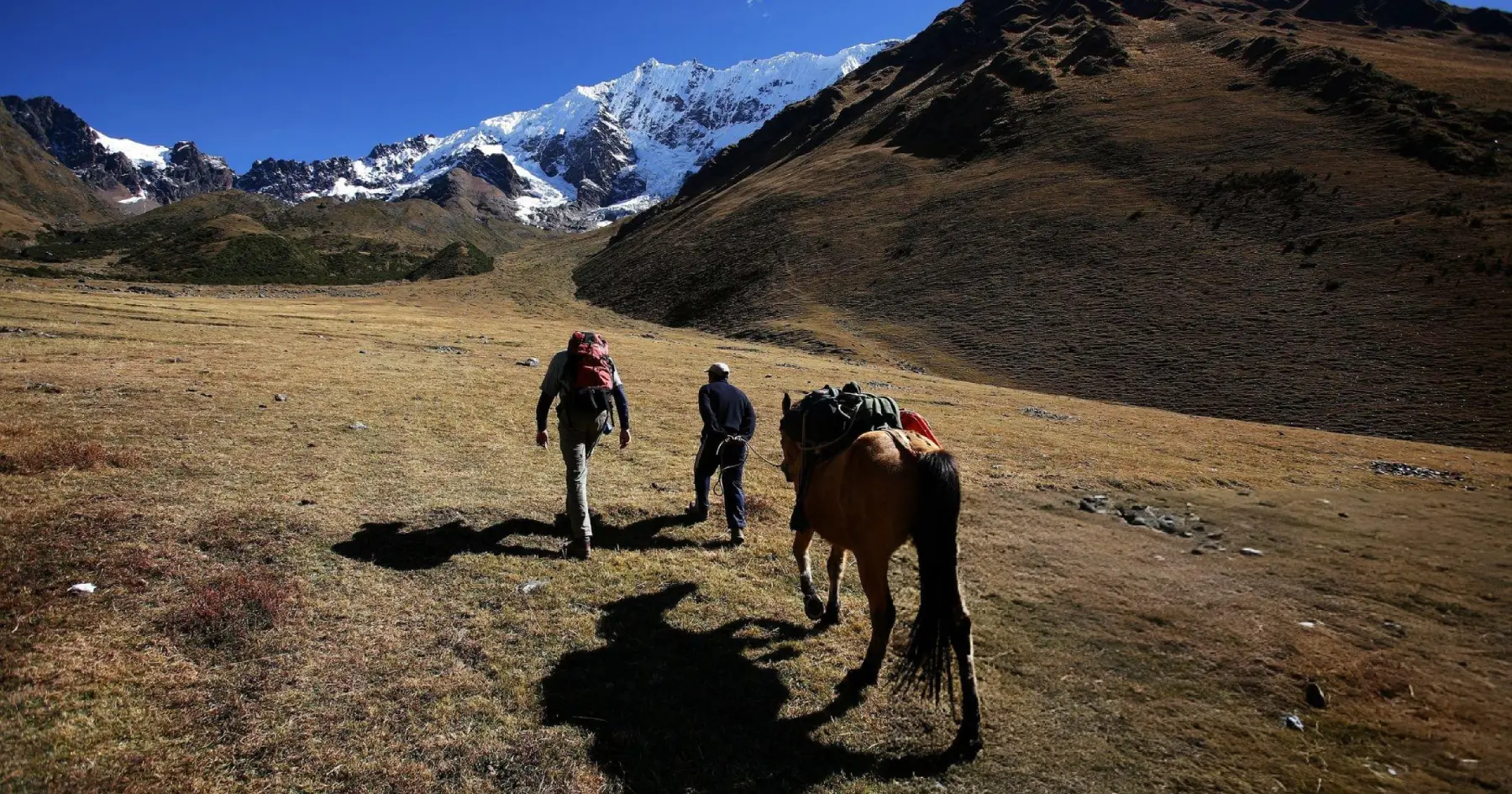
Highlights: on day 1 you hike to Humantay Lake (4,200 m), a turquoise glacial lake. On day 2 you climb to the Salkantay Pass (4,630 m / 15,190 ft), right below the glaciers of Nevado Salkantay (6,271 m). The route then drops into cloud forest and the coffee farms of Lucmabamba. On day 4 you pass Llactapata, an Inca site with a distant view of Machu Picchu on clear days. Mules carry the camping gear and up to 7 kg (15 lb) of your luggage.
Trade-offs: it is the longest trek here, about 67.5 km over four hiking days; day 2 alone is about 19 km and 8–9 hours. The first camp, Soraypampa (3,900 m), can be close to freezing from June to August. You do not enter through the Sun Gate: the last stretch follows the railway from Hidroeléctrica to Aguas Calientes, and you take the bus up on day 5 after a night in a hotel. See the Salkantay Trek 5 days itinerary.
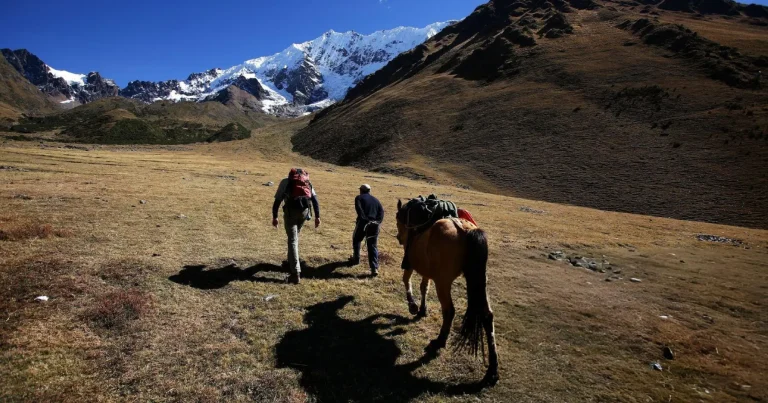 Salkantay Trek 5 days · no Inca Trail permit needed
Salkantay Trek 5 Days / 4 Nights to Machu Picchu
See itinerary & dates →
Salkantay Trek 5 days · no Inca Trail permit needed
Salkantay Trek 5 Days / 4 Nights to Machu Picchu
See itinerary & dates →
Inca Jungle Trek 4 days: bike, raft and hike
Who it suits: active travelers who want variety more than one long high-altitude hike. We recommend it from 10 years old.
Highlights: a 50–60 km bike descent from Abra Málaga, mostly downhill on a paved road with a support vehicle behind the group, then rafting on the Urubamba river near Santa María. Day 2 is about 12–15 km on a stretch of Inca path, ending at the Cocalmayo hot springs. Day 3 is an easy 10 km walk from Hidroeléctrica to Aguas Calientes. You sleep in simple hostels.
Trade-offs: the bike road is open to traffic, including buses and trucks. Rafting goes ahead only when the river is safe; when the water is too high, most often from January to March, we replace it with another activity such as the zipline. Some sections of the Inca path are narrow, with steep drops, and you carry your own small backpack. See the Inca Jungle Trek 4 days itinerary.
Lares Trek 4 days: villages, hot springs and a high pass
Who it suits: well-acclimatized hikers interested in Andean culture as much as in landscapes. Plan 2–3 days in Cusco first.
Highlights: the trek starts at the Lares hot springs and follows the “Potato Valley”, where families grow many native varieties, to the Kiswarani waterfall. On day 2 you climb to Condor Pass (4,680 m / 15,354 ft), with views of Mount Pitusiray, and descend to Cancha Cancha, a village without electricity. Day 3 adds the Maras salt mines and the train from Ollantaytambo. Porters or pack animals carry up to 7 kg (15 lb), and a support horse travels with the group.
Trade-offs: Condor Pass is the highest point in this guide and the trek is rated difficult. The two camps, at 3,850 m and 3,750 m, are cold, so bring or rent a sleeping bag rated to at least -10°C. You reach Aguas Calientes by train, not on foot. See the Lares Trek 4 days itinerary.
Salkantay vs Inca Trail: the key differences
- Permits: the Inca Trail needs a permit with a daily quota of 500 people. Salkantay needs none, so you can often book it at shorter notice. Both need a Machu Picchu ticket, which sells out in high season.
- Altitude: the Salkantay Pass (4,630 m) is 415 m higher than Dead Woman’s Pass (4,215 m).
- Distance: 67.5 km against 40 km.
- Scenery: glaciers, a glacial lake, cloud forest and coffee farms on Salkantay; one Inca site after another on the Inca Trail.
- Arrival: the Inca Trail ends on foot at the Sun Gate. Salkantay ends with a walk along the railway, a hotel night and the bus up.
- Price and season: from USD 585 for Salkantay and USD 780 for the Classic Inca Trail. The Inca Trail closes in February; Salkantay runs all year.
Our verdict: if the Sun Gate is why you came, choose the Inca Trail and book early. If you care more about high mountains, or the permits for your dates are gone, Salkantay is a great trek in its own right. Want the Sun Gate in less time? The Short Inca Trail is the middle ground.
Is the Salkantay trek worth it?
For most fit hikers, yes. In five days you walk from a glacier pass at 4,630 m to coffee farms at about 2,000 m. It costs less than the Classic Inca Trail, needs no trail permit, runs in February, and the hotel night in Aguas Calientes means you visit Machu Picchu rested.
It is not worth it if you are short of time or not used to long days: two of the four hiking days are about 20 km. It is also the wrong choice if walking through the Sun Gate is the point of your trip. And you need at least 2 days in Cusco to acclimatize before you start.
How to choose your trek to Machu Picchu
- Check permits first. If your Inca Trail dates are sold out, choose Salkantay, Inca Jungle or Lares. See our Inca Trail permits page.
- Count your days. One day: 1-day Inca Trail. Two: Short Inca Trail. Four: Classic Inca Trail, Inca Jungle or Lares. Five: Salkantay.
- Think about altitude. If it worries you, choose the Short or 1-day Inca Trail (highest point 2,720 m) or the Inca Jungle Trek.
- Choose where you sleep. Tents every night: Classic. Tents and one hotel: Salkantay or Lares. No tents: Short Inca Trail or Inca Jungle.
- Choose how you arrive. On foot through the Sun Gate: any Inca Trail. By train or along the railway: the other three.
Frequently asked questions
Which trek to Machu Picchu is the easiest?
The 1-day and Short Inca Trail: about 11 km, a highest point of 2,720 m and 6–8 hours of walking, rated moderate because of the stone steps. See our Short Inca Trail difficulty guide.
Which trek is the hardest?
Salkantay is the longest, with about 67.5 km and a pass at 4,630 m. Lares has the highest pass (4,680 m) over about 33 km. The Classic Inca Trail is shorter, but day 2 over Dead Woman’s Pass takes 8–9 hours.
Do I need a permit for the Salkantay, Inca Jungle or Lares trek?
No. Only the Inca Trail routes need an Inca Trail permit. On the other three you only need the Machu Picchu ticket, which is included and which we buy when you book.
How far ahead should I book the Inca Trail?
As early as possible, especially for May to August. For 2027 you reserve with 40% of the tour price; we buy your permit as soon as the Ministry of Culture opens sales for your month, and your date is guaranteed once the permit is issued.
Which treks can I do in February?
The Inca Trail, including the Short and 1-day routes, closes every February for maintenance, and in rainy years it can stay closed longer: in 2025 the closure was extended to 31 March after landslides. The Salkantay Trek runs all year, and the Inca Jungle Trek also operates in the rainy season.
Which trek is best if I am worried about the altitude?
The Short or 1-day Inca Trail, whose highest point (2,720 m) is lower than Cusco. On the Inca Jungle Trek you reach Abra Málaga (4,316 m) by vehicle and hike between about 1,200 m and 2,430 m.
Can children do these treks?
Yes, with age limits. We recommend the Short Inca Trail from 7 years old, the Classic from 8, the Inca Jungle Trek from 10 and Salkantay from 12. Read our Short Inca Trail with kids guide.
Do I have to carry my own luggage?
On the Classic Inca Trail an extra porter carries up to 7 kg (15 lb). On Salkantay the mules carry up to 7 kg, and on Lares porters or pack animals do. On the Short and 1-day Inca Trail and the Inca Jungle Trek you carry only a daypack.
Can I add Huayna Picchu?
On most of these tours, yes, for USD 80 per person, booked together with your tour because tickets are limited. On the 1-day Inca Trail there is no time for it.