
In this article
The Sacred Valley of the Incas is the valley of the Urubamba River between Pisac and Ollantaytambo, about an hour and a half by road from Cusco. Its floor is lower than Cusco — Urubamba is at 2,885 m and Ollantaytambo at 2,871 m — while Chinchero, Moray, the Maras salt pans and Huaypo Lake sit on the high plateau above it. Here are 12 places worth your time, which ones the Cusco Tourist Ticket covers and how to combine them. For Cusco itself and the other areas, see things to do in Cusco.
Sources: COSITUC (Cusco Tourist Ticket), PromPerú, Peru’s National Statistics Institute (INEI) and the state news agency Andina. Checked on 5 October 2026; map, itineraries and photos added on 18 November 2026.
Quick answer
- One classic day: Pisac, a stop in Urubamba, Ollantaytambo and Chinchero — our Sacred Valley Tour 1 Day (USD 70).
- The plateau in half a day: Chinchero, the Moray terraces and the Maras salt pans — our Chinchero, Moray and Maras tour (USD 45).
- Everything in one long day: Chinchero, Maras, Moray, Urubamba, Ollantaytambo and Pisac — the Sacred Valley + Maras & Moray tour (USD 75).
- With Machu Picchu: the valley on day 1 and Machu Picchu on day 2 — Machu Picchu & Sacred Valley 2 Days.
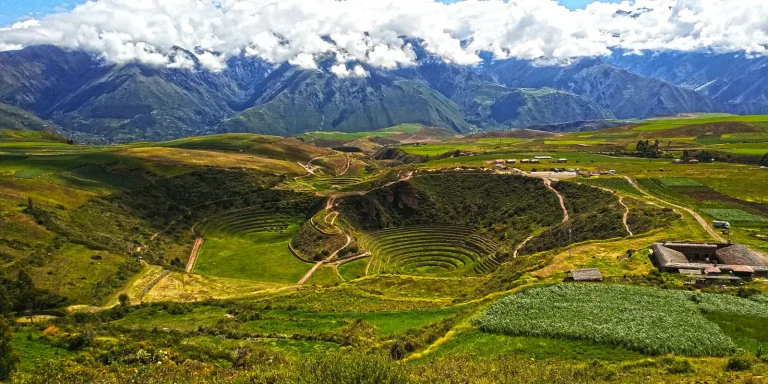 The Sacred Valley, Maras and Moray in one day
Sacred Valley Full-Day Tour with Maras and Moray from Cusco
See itinerary & dates →
Tickets: what the Tourist Ticket covers
| Ticket | Price | Valid | Sacred Valley sites |
|---|---|---|---|
| Partial Circuit III (Sacred Valley) — foreign visitors | S/ 70 | 2 days | Pisac, Ollantaytambo, Chinchero, Moray |
| Partial Circuit III — Peruvians and residents | S/ 40 | 2 days | Same four sites |
| Full ticket — foreign visitors | S/ 130 | 10 days | The four sites plus Cusco and the South Valley (16 in total) |
| Full ticket — foreign students (18–25, with a valid card or ISIC) | S/ 70 | 10 days | 16 sites |
Not included in the Tourist Ticket: the Maras salt pans (a separate community fee paid in cash at the entrance), Huchuy Qosqo, Pumamarca, Awana Kancha and Huaypo Lake. Buy the Tourist Ticket only at official points — COSITUC has warned about counterfeit tickets.
12 places to visit in the Sacred Valley
| Place | Altitude | Entry | Best for |
|---|---|---|---|
| Pisac archaeological park | Valley side, above the town | Tourist Ticket | Terraces and temples on a mountain spur |
| Pisac town and craft market | Valley floor | Free | Textiles and souvenirs |
| Huchuy Qosqo | Above Lamay | Separate | A hike to quiet Inca ruins |
| Urubamba | 2,885 m | Free | A base to sleep in the valley |
| Ollantaytambo archaeological site | 2,871 m (town) | Tourist Ticket | The Temple of the Sun and huge terraces |
| Ollantaytambo town | 2,871 m | Free | Inca streets; train station to Machu Picchu |
| Chinchero | 3,759 m | Tourist Ticket | Inca walls under a colonial church; weaving |
| Moray | 3,481 m | Tourist Ticket | Circular Inca terraces |
| Maras salt pans | 3,200–3,380 m | Community fee, S/ 20 (cash) | More than 3,000 salt pools |
| Huaypo Lake | 3,507 m | Free | A high-plateau lake, by ATV |
| Awana Kancha | Km 23 of the Cusco–Pisac road | Free | Llamas, alpacas and natural dyes |
| Pumamarca | Above Ollantaytambo | — | A walk to an Inca site without crowds |
1. Pisac archaeological park
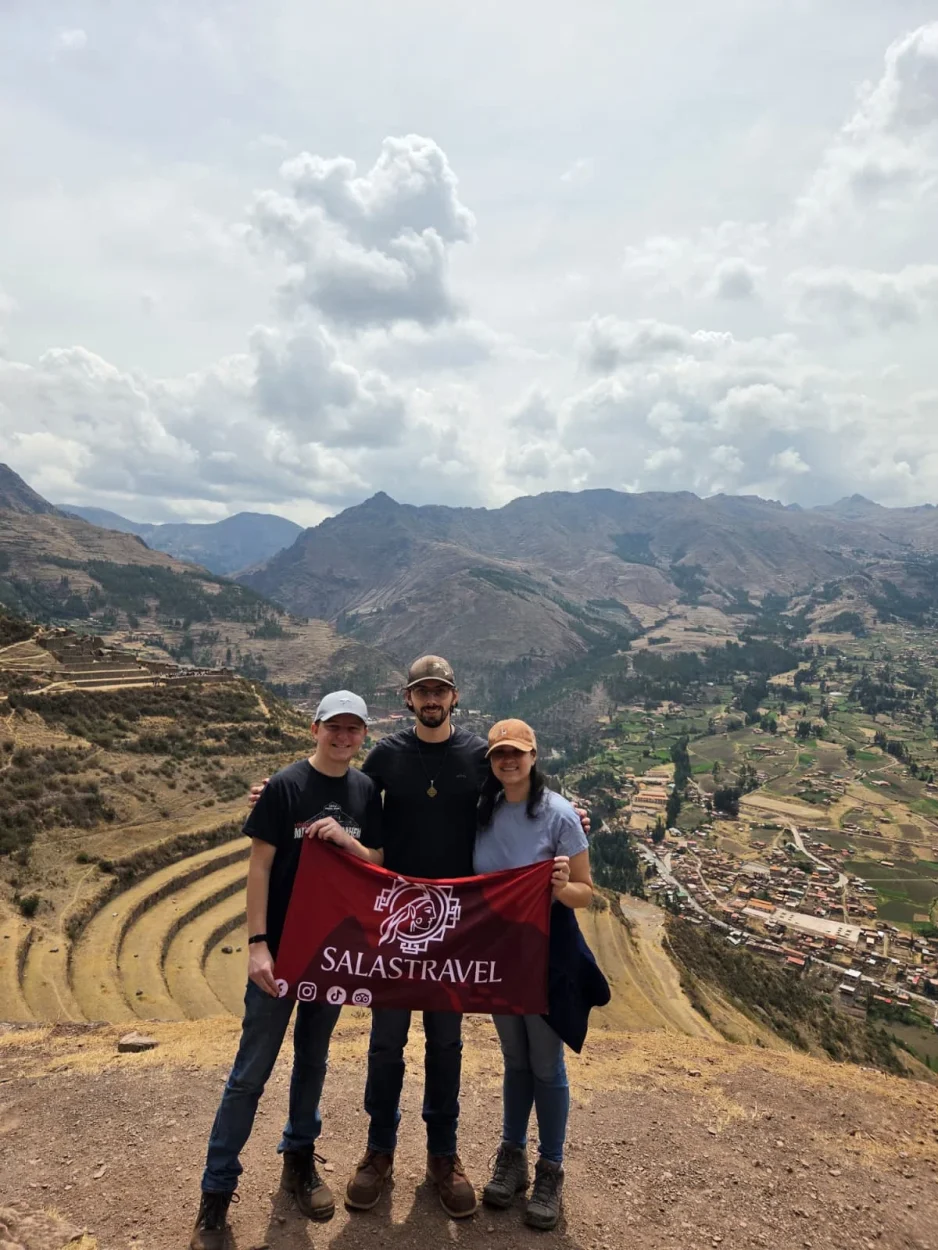
A park of 9,063 hectares with Inca terraces, temples and one of the largest cemeteries of the Inca empire; COSITUC distinguishes a religious, an urban and an agricultural sector. It is on the Tourist Ticket and usually the first stop when you arrive from Cusco. Sectors, paths open in 2026 and a map in our Pisac guide.
2. Pisac town and market
The town below the ruins is known for its craft market around the main square: textiles, ceramics and silver.
3. Huchuy Qosqo
“Little Cusco”, in the district of Lamay, is an Inca site reached only on foot, so it gets few visitors. It is not on the Tourist Ticket. Our Huchuy Qosqo Trek walks there from above Cusco in one day.
4. Urubamba
The provincial capital and the logistical center of the valley, with most of the hotels. Being lower than Cusco, it is a good place to sleep on your first nights — see our altitude guide.
5. Ollantaytambo archaeological site
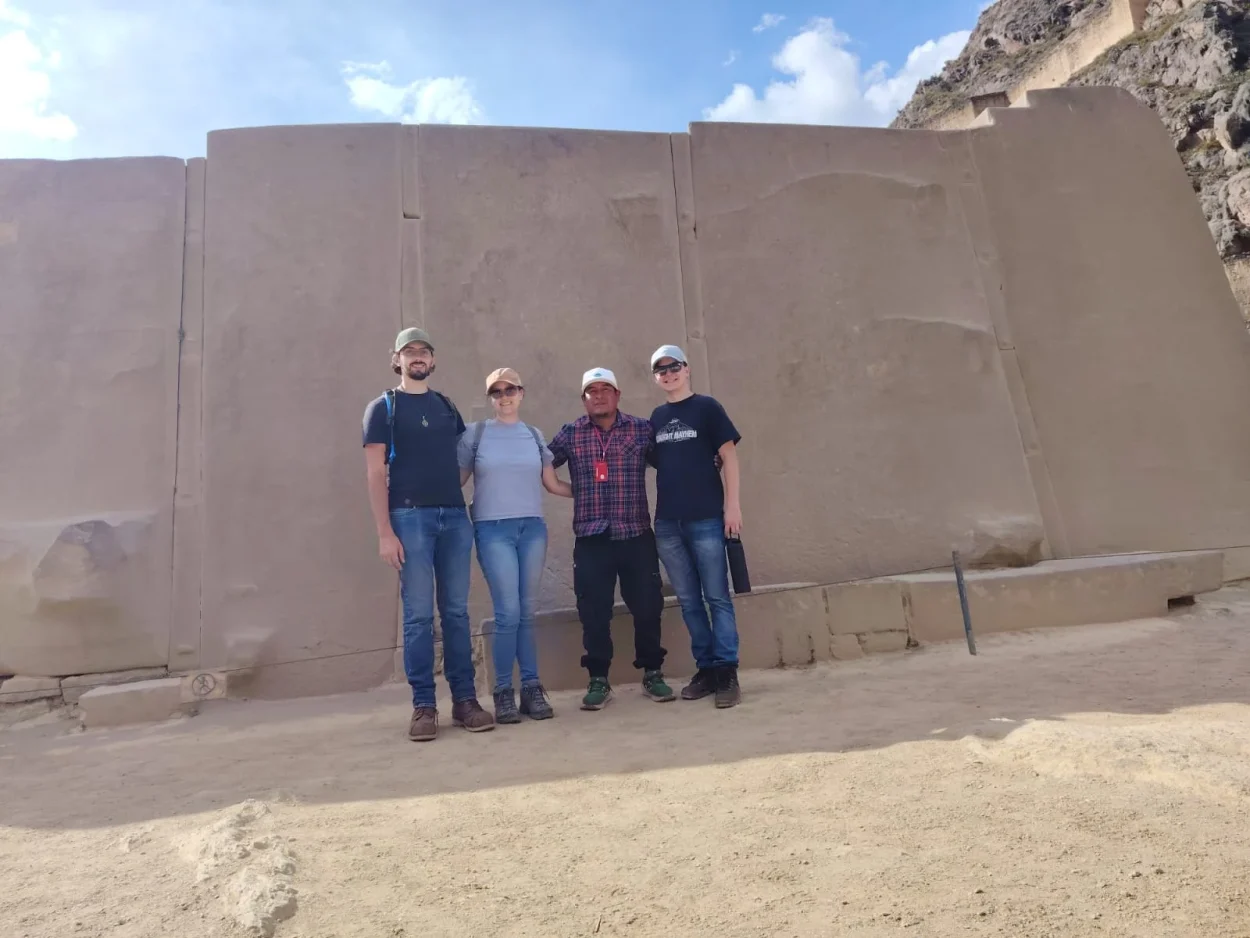
Part of a park of 34,800 hectares with 204 archaeological sites. Its Temple of the Sun has six polished monoliths 3.3 to 4.2 m high, and the terraces were the stage of Manco Inca’s resistance against Hernando Pizarro in 1537. It receives more than 2,000 visitors a day, so go early or late.
6. Ollantaytambo town
Ollantaytambo keeps its Inca street layout, and its station is where most trains to Machu Picchu leave from. Read How to get from Cusco to Machu Picchu.
7. Chinchero
On the plateau at 3,759 m, Chinchero has Inca terraces and walls with a colonial church built on top of them, and a strong weaving tradition; more in our Chinchero guide. Our ATV tour crosses the Chinchero countryside to Piuray Lake and the Abode of the Gods (Apukunaq Tianan), six stone sculptures 15–17 m tall in Sencca; the sculptures alone are a half-day tour from Cusco.
8. Moray
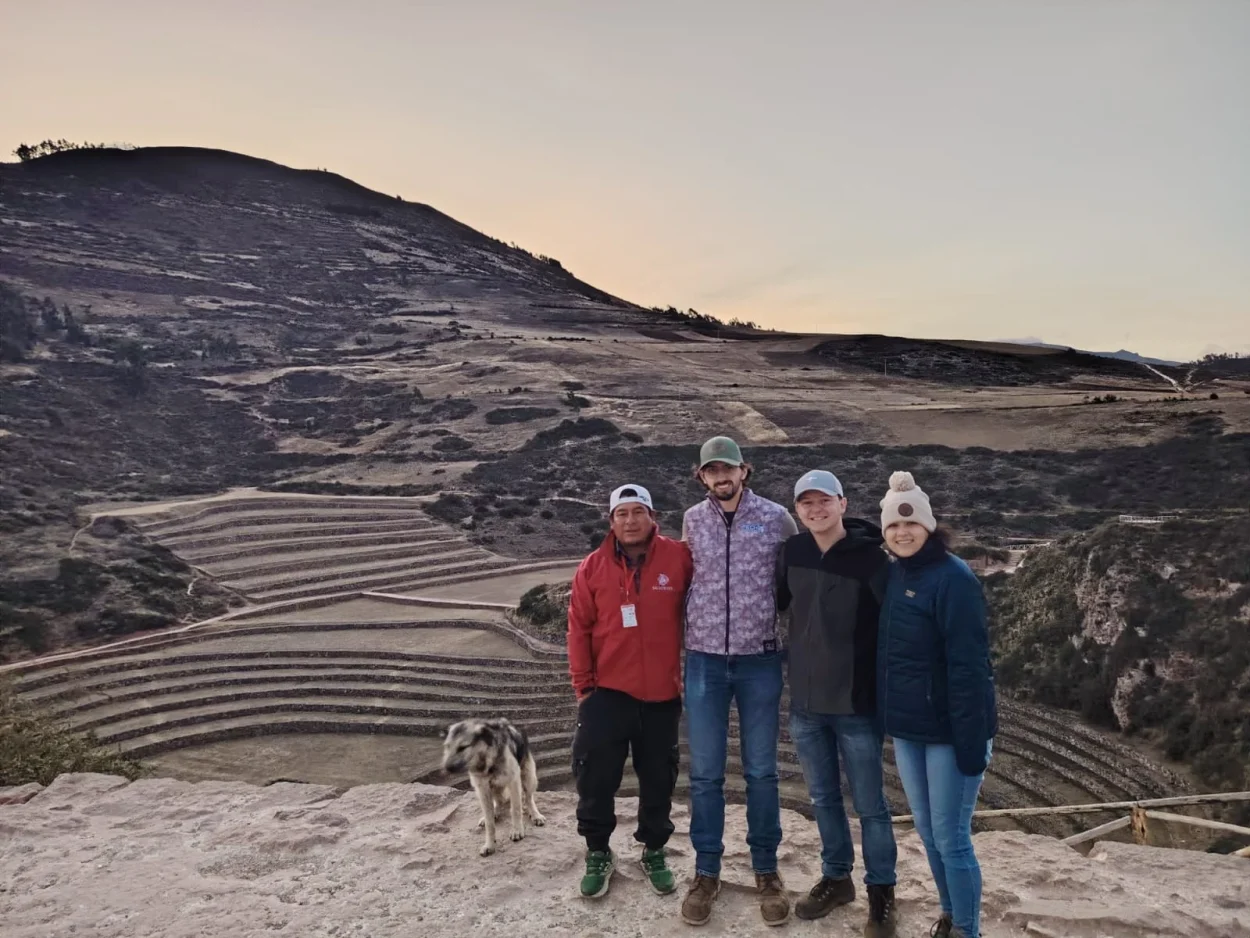
Concentric circular terraces sunk into the ground, thought to have been used for agricultural experiments. PromPerú places Maras-Moray at 3,481 m.
9. Maras salt pans
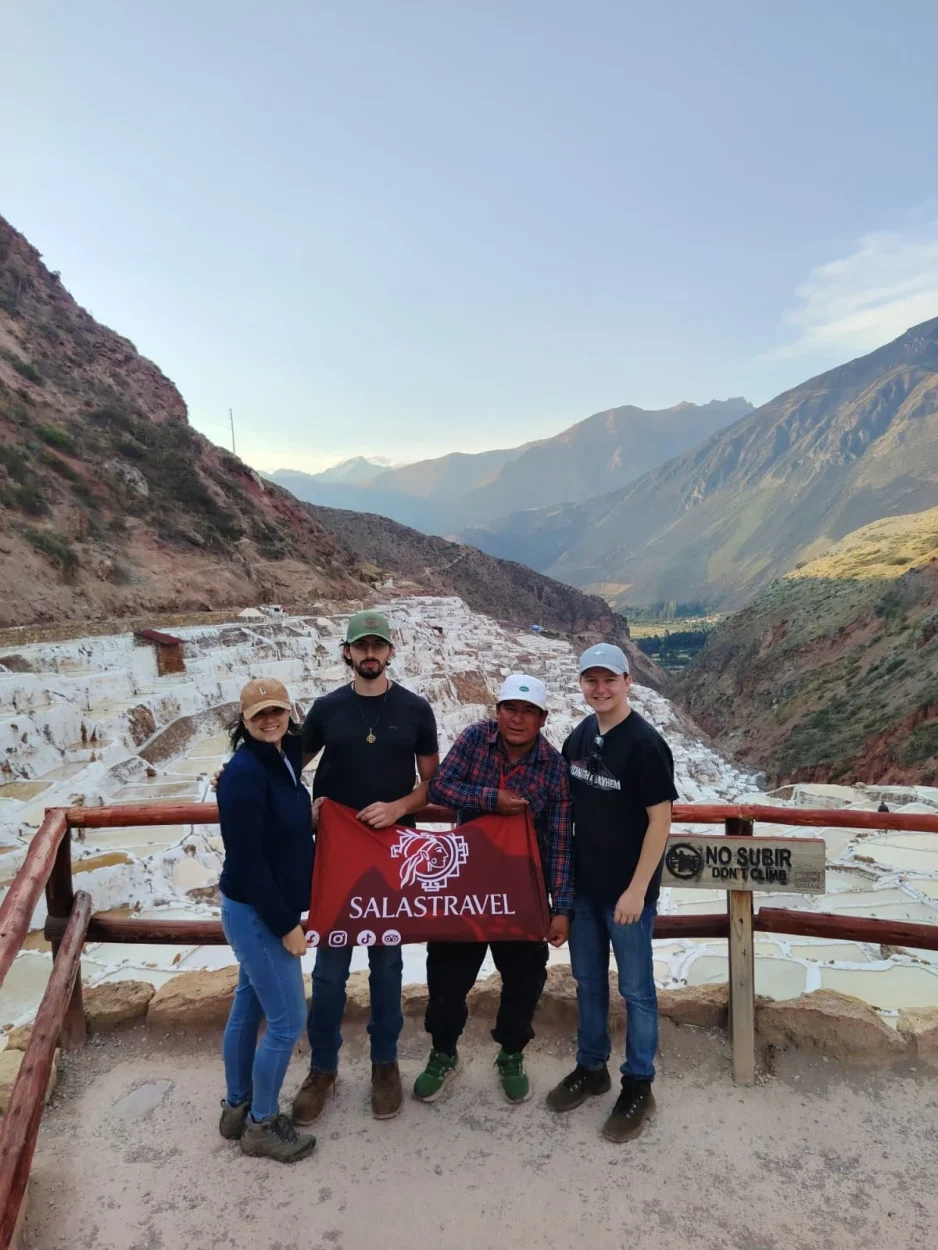
More than 3,000 salt pools on a hillside at about 3,200 to 3,380 m (Ministry of Culture, Andina), still worked by local families. Since 2019 visitors can no longer walk between the pools; the visit ends at a viewpoint. The entrance is a separate community fee: on our tours we pay S/ 20 for foreign visitors and S/ 15 for Peruvians, in cash. Tickets, altitude and the best season in our guide to Moray and the Maras salt mines.
10. Huaypo Lake
A lake at 3,507 m on the plateau near Chinchero, about 50 km and an hour from Cusco. Our Huaypo Lake and Maras ATV tour combines it with the salt pans.
11. Awana Kancha
A textile center at km 23 of the Cusco–Pisac road where you can see the four Andean camelids — llama, alpaca, vicuña and guanaco — and natural dyeing.
12. Pumamarca
An Inca site above Ollantaytambo, reached on foot. A good half-day walk if you sleep in Ollantaytambo.
Optional detour: Tipón, with Inca channels and fountains that still work, is south-east of Cusco in the South Valley and is covered by Circuit II of the Tourist Ticket, not Circuit III. More in our South Valley guide.
How to get from Cusco to the Sacred Valley
Two roads run down from Cusco to the valley: one via Pisac, which reaches the Urubamba River and continues through Calca to Urubamba, and one via Chinchero, across the plateau, to Urubamba. Our full-day tour goes out via Pisac and comes back via Chinchero.
| From Cusco to | Road distance | Source |
|---|---|---|
| Pisac | About 33 km | COSITUC, PromPerú |
| Chinchero | About 30 km | DDC Cusco |
| Ollantaytambo | About 60 to 75 km, 1 h 30 to 2 h by tourist bus, usually via Urubamba | MINCETUR |
- On a tour: the simplest way, because in one day you cover sites that are far apart, with transport and a guide.
- By public transport: minivans and buses to Pisac leave from Calle Puputi in Cusco, according to PromPerú; there are also shared vans to Urubamba and Ollantaytambo, with no official fares or timetables.
- Going on to Machu Picchu: the train leaves from Ollantaytambo; see times and prices in our train to Machu Picchu guide.
How many days? Sample Sacred Valley itineraries
The valley is long: Ollantaytambo is about 60 to 75 km by road from Cusco, and the plateau sites (Chinchero, Moray and Maras) are on a different road from Pisac. These are the combinations that work best, from the shortest to the longest.
One day: the classic Sacred Valley day trip from Cusco
Out via Pisac and back via Chinchero: the Pisac ruins and market in the morning, lunch in Urubamba, Ollantaytambo in the afternoon and a short stop in Chinchero on the way back. Our Sacred Valley Tour 1 Day picks you up around 8:00 a.m. and is back in Cusco in the late afternoon. With an earlier start, around 6:30 a.m., the Sacred Valley + Maras & Moray tour also fits in the Maras salt pans and Moray.
Two days: sleep in the valley
Day 1: the plateau (Chinchero, Moray and the Maras salt pans), then down to Urubamba or Ollantaytambo for the night. Day 2: Ollantaytambo early, before the crowds, and the walk up to Pumamarca if you have time, then Pisac on the way back to Cusco. Sleeping on the valley floor, 450 to 570 m lower than Cusco, also helps on your first nights at altitude.
Two days with Machu Picchu
Day 1: Chinchero, Moray and Maras, lunch in Urubamba and Ollantaytambo, then the train to Aguas Calientes. Day 2: Machu Picchu and back to Cusco by train and road, arriving around 7:00 p.m. This is our Machu Picchu & Sacred Valley 2 Days tour.
Where to stay
Urubamba is the middle of the valley and has most of the hotels. Ollantaytambo is the best base for an early train to Machu Picchu, because the station is in town. Pisac is the closest to Cusco, about 33 km away.
Weather and when to go
PromPerú gives the Sacred Valley a range of about 1 °C to 20 °C. The driest months are roughly May to August; SENAMHI places the rainy period in the Cusco region from October to March, so expect afternoon rain in those months. Mornings on the plateau (Chinchero, Moray, Maras) are colder than on the valley floor.
Tips
- Bring soles in cash for Maras and the markets.
- Use sun protection and carry a warm layer: the sun is strong and the temperature drops fast.
- Buy the Tourist Ticket only at official points.
- If you arrive in Cusco by plane, consider sleeping your first night in the valley, which is lower.
Frequently asked questions
How far is the Sacred Valley from Cusco?
About an hour and a half by road to the main towns, according to PromPerú. Pisac is the closest; Ollantaytambo is at the far end.
How high is the Sacred Valley?
The valley floor is 450 to 570 m lower than Cusco (3,439 m): Pisac is at 2,986 m, Urubamba at 2,885 m and Ollantaytambo at 2,871 m, according to INEI. Chinchero (3,759 m), Moray and Maras are on the higher plateau.
Which Tourist Ticket do I need for the Sacred Valley?
The partial Circuit III ticket (S/ 70 for foreign visitors, valid 2 days) covers Pisac, Ollantaytambo, Chinchero and Moray. See all 16 sites in our Cusco Tourist Ticket guide. The full ticket (S/ 130, 10 days) also covers Cusco and the South Valley.
Is the Maras salt pans entrance included in the Tourist Ticket?
No. It is a separate community fee paid in cash at the entrance: on our tours we pay S/ 20 for foreign visitors and S/ 15 for Peruvians.
Can I see the Sacred Valley in one day?
Yes. A full-day tour covers Pisac, Urubamba, Ollantaytambo and Chinchero, or you can add Maras and Moray in a longer day.
How many days do you need in the Sacred Valley?
One full day covers the main sites: Pisac, Ollantaytambo and Chinchero, or also Maras and Moray with an early start. With two days you can sleep in the valley and see the sites at a slower pace, or continue to Machu Picchu on day 2. See the sample itineraries above.
Where should I stay in the Sacred Valley?
Urubamba has most of the hotels and is in the middle of the valley. Ollantaytambo is the best base if you take an early train to Machu Picchu, because the station is in town. Pisac is the closest to Cusco.
Can I combine the Sacred Valley with Machu Picchu?
Yes. Visit the valley on day 1, take the train from Ollantaytambo to Aguas Calientes and see Machu Picchu on day 2.
Can I still walk among the Maras salt pools?
No. Since 2019 the visit ends at a viewpoint over the pools.
Is the Sacred Valley the same as Machu Picchu?
No. The Sacred Valley is the valley of the Urubamba River between Pisac and Ollantaytambo, about an hour and a half from Cusco. Machu Picchu lies further down the same river: you get there by train from Ollantaytambo to Aguas Calientes and then by bus. Many travelers visit the valley on day 1 and Machu Picchu on day 2.