In this article
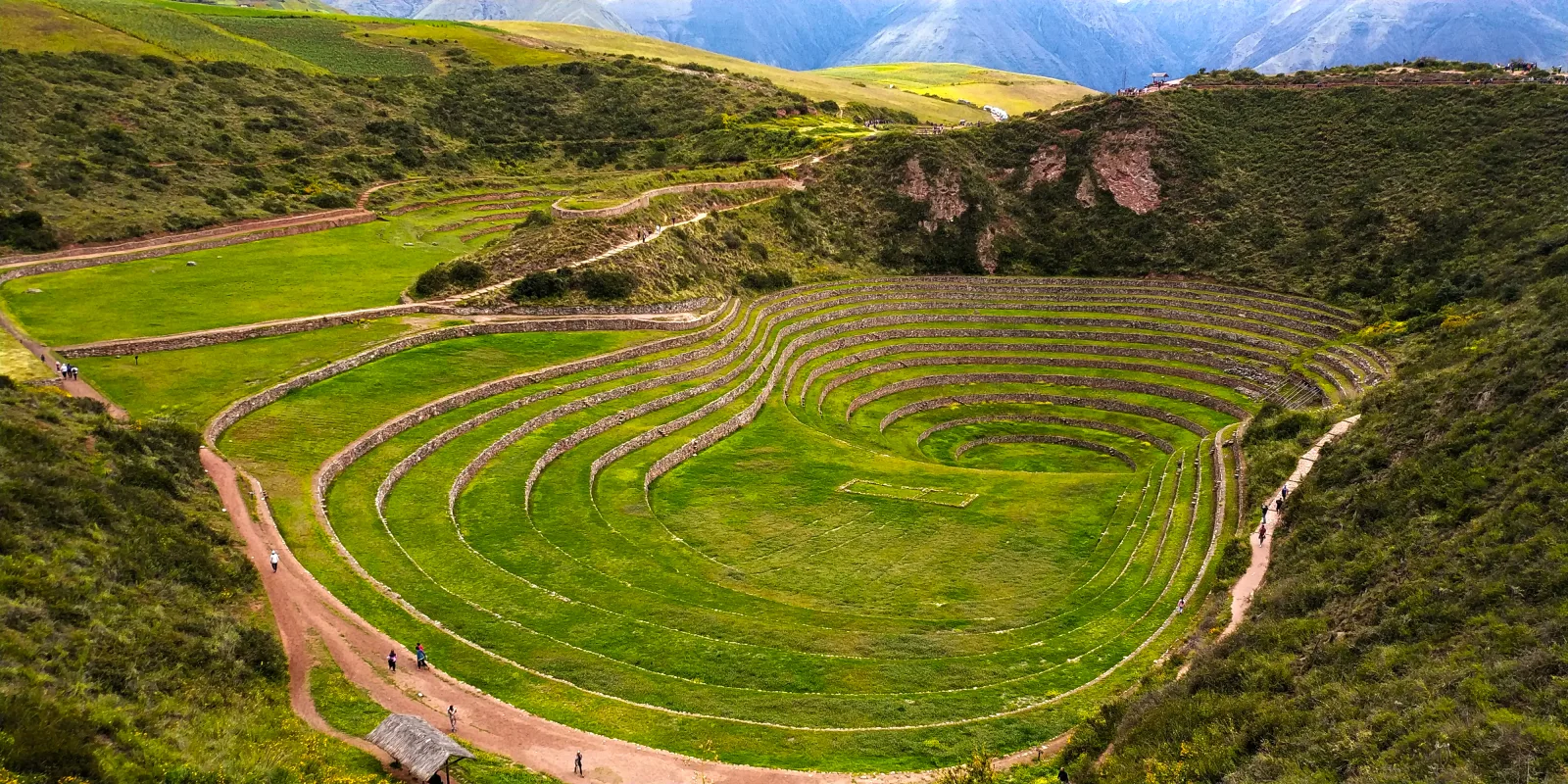
Moray and the Maras salt pans are close to each other on the high plateau between Cusco and the Sacred Valley, and most people see them together in half a day. Moray is a set of circular Inca terraces sunk into the ground; the salt pans are thousands of small pools on a hillside, still worked by two local communities. This guide covers tickets, hours, altitude, the best time to go and how to get there. Prices and hours checked on 4 November 2026.
Quick answer
- Moray is included in the Cusco Tourist Ticket: the partial Circuit III ticket costs S/ 70 for foreign visitors (2 days, also Pisac, Ollantaytambo and Chinchero) and the full ticket S/ 130 (10 days). Open 07:00–17:00.
- The Maras salt pans are not in the Tourist Ticket. The community fee we pay on our tours is S/ 20 for foreign visitors and S/ 15 for Peruvians, in cash at the entrance.
- Since 2019 you cannot walk among the salt pools: the visit is from the authorized viewpoint.
- Altitude: Moray is at about 3,481 m (PromPerú), a little higher than Cusco (3,439 m). The salt pans are lower: about 3,200 m according to the Ministry of Culture.
- How: our half-day tour with Chinchero costs USD 45; there are also ATV tours and a full day that adds the Sacred Valley.
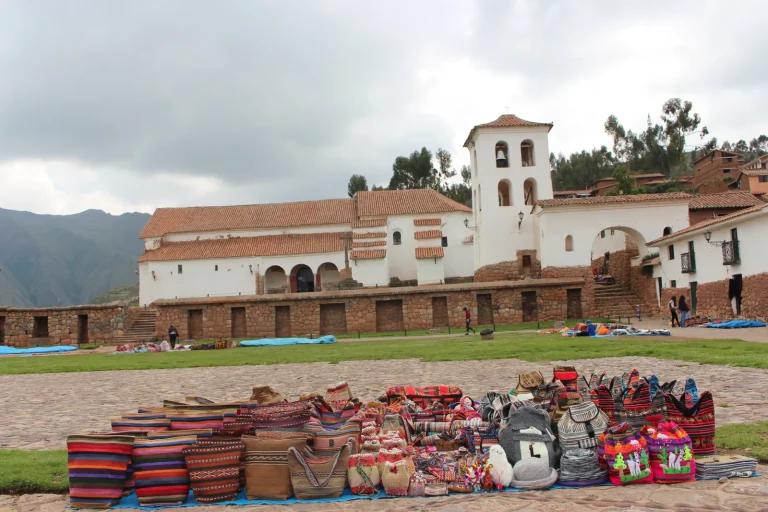 Chinchero, Moray and the salt pans in half a day
Chinchero, Moray and Maras Salt Mines Half-Day Tour from Cusco
See itinerary & dates →
Where they are
Both sites are in the district of Maras, Urubamba province, on the plateau that rises above the Urubamba River on the way from Cusco to the Sacred Valley. The Ministry of Culture places the salt pans about 50 km from Cusco, in a narrow gorge only about 1.5 km from the valley floor. Moray is on the open farmland above, near the town of Maras. That is why the usual route goes Cusco → Chinchero → Moray → salt pans, and why the salt pans are the natural last stop before going down to Urubamba.
Moray: the circular Inca terraces
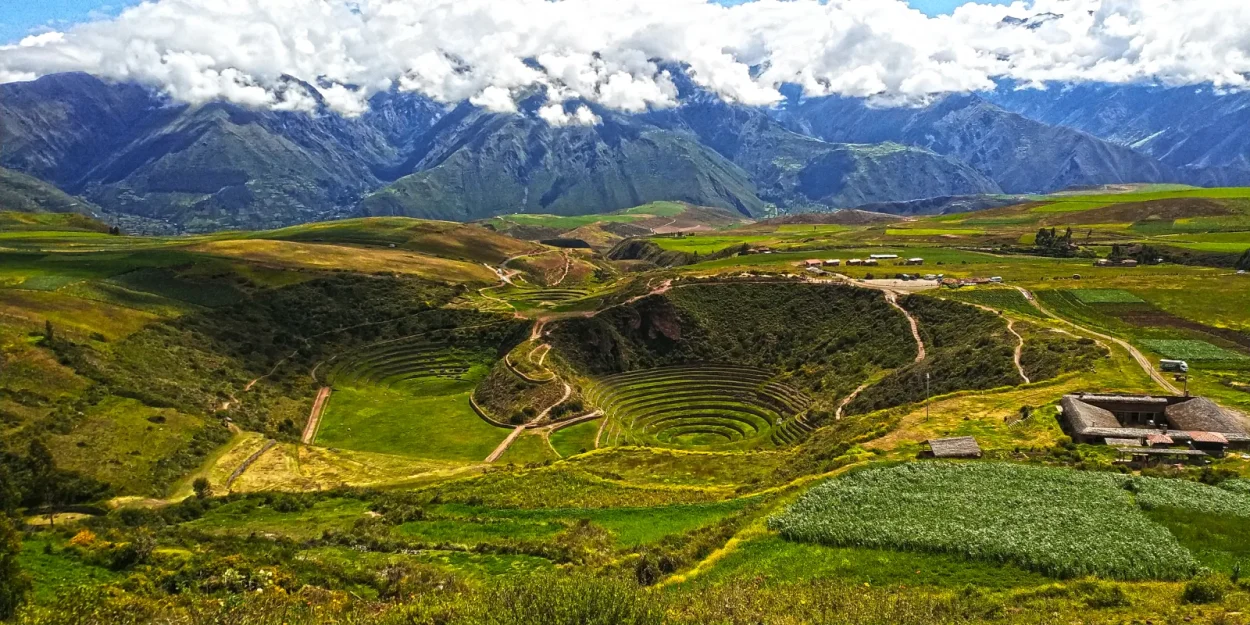
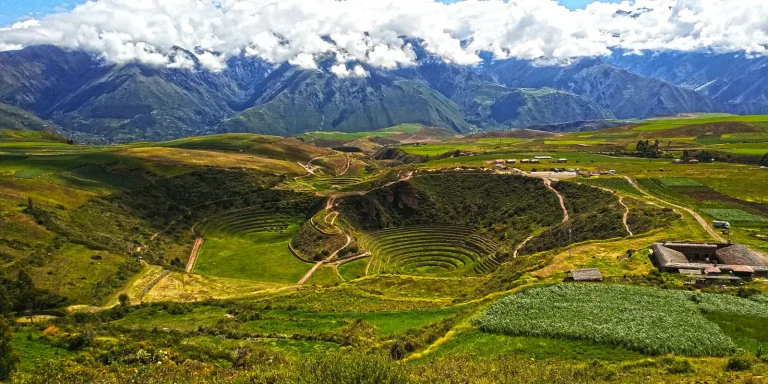
Moray is a group of terraced circular depressions, known as muyus. According to PromPerú, the site appears to have been an Inca centre for agricultural experimentation. An engineering study published by the American Society of Civil Engineers (Wright and others, 2011) surveyed the site and its water collection and delivery systems; it describes the largest depression as about 30 m (98 ft) deep. The idea of an agricultural laboratory is the most common explanation, but it is an interpretation: there is no Inca record of what Moray was for.
- Ticket: Cusco Tourist Ticket, full or partial Circuit III. In October 2026 single-site tickets were not yet on sale; see our Tourist Ticket guide for updates.
- Hours: 07:00–17:00 (COSITUC, the body that manages the Tourist Ticket).
- The visit: you walk around the rim of the main depression and look down into it.
The Maras salt pans
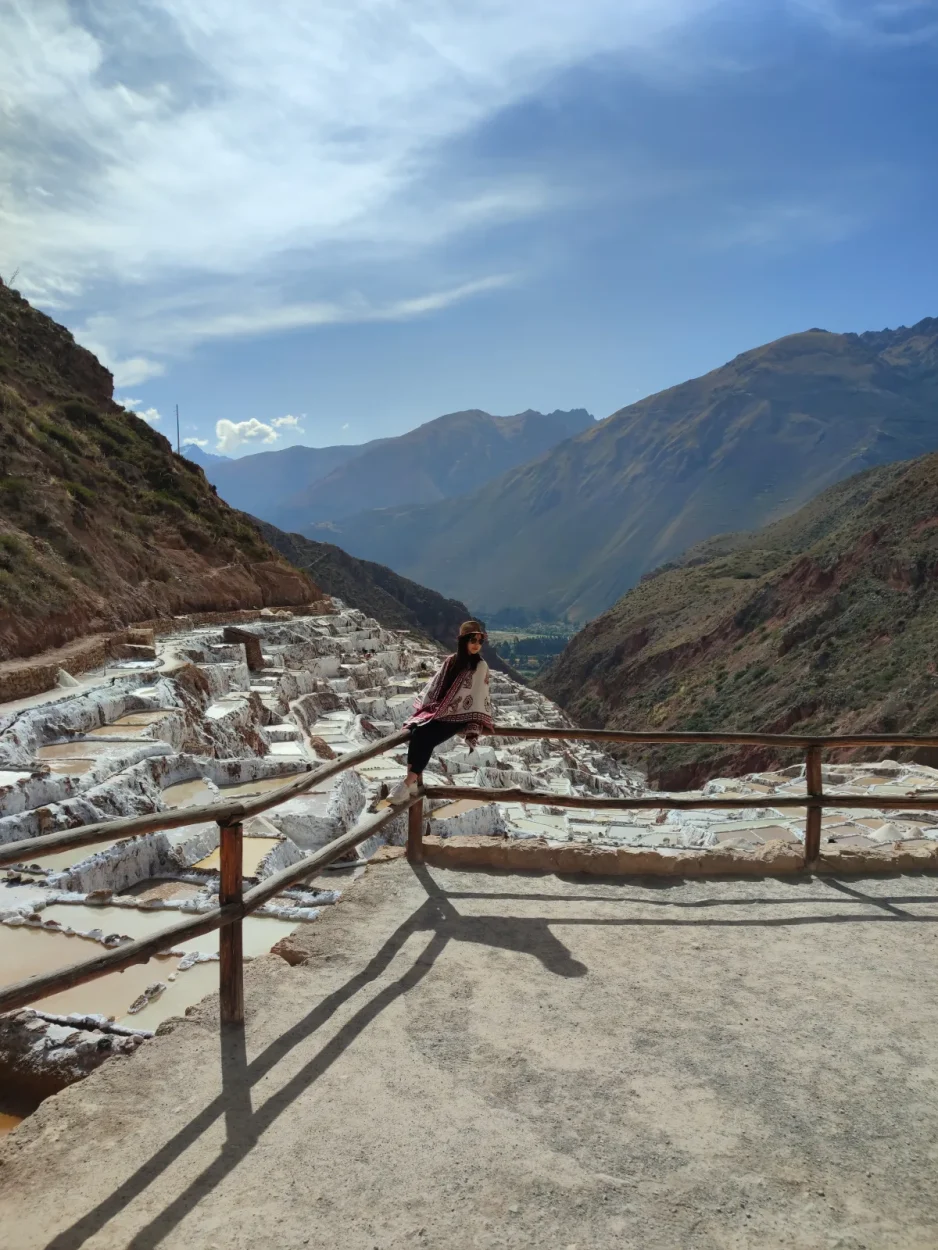
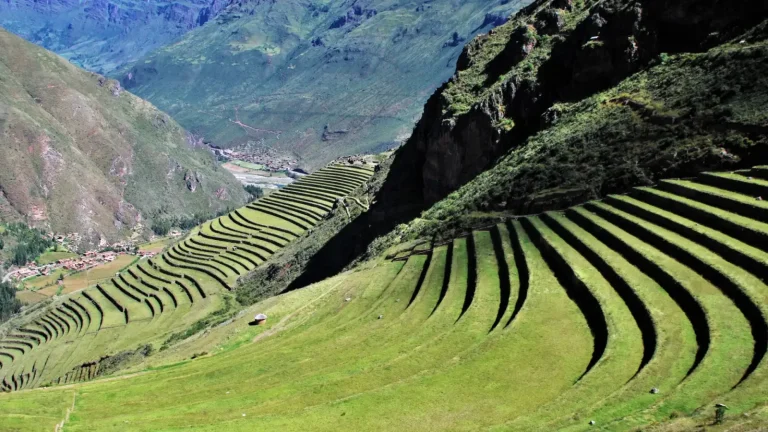
The salt pans are about 4,500 small pools, each of roughly 5 m², stepped down the slope of the Qaqawiñay hill and fed by a salty spring through a main channel and many small ones. This description comes from the file the Ministry of Culture submitted to UNESCO’s Tentative List in 2019. The same file explains how they work:
- Each pool is filled with about 5 cm of salt water, which evaporates in about 3 days. The process is repeated for a month, until a layer of salt 7 to 10 cm thick has formed.
- Production is best in the dry season, May to October, when the salt is white or pinkish. From November to April it is harder and the salt comes out in shades of brown.
- The pools belong to families of the Maras and Pichingoto communities and are inherited from parents to children. The communal company Marasal sorts and sells the salt.
- The file dates the use of the site back to the Early Horizon period (1000–200 BC), well before the Incas.
The visit: since 2019 visitors may no longer walk among the pools, so you see them from the authorized viewpoint above. Bring soles in cash for the entrance (S/ 20 for foreign visitors and S/ 15 for Peruvians, the fee we pay on our tours).
Altitude: official sources do not agree. The Ministry of Culture’s UNESCO file gives about 3,200 m; the state news agency Andina gives about 3,380 m. The pools run down a hillside, so the figure depends on where it is measured. Either way, you are lower than Cusco.
Tickets and hours
| Site | Ticket | Price for foreign visitors | Hours |
|---|---|---|---|
| Moray | Cusco Tourist Ticket (partial Circuit III or full) | S/ 70 (Circuit III, 2 days) · S/ 130 (full, 10 days) | 07:00–17:00 |
| Maras salt pans | Community fee at the entrance, cash only | S/ 20 (Peruvians: S/ 15) | During the day; visits are from the viewpoint |
| Chinchero (usual first stop) | Cusco Tourist Ticket, same as Moray | Included in the same ticket | See our Tourist Ticket guide |
Buy the Tourist Ticket at the entrance or at the COSITUC office in Cusco, never from street sellers. Our tours do not include entrance fees, so you pay them on the day.
How to get there from Cusco
- Half-day tour (the most common): Chinchero, Moray and the salt pans by tourist transport with a guide, back in Cusco the same day.
- ATV: you ride a quad bike through the Maras countryside to Moray and continue to the salt pans, or combine the salt pans with Huaypo Lake.
- Full day: Maras and Moray with the Sacred Valley (Chinchero, Urubamba, Ollantaytambo and Pisac). Pickup is around 6:30 a.m.
- On your own: neither site has a scheduled bus. The simplest option is a taxi from Cusco or Urubamba; agree on the price and the waiting time before you leave. Hikers can also reach the salt pans on foot from the valley floor, crossing the Urubamba River at Pichingoto, one of the access routes listed by the Ministry of Culture.
Best time to visit
The dry season, roughly May to August, gives the clearest skies and the best light on the pools; SENAMHI places the rainy period in the Cusco region from October to March, with afternoon rain. In the salt pans, May to October is also the season of highest production and whitest salt. Mornings on the plateau are cold, so bring a warm layer and sun protection.
Is the altitude a problem?
Not usually, if you have already spent a day or two in Cusco. Moray (about 3,481 m) is a little higher than Cusco, Chinchero (3,759 m) is the highest point of the half-day loop and the salt pans are lower. The walks are short. If you have just arrived, read our guide to altitude sickness in Cusco; some travellers start their trip in the Sacred Valley, which is about 500 m lower than Cusco.
Tours to Moray and Maras
| Tour | What you see | How | Price per person |
|---|---|---|---|
| Chinchero, Moray and Maras | Chinchero, Moray, salt pans | Tourist transport, half day | USD 45 |
| Moray and Maras by ATV | Maras countryside, Moray, salt pans | Quad bike + transport | USD 70 |
| Huaypo Lake and Maras by ATV | Huaypo Lake, salt pans (not Moray) | Quad bike + transport | USD 75 |
| Sacred Valley with Maras and Moray | Chinchero, Maras, Moray, Urubamba, Ollantaytambo, Pisac | Tourist transport, full day, lunch | USD 75 |
Entrance fees are paid separately on all four tours.
 Moray and the salt pans by quad bike
Moray and Maras Salt Mines ATV Tour from Cusco
See itinerary & dates →
 The Sacred Valley, Maras and Moray in one day
Sacred Valley Full-Day Tour with Maras and Moray from Cusco
See itinerary & dates →
Frequently asked questions
Is Moray included in the Cusco Tourist Ticket?
Yes. Moray is in Circuit III of the Cusco Tourist Ticket (S/ 70 for foreign visitors, 2 days), together with Pisac, Ollantaytambo and Chinchero. The full ticket (S/ 130, 10 days) also covers it.
How much is the entrance to the Maras salt pans?
The fee we pay on our tours is S/ 20 for foreign visitors and S/ 15 for Peruvians. It is a community fee, paid in cash at the entrance, and it is not part of the Tourist Ticket.
Can you walk among the salt pools?
No. Since 2019 visitors may no longer walk among the pools; the visit is from the authorized viewpoint above them.
What is the altitude of Moray?
About 3,481 m (11,421 ft) according to PromPerú, slightly higher than Cusco. The Maras salt pans are lower, at about 3,200 m according to the Ministry of Culture (Andina gives about 3,380 m).
What was Moray used for?
The most common explanation, which PromPerú uses, is that it was an Inca centre for agricultural experimentation. It remains an interpretation: there is no Inca record of its purpose.
When is the best time to see the salt pans?
From May to October, the dry season: the Ministry of Culture’s file notes that production is highest and the salt whitest in those months. From November to April the pools look browner and afternoon rain is common.
Can I visit Moray and Maras in half a day?
Yes. Our half-day tour covers Chinchero, Moray and the salt pans and returns to Cusco the same day. If you have a full day, you can add the Sacred Valley.
Sources
- Maras salt pans: Ministry of Culture of Peru, Salt Mines of Maras, UNESCO Tentative List (5 August 2019) (location, altitude, number of pools, production, Marasal, history). Altitude of about 3,380 m: Andina. Viewpoint-only visits and the entrance fee: our guides, November 2026.
- Moray: PromPerú (altitude and interpretation); Kenneth R. Wright and others, Moray: Inca Engineering Mystery, ASCE Press, 2011.
- Tourist Ticket prices and hours: COSITUC; see our Cusco Tourist Ticket guide.
- Altitudes of Cusco, Chinchero and Urubamba: INEI, Compendio Estadístico Cusco 2025. Rainy season: SENAMHI.