In this article
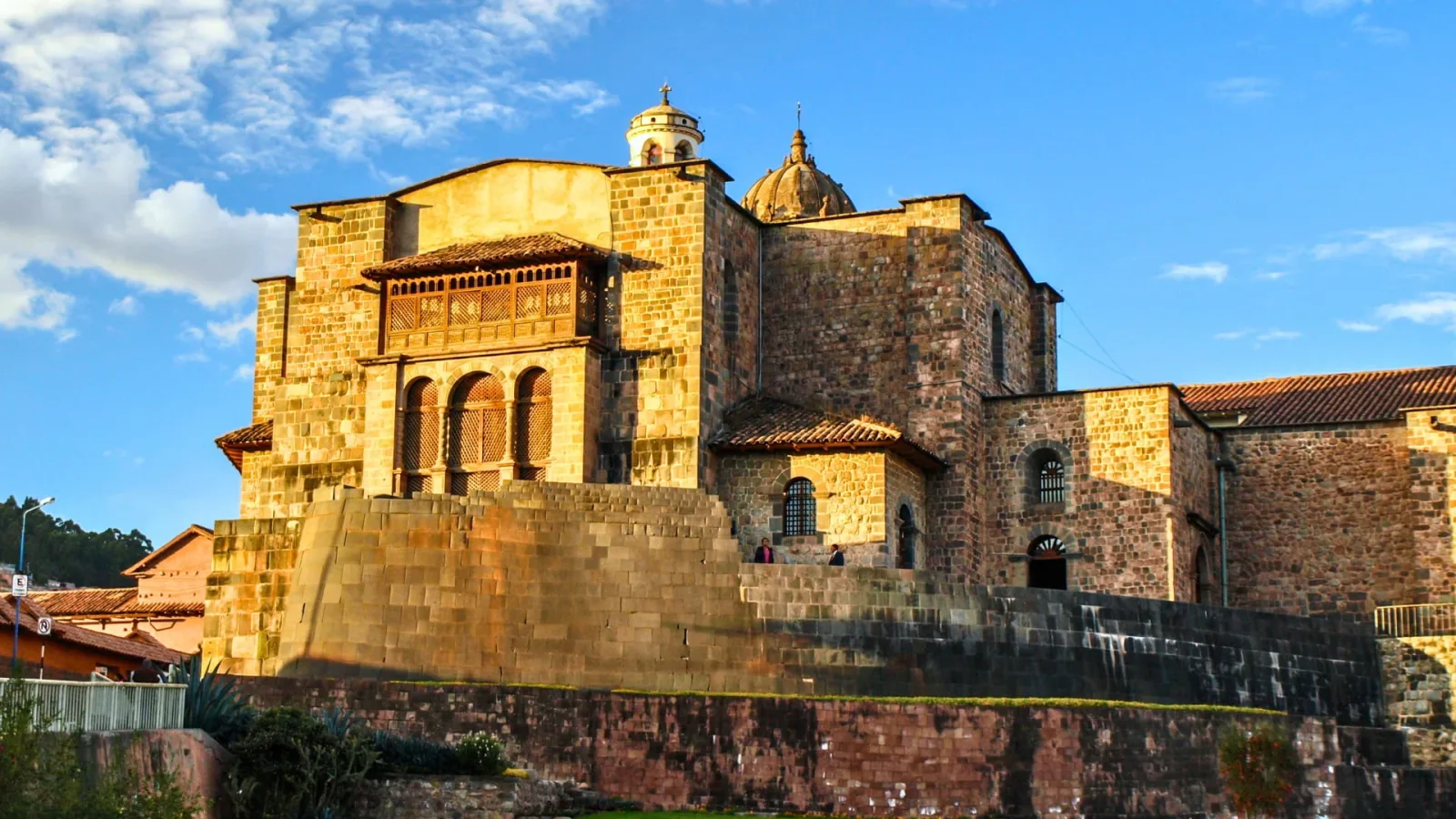
Qorikancha (also written Coricancha or Qoricancha) was the main temple of Inca Cusco, dedicated to the Sun. After the Spanish conquest the Dominican order built the church and convent of Santo Domingo on top of it, so today you visit Inca walls inside a colonial convent. This guide covers what it was, what you see, the entrance fee, the site museum and how to fit it into a day in Cusco. Prices checked on 5 November 2026.
Quick answer
- What it is: the Inca Temple of the Sun, now the church and convent of Santo Domingo, in the historic centre of Cusco (Plazoleta de Santo Domingo).
- Entrance: the temple has its own ticket, not included in the Cusco Tourist Ticket. Our travellers pay S/ 20 per adult, in cash and in soles only.
- Site museum: the Museo de Sitio Qorikancha is a separate visit and is in the Cusco Tourist Ticket (Circuit II, S/ 70 for 2 days, or the full ticket, S/ 130 for 10 days).
- Time: about 40 minutes with a guide.
- Easiest way: our half-day Cusco City Tour starts at Qorikancha and continues to Sacsayhuamán, Q’enqo, Puka Pukara and Tambomachay, from USD 15.
 Qorikancha and Sacsayhuamán in half a day
Cusco City Tour: Qorikancha, Sacsayhuamán & 3 Inca Sites
See itinerary & dates →
What was Qorikancha?
The name means “golden enclosure”: the archaeologist Brian Bauer translates it as “Golden Enclosure”, and Clements Markham’s English version of Inca Garcilaso de la Vega’s Royal Commentaries (1609) renders it “court of gold”. It was the most important temple of the Inca capital. The chronicler Pedro Sarmiento de Gamboa credits its rebuilding to the Inca Pachacútec, who ruled in the 15th century.
Qorikancha was also the centre of Cusco’s sacred geography. Bauer’s study The Sacred Landscape of the Inca describes 328 shrines (huacas) arranged along 42 lines (ceques) that radiated from the Coricancha across the valley. Sacsayhuamán, Q’enqo and Tambomachay, the sites you see on the rest of the City Tour, belong to that same landscape.
Garcilaso, who grew up in Cusco, wrote that the Sun’s chamber was where the church of Santo Domingo stands, and that its stone was “very fine and polished” ashlar. That masonry is what still impresses visitors: blocks cut to fit each other without mortar.
What the Spanish did
- The gold was taken first. While Atahualpa was held prisoner, the Spanish had the gold plates removed from the temple walls as part of his ransom. William Prescott, drawing on the conquistadors’ accounts, puts the number at seven hundred plates.
- The convent was built on top. The site was granted to the Dominican order, whose Cusco convent dates from 1538 according to the Dominican Province of Peru. The church and convent stand on the Inca walls.
- The 1950 earthquake. The earthquake of 21 May 1950 caused severe damage in Cusco, and the church of Santo Domingo, “located on the ancient Qoricancha”, was among the worst hit, according to the historian Raúl Asensio.
The result is the mix you see today: Inca walls and rooms around a colonial cloister, with the church above.
What you see on the visit
- The Inca rooms around the cloister. Garcilaso describes halls dedicated to the Moon, the stars (Venus is named Chasca), thunder and lightning, and the rainbow, and says the Moon’s hall was lined with silver. Guides use these names for the surviving Inca rooms, but they come from his chronicle: there is no Inca record that says which room was which.
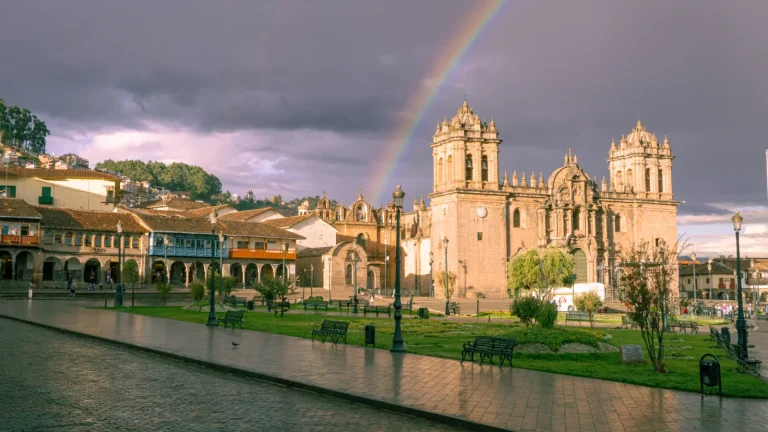
- The curved wall. From Av. El Sol you see the curved Inca wall below the church, the view in the photo at the top of this guide.
- The “golden garden”. Garcilaso also wrote that the convent garden had been, in Inca times, a garden of gold and silver, with maize plants, animals and figures made of those metals. It is a chronicle account written in Spain, decades later; nothing of it survives.
- The colonial church and convent, still run by the Dominicans.
Tickets and hours
| Visit | Ticket | Price for foreign visitors | Managed by |
|---|---|---|---|
| Qorikancha (temple and Santo Domingo convent) | Own ticket at the entrance, cash in soles only | S/ 20 per adult | Dominican order |
| Museo de Sitio Qorikancha (site museum) | Cusco Tourist Ticket, Circuit II or full | S/ 70 (Circuit II, 2 days) · S/ 130 (full, 10 days) | COSITUC (Tourist Ticket) |
- Hours: the convent sets its own visiting hours, which can change for Masses and religious celebrations. There is no official website with a current timetable, so ask us or check at the entrance.
- Cash: bring soles in cash; dollars and cards are not accepted at the entrance.
- Students: the Tourist Ticket has a student rate (S/ 70 for the full ticket, with a valid student or ISIC card, according to COSITUC); see our Tourist Ticket guide.
The site museum

The Museo de Sitio Qorikancha is a small museum next to the temple, on the side of the gardens that slope down to Av. El Sol. It is one of the eight sites of Circuit II of the Cusco Tourist Ticket, together with the Museo Histórico Regional, the Museo de Arte Contemporáneo, the Centro Qosqo de Arte Nativo, the Monumento a Pachacútec, Tipón and Pikillaqta (COSITUC). If you buy the full Tourist Ticket for Sacsayhuamán and the Sacred Valley, the museum is already included.
Qorikancha and Inti Raymi
Every 24 June, the Inti Raymi (Festival of the Sun) begins at Qorikancha. According to the state news agency Andina, the first scene takes place on the green esplanade of the temple, then the ceremony moves to the Plaza de Armas and ends at Sacsayhuamán. Watching from around Qorikancha is free; there is also a small paid stand. More details in our Inti Raymi guide.
How to visit
- With the City Tour (most common): the guide takes you through Qorikancha for about 40 minutes and then the vehicle drives up to the four Inca sites above the city. Morning or afternoon departure; the entrance fees are paid separately.
- With the Walking Tour: our Cusco Walking Tour may show you Qorikancha from the outside, depending on opening hours and the group’s pace; to go inside you need the S/ 20 ticket.
- On your own: it is in the historic centre, within walking distance of the Plaza de Armas. Without a guide you will see the walls but miss most of the explanation.
- Nearby: San Pedro Market, also in the historic centre, fits well before or after your visit.
Qorikancha is a good first visit in Cusco: it is in the city, the walking is short, and it gives context for everything you will see at Sacsayhuamán and Machu Picchu. Our Sacsayhuamán guide covers the next stop.
Cusco City Tour: Qorikancha and 4 Inca sites
Cusco City Tour: Qorikancha, Sacsayhuamán & 3 Inca Sites
See itinerary & dates →
Frequently asked questions
Is Qorikancha included in the Cusco Tourist Ticket?
No. The temple and convent have their own ticket (S/ 20 per adult, cash in soles). The Tourist Ticket only covers the Qorikancha site museum next door, in Circuit II.
How much is the entrance to Qorikancha?
Our travellers pay S/ 20 per adult in 2026, in cash and in soles only. The fee is set by the Dominican convent and can change.
Are Qorikancha and Coricancha the same place?
Yes. Qorikancha, Coricancha and Qoricancha are spellings of the same Quechua name. It is also called the Temple of the Sun and, as a colonial building, the church and convent of Santo Domingo.
What does Qorikancha mean?
“Golden enclosure”: quri means gold and kancha an enclosure or courtyard.
Who built Qorikancha?
The Incas. The chronicles credit its rebuilding to the Inca Pachacútec, in the 15th century. The Dominicans later built the church and convent of Santo Domingo on its walls.
How long does the visit take?
About 40 minutes with a guide, the time we spend there on the City Tour. Add some time if you also visit the site museum.
Can I visit Qorikancha and Sacsayhuamán on the same day?
Yes. Our half-day City Tour visits Qorikancha first and then Sacsayhuamán, Q’enqo, Puka Pukara and Tambomachay. For Sacsayhuamán and the other three sites you need the Tourist Ticket (Circuit I, S/ 70, or the full ticket).
Sources
- Inca Garcilaso de la Vega, Comentarios Reales de los Incas (1609), book III, chapters XX–XXIV (name, Sun’s chamber, halls of the Moon, stars, thunder and lightning, and rainbow, golden garden); English translation by Clements Markham, Hakluyt Society, 1869.
- Pedro Sarmiento de Gamboa, History of the Incas, chapter XXXI (rebuilding by Pachacútec).
- Brian S. Bauer, The Sacred Landscape of the Inca: The Cusco Ceque System, University of Texas Press, 1998 (328 huacas, 42 ceques).
- William H. Prescott, History of the Conquest of Peru (1847), book III, chapter VI (plates removed for the ransom).
- Dominican Province of Peru, Convent of Santo Domingo, Cusco (foundation in 1538, address).
- Raúl Asensio, chapter on the 1950 Cusco earthquake, Iberoamericana / Vervuert.
- Andina, Inti Raymi: where, when and how it is celebrated (16 March 2024).
- COSITUC, Circuit II and price list (site museum, Tourist Ticket prices).
- Qorikancha entrance fee and visit length: our guides, November 2026.