In this article
San Pedro Market (Mercado Central de San Pedro) is Cusco’s big traditional market, about a 10-minute walk from the Plaza de Armas. More than 1,000 vendors sell fruit, meat, groceries, handicrafts and cooked food there. The building dates from the 1920s and has been part of Peru’s national cultural heritage since November 2024. This guide covers how to get there, what you will find, its history, what is true about the Gustave Eiffel story and how to eat there carefully. Data checked on 7 November 2026.
Sources: Peru’s Ministry of Culture (Vice-Ministerial Resolution 000331-2024-VMPCIC/MC), the Andina news agency, the US CDC and OpenStreetMap.
Quick answer
- Where: on Calle Túpac Amaru, facing Plaza San Pedro, about 750 m on foot from the Plaza de Armas (around 10 minutes).
- Entrance: it is a public market; there is no entrance fee.
- Opening hours: there are no official published hours, and each stall opens and closes on its own schedule.
- What you find: fruit, meat, groceries, handicrafts and food stalls, according to the Andina news agency.
- Heritage: Peru’s Ministry of Culture declared it a monument of the nation’s cultural heritage on 22 November 2024.
 San Pedro Market with a guide, on foot
Cusco Walking Tour: Historic Center, San Pedro Market and San Blas
See itinerary & dates →
How to get there from the Plaza de Armas
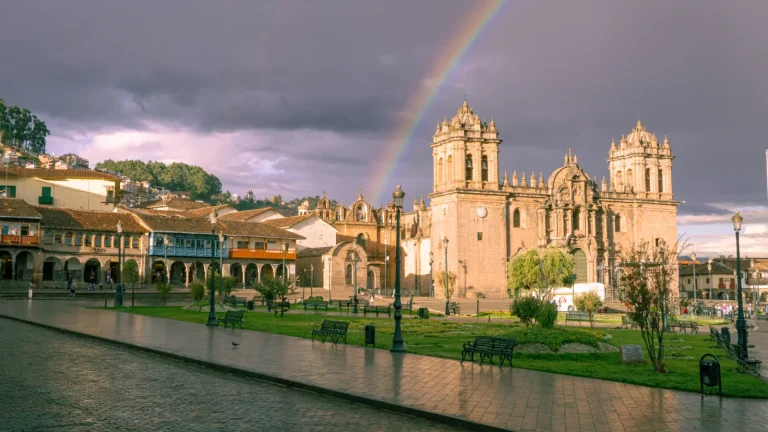
Leave the Plaza de Armas along the Portal de Comercio and follow Calle Marqués and Calle Santa Clara, where you walk under the Santa Clara Arch. At the end you reach Calle Túpac Amaru and Plaza San Pedro, where the market stands. It is about 750 m and takes around 10 minutes.
The market fills a whole block between Calle Túpac Amaru, Calle Ccasparu, Calle Ghoring and Plaza San Pedro, according to the Ministry of Culture resolution. About 150 m away is San Pedro station, where some PeruRail trains to Machu Picchu leave from May to December; the timetables are in our train to Machu Picchu guide.
What you will find in the market
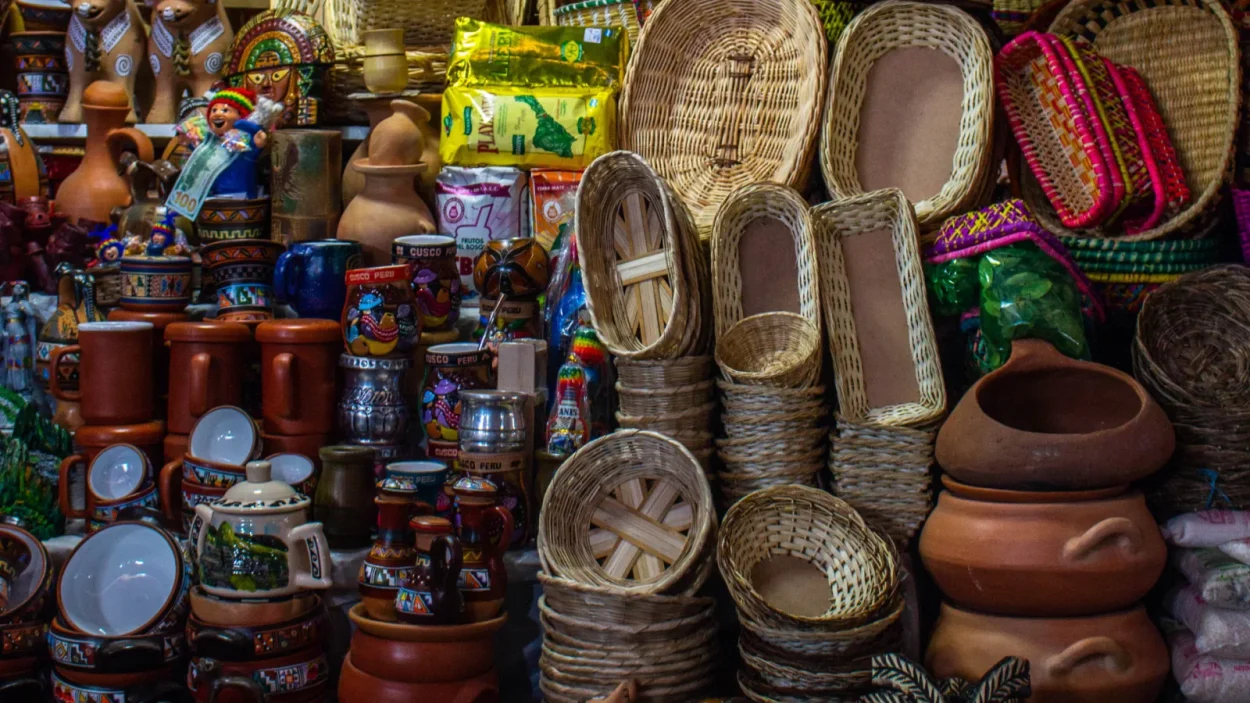
The Andina news agency describes it as a food market of more than 1,000 vendors, with stalls of groceries, meat and fresh fruit, plus handicrafts and food. It is an everyday market for the people of Cusco, not only for visitors:
- Fresh fruit and produce from the region.
- Meat and groceries for everyday shopping.
- Food stalls: cooked dishes and drinks, including the juice stalls, among the most visited by travelers.
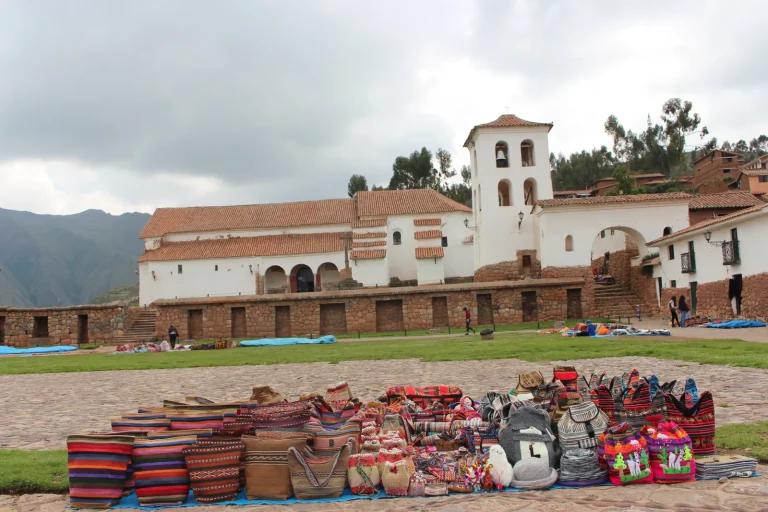
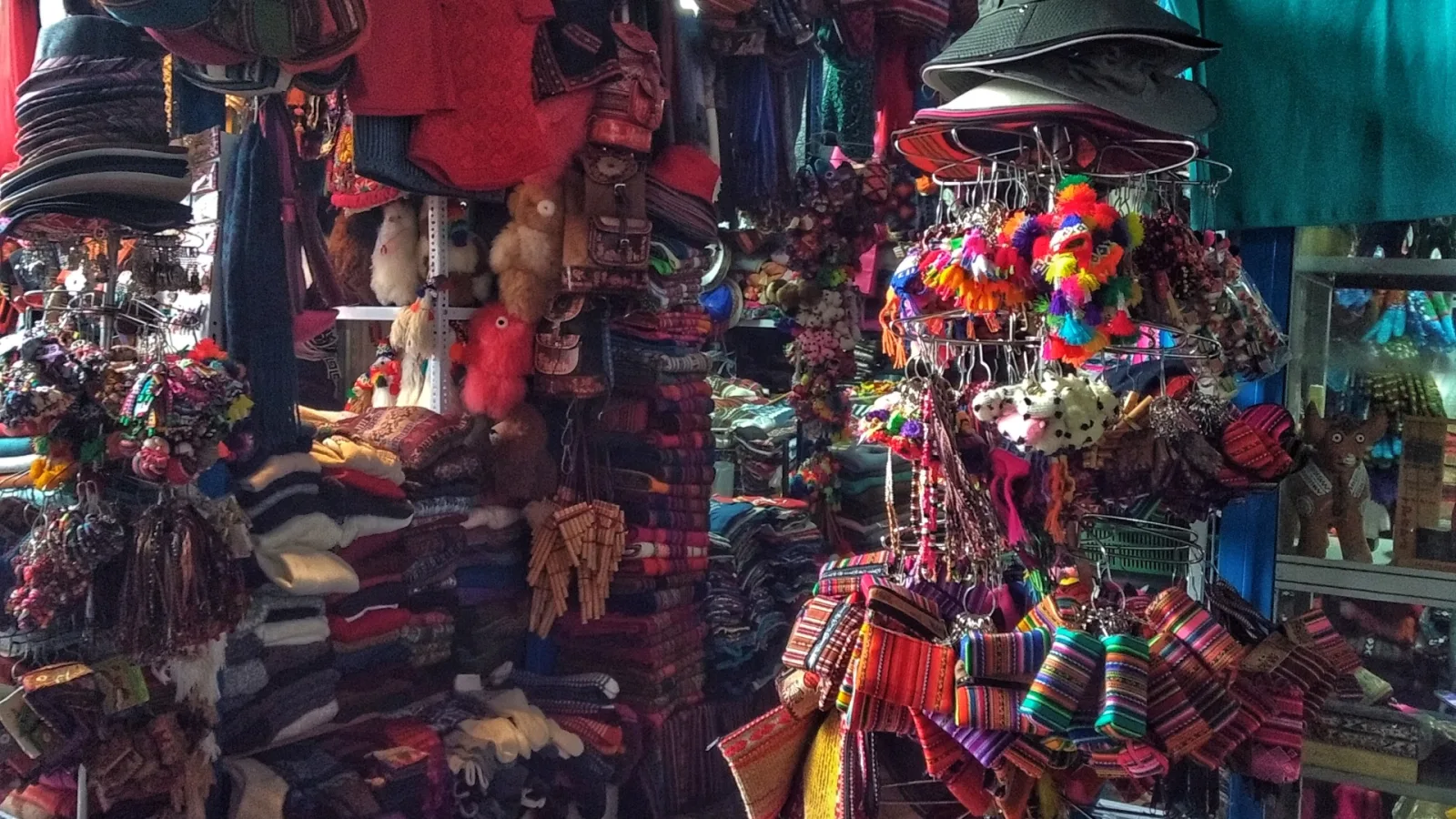
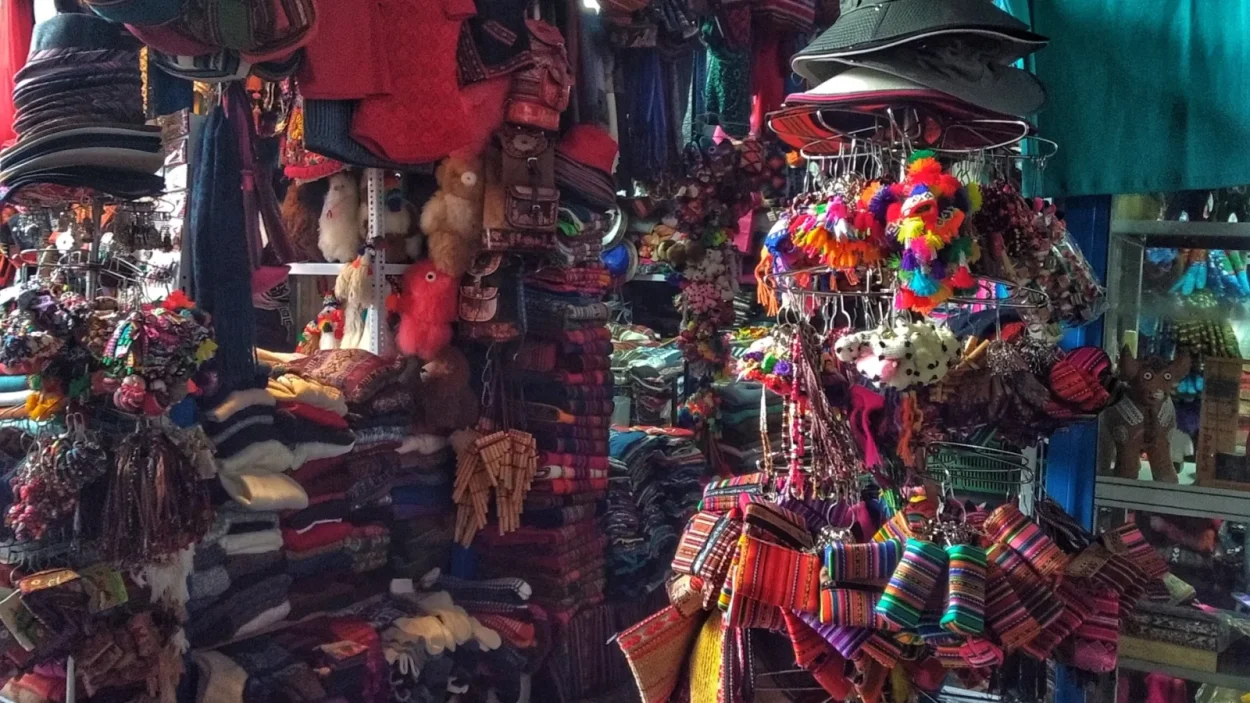
- Handicrafts: textiles, pottery, baskets and souvenirs, like the ones in the photos in this guide.
Ask before you photograph vendors, and carry small notes and coins in soles.
History of San Pedro Market
In the early 20th century it operated as the Mercado Frisancho, named after the then mayor Manuel Silvestre Frisancho. In 1925 it officially took the name Mercado Central de San Pedro, and its centenary was celebrated on 7 June 2025, according to Andina.
The Ministry of Culture resolution calls it a major work for the progress of 1920s Cusco. It explains that this building closed the era of open-air markets, which lasted in Cusco until the second decade of the 20th century, and that it was the largest roofed area built in the city up to then. These are the features it highlights:
- A new design for Cusco: influenced by the international architecture of the time and a break from Cusco’s building tradition.
- A roof “in three stages” that gives a sense of movement, an enclosure of ornamental pillars alternating with railings, symmetrical façades and entrances marked in the roofline.
- Modern materials for its time: cement, reinforced concrete strengthened with rails, timber in the structures and corrugated metal roofing.
- Size: the declared area covers 7,134 m², with a perimeter of 392 m.
The process to declare it heritage began in 2019 and ended with Vice-Ministerial Resolution 000331-2024-VMPCIC/MC, signed on 22 November 2024 and published in the official gazette El Peruano on 27 November. Since then, any work on the building needs the Ministry of Culture’s authorization. In 2025 the Cusco Regional Government also honored it for its centenary.
Did Gustave Eiffel design it?
Many websites and guides say the market was designed by Gustave Eiffel, the engineer behind the Paris tower. We have not found a document that proves it:
- The Ministry of Culture resolution that declared it a monument does not mention Eiffel or any other designer.
- The same resolution describes a building of reinforced concrete strengthened with rails, with timber in the structures instead of the iron that was usual at the time, and corrugated metal roofs. It is not the iron structure usually linked to Eiffel.
- Andina’s article on the centenary does not name Eiffel either.
So we do not treat that story as fact. If a document from the time confirms it, we will update this guide.
Eating at the market carefully
Many travelers eat at the market. The US CDC gives this advice for food and drink when traveling:
- Eat food that is cooked and served steaming hot.
- Avoid cut-up fruit, raw salads and sauces made from raw fruit or vegetables; fruit you peel yourself is safer.
- The CDC advises avoiding freshly squeezed juice made by others and drinks with ice, which may be made with tap water.
- Hot drinks served steaming hot and bottled drinks with an intact factory seal are safer.
If you have just arrived in Cusco, take it easy: the city is at 3,439 m. Read our guide to altitude sickness in Cusco.
Tips for your visit
- Carry cash in soles, in small notes and coins.
- Watch your belongings: wear your backpack on the front and keep your phone away in the busiest aisles, as in any crowded market.
- Ask before taking photos of people and stalls.
- Combine it with the historic center: Qorikancha and the Plaza de Armas are close by, and in the afternoon you can walk up to Sacsayhuamán.
- Check the weather: December to March is the rainy season; see our Cusco weather by month guide.
 Cusco and its Inca temples in one afternoon
Cusco City Tour: Qorikancha, Sacsayhuamán & 3 Inca Sites
See itinerary & dates →
Frequently asked questions
Where is San Pedro Market in Cusco?
In Cusco’s historic center, between Calle Túpac Amaru, Calle Ccasparu, Calle Ghoring and Plaza San Pedro. From the Plaza de Armas it is about 750 m on foot along Calle Marqués and Calle Santa Clara.
What are San Pedro Market’s opening hours?
There are no official published hours: each stall opens and closes on its own schedule.
Do you pay to enter the market?
No. It is a public market and entry is free; you only pay for what you buy.
Was San Pedro Market designed by Gustave Eiffel?
There is no proof. The Ministry of Culture resolution that declared it a monument does not mention Eiffel and describes a structure of reinforced concrete and timber, not iron.
Is it safe to eat at San Pedro Market?
Many travelers eat there. The CDC recommends choosing food that is cooked and served steaming hot, and avoiding cut-up fruit, freshly squeezed juice made by others and ice.
Is San Pedro Market a heritage site?
Yes. Peru’s Ministry of Culture declared it a monument of the nation’s cultural heritage with Vice-Ministerial Resolution 000331-2024-VMPCIC/MC of 22 November 2024.
Which tours visit the market?
Our Cusco walking tour visits San Pedro Market along with the Plaza de Armas, the twelve-angled stone and San Blas.
Sources
- Peru’s Ministry of Culture, Vice-Ministerial Resolution No. 000331-2024-VMPCIC/MC, San Borja, 22 November 2024, published in El Peruano on 27 November 2024: declaration of the “Mercado Central San Pedro, Antiguo Mercado Frisancho” (location, area, description, materials and values).
- Andina news agency, “Cusco: Gore reconoce al Mercado Central San Pedro en su centenario de fundación”, 23 August 2025 (Mercado Frisancho, the 1925 name, centenary, number of vendors and types of stalls).
- US CDC, Food and Water Safety (advice for eating and drinking when traveling).
- Route and distances: calculated with OpenStreetMap data (© OpenStreetMap contributors).
- Altitude of Cusco: INEI, Compendio Estadístico Cusco 2025; trains from San Pedro: see our train to Machu Picchu guide.