In this article
Pisac (also written Písac or Pisaq) is the Sacred Valley town closest to Cusco, about 33 km away by road. Above it, on the mountain, is the Pisac archaeological park: Inca terraces, temples and one of the largest cemeteries of the Inca empire, entered with the Cusco Tourist Ticket. Down in the town, the square fills with craft stalls, and Sunday is its best-known market day. This guide covers the sectors of the site, how to get there, the market, the festivals and what is open in 2026. Data checked on 7 November 2026.
Sources: Peru’s Ministry of Culture (DDC Cusco), COSITUC, INEI, PromPerú, the Municipality of Pisac, INGEMMET, El Peruano, Andina and the Penn Museum.
Quick answer
- Where: in the province of Calca, about 33 km from Cusco by road, according to COSITUC and PromPerú.
- Altitude: the town is at 2,986 m (INEI), about 450 m lower than Cusco; the ruins stand at about 3,300 m, according to the Municipality of Pisac.
- Entrance: the Cusco Tourist Ticket, partial Circuit III (S/ 70 for foreign visitors, 2 days, also covers Ollantaytambo, Chinchero and Moray) or the full ticket (S/ 130, 10 days). There is no single-site ticket for Pisac.
- Hours: 07:00 to 16:30, according to the DDC Cusco.
- Market: craft stalls every day around the main square; the Sunday market is the best known, according to COSITUC.
- Heads-up: part of the footpath network inside the park has been closed since 2016 because of rockfalls. Check at the entrance which paths are open.
 Pisac, Ollantaytambo and Chinchero in one day
Traditional Sacred Valley Tour from Cusco: Pisac, Ollantaytambo and Chinchero
See itinerary & dates →
Pisac at a glance
| Fact | Figure | Source |
|---|---|---|
| Distance from Cusco | About 33 km by road | COSITUC, PromPerú |
| Altitude of the town | 2,986 m (9,797 ft) | INEI, Compendio Estadístico Cusco 2025 |
| Altitude of the ruins | About 3,300 m | Municipality of Pisac |
| Area of the archaeological park | 9,063 hectares | Andina; Resolución Directoral Nacional 429-2002 |
| Road from the town up to the park | About 9 km, around 15 minutes | INGEMMET, Technical Report A7114 (2020) |
| Visitors in 2019 / 2023 | 673,499 / 427,654 | DDC Cusco data in the 2024 risk study |
| Entrance | Tourist Ticket, Circuit III or full | COSITUC |
| Hours | 07:00–16:30 | DDC Cusco |
The Pisac archaeological park
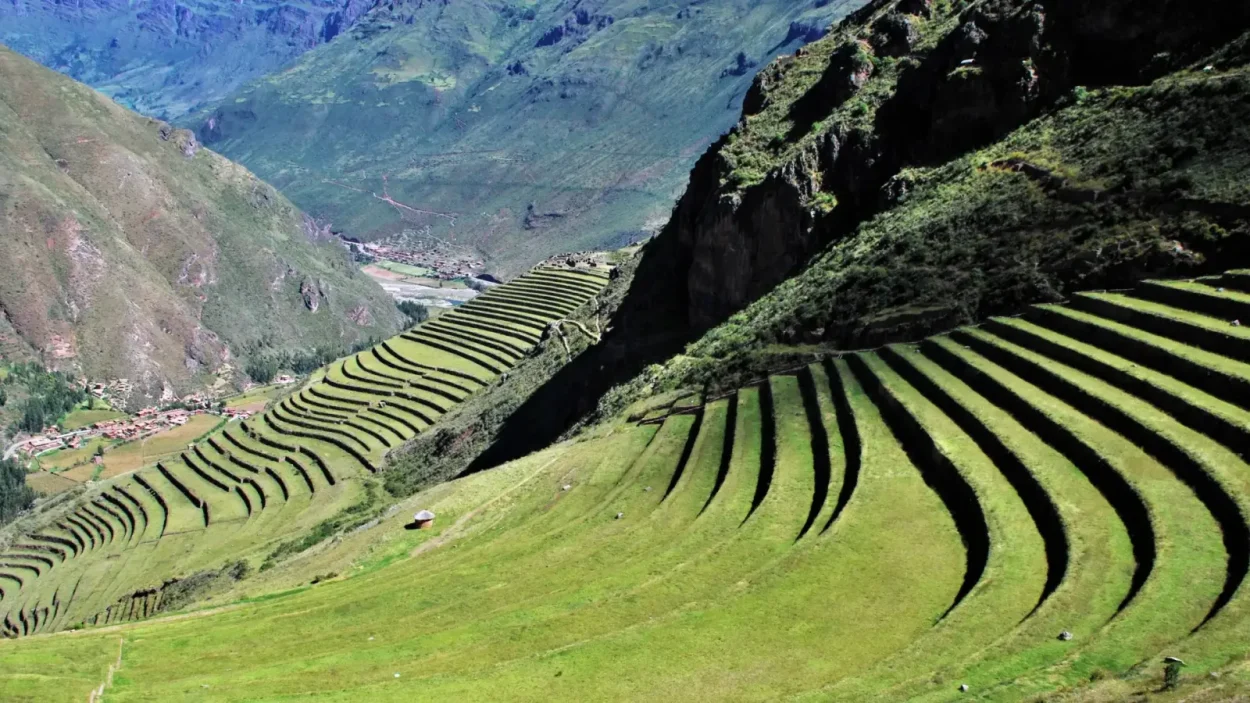
COSITUC describes the site as a group of buildings from the height of Inca development, where you can clearly tell apart a religious, an urban and an agricultural sector. The park covers 9,063 hectares and was delimited by Resolución Directoral Nacional 429-2002. Within it are the main sectors you will walk through:
- Qantus Raqay: the entrance to the park, with the parking area and restrooms, according to the DDC Cusco.
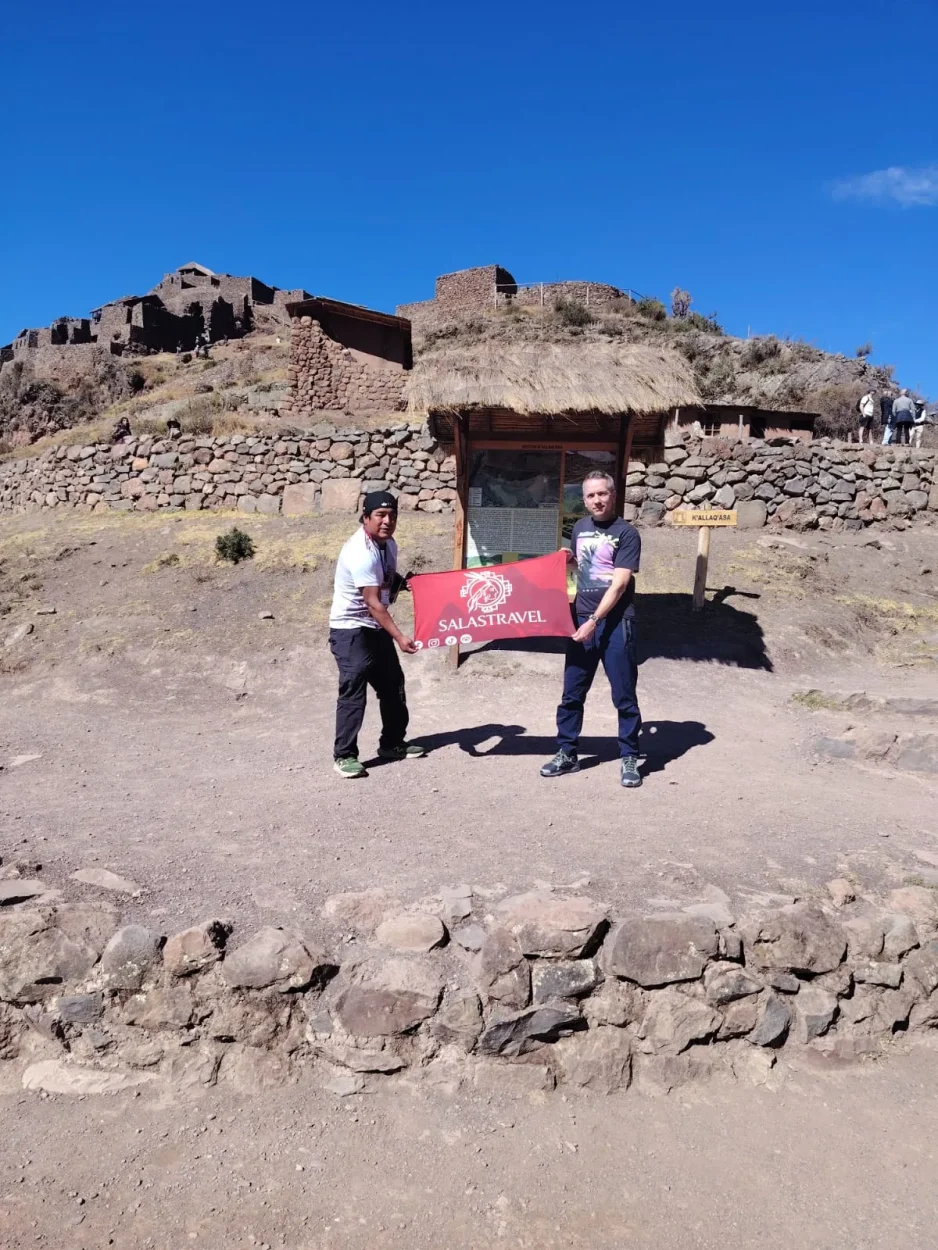
- Q’allaqasa: the first group of Inca buildings, about 500 m from the entrance along the path, with restrooms. From here a 300 m stretch of Inca trail, restored by the DDC Cusco in 2017, climbs to the Llaqta Qhawarina viewpoint through two tunnels cut into the rock.
- Intihuatana: the main quarter, with temples and palaces of fine stonework, as Andina describes it, around the Intihuatana and the Temple of the Sun. The DDC Cusco calls it one of the most representative spaces of the park, for its monumental architecture and its astronomical symbolism. In October 2025 it began removing lichens and plants that were damaging its walls.
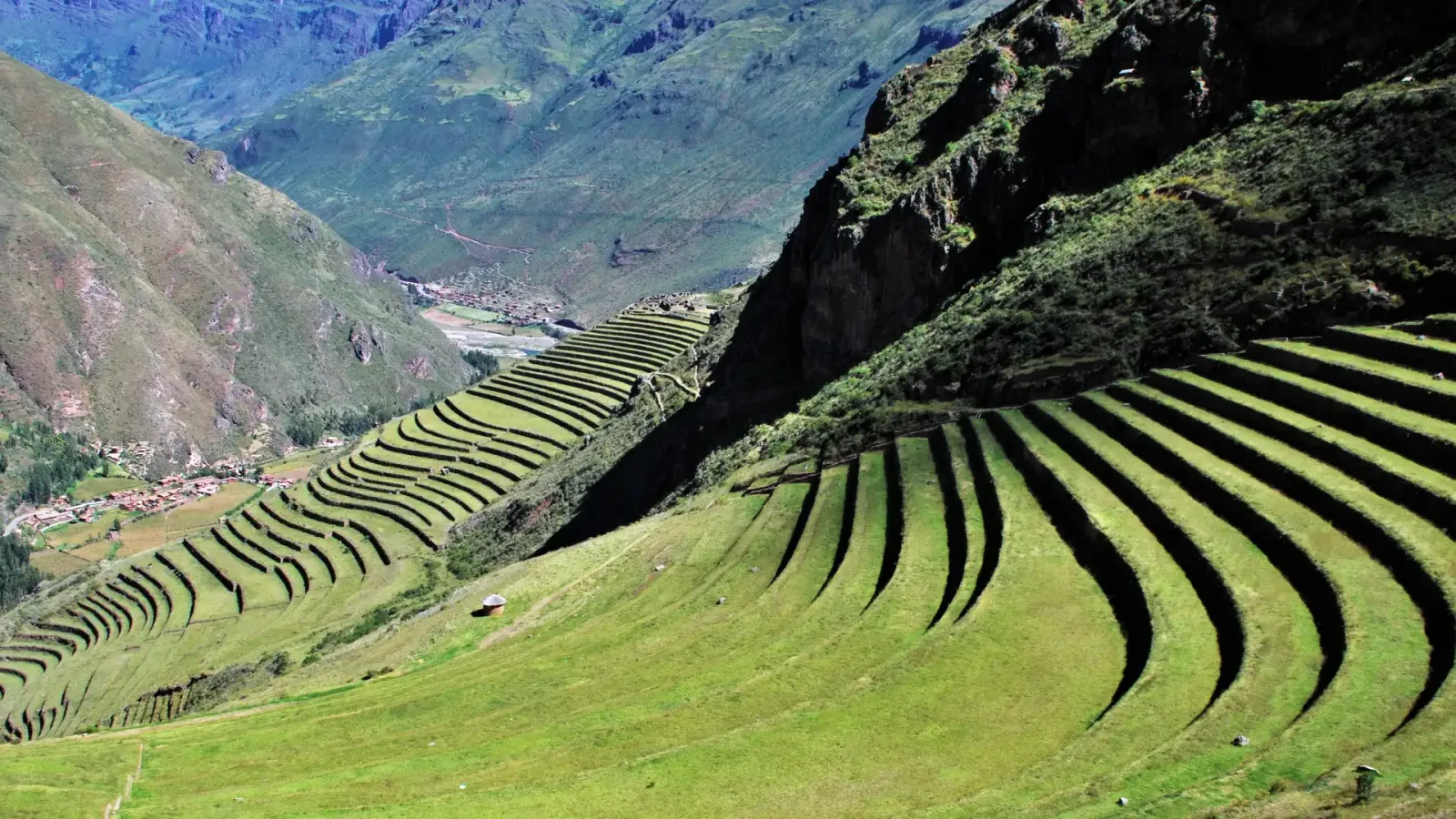
- The terraces: the curved terraces that cover the mountainside below the buildings, built at altitudes from about 2,995 to 3,450 m, according to RPP.
- The cemetery: COSITUC says Pisac has one of the largest cemeteries of the Tawantinsuyo, the Inca empire. Known as Tankanamarka, it lies on a steep slope across the Kitamayo stream, according to RPP.
What is open in 2026
The official information on the paths does not fully match, so we explain what each source says:
- A rock fell from above Qantus Raqay on 12 February 2016 and killed a 10-year-old girl; the monumental area was closed for more than two weeks. In December 2016 another rockfall damaged the path from Q’allaqasa to the Intihuatana.
- In October 2017 the DDC Cusco opened the restored 300 m stretch from Q’allaqasa to the Llaqta Qhawarina viewpoint, which connects with the path to the Intihuatana.
- A 2024 risk study, commissioned by the Municipality of Pisac to reopen the circuit, says the path from Amaru Punku to Llaqta Qhawarina, the main access to the Intihuatana, has been closed since 2016 and that visitors can only reach part of the park.
We have not found an official reopening notice. Ask at the Qantus Raqay entrance which paths are open on the day, or ask us before you go.
Map of the park and the town
How to get to Pisac from Cusco
- On a tour: most Sacred Valley day tours stop at Pisac first, both at the ruins and at the market. On ours, you visit the park with a guide and then go down to the town for the market.
- By public transport: PromPerú says minivans and buses to Pisac leave from Calle Puputi in Cusco, about 15 minutes from the center, and that the trip takes about 45 minutes. In 2020 it gave fares of S/ 4 to 7; check the current price before you go.
- By road: INGEMMET gives 34 km of asphalt and about 50 minutes from Cusco to Pisac, plus 9 km and about 15 minutes from the town up to the archaeological park.
If you arrive in the town by public transport, remember that the Qantus Raqay entrance is about 9 km up the road. In the rainy season, roughly November to March, INGEMMET rates the access road to the park as having a very high risk of rockfalls and landslides: travel by day and follow what the authorities say.
Pisac town and its market

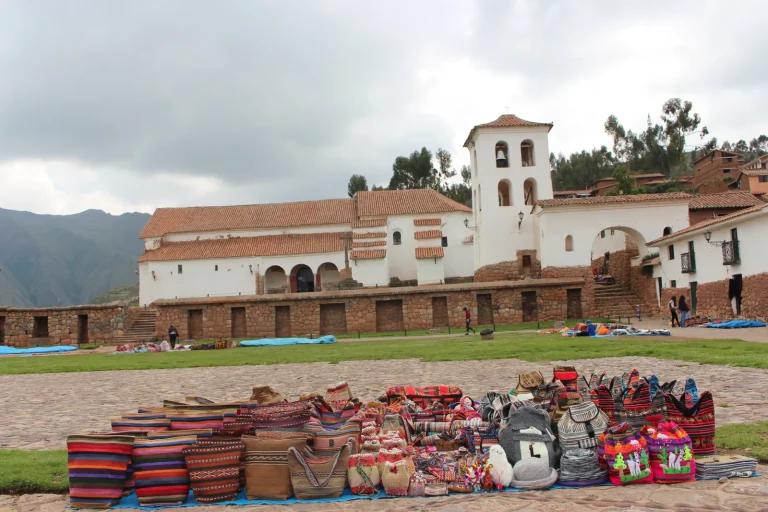
The town at the foot of the ruins is known for its craft market. The Municipality of Pisac counts more than 200 stalls, with textiles, ceramics, jewelry and souvenirs around the main square. COSITUC says the town is well known for its Sunday market, and PromPerú adds that on Sundays rural communities still trade products by barter in the main square.
Also on Sundays, according to the Municipality of Pisac, the varayoc, the traditional authorities of the communities, attend mass in Quechua at the San Pedro Apóstol church with their vara, the staff of office, and then go to the craft market. Ask before photographing people, and carry small notes and coins in soles.
Festivals in Pisac
- Virgen del Carmen (15 to 18 July): Pisac’s biggest festival, with processions, dances and fireworks, according to Andina. The Ministry of Culture declared it national cultural heritage in 2014 (Resolución Viceministerial 006-2014-VMPCIC-MC). The resolution explains that the cult of the Virgen del Carmen grew in the late 19th century and took the place of Saint Peter as the town’s patron, and that the twelve rural communities of the district take part.
- Corpus Andino (August): in 2026 it was held from 23 to 27 August, with mass in Quechua and a procession of 23 images of patron saints, according to the Municipality of Pisac.
A short history
The name Pisac refers to the partridge, a bird common in the area, according to Andina. The archaeologist Susan Niles, writing for the Penn Museum, explains that Pisac was an estate built by the Inca Pachacuti, the ruler who also developed Ollantaytambo; PromPerú also dates its construction to the time of Pachacútec. The town lies in the valley below the ruins, and its main church is dedicated to San Pedro Apóstol, the patron imposed in colonial times.
Today the park is one of the most visited sites on the Tourist Ticket, alongside Sacsayhuamán, Chinchero and Ollantaytambo, according to Andina. In 2019 it received 673,499 visitors; July to September are the busiest months.
Altitude and weather
The town of Pisac is at 2,986 m, about 450 m below Cusco (3,439 m), so it is a gentle first stop if you have just arrived. The ruins are higher, at about 3,300 m, and the visit involves climbing steps, so walk slowly. PromPerú gives the Sacred Valley a range of about 1 °C to 20 °C: bring layers, a hat and sunscreen. It rains more from December to March, when the paths can be slippery. More in our guide to altitude sickness in Cusco.
Practical tips
- Buy the right ticket: if you will also visit Sacsayhuamán or the South Valley, the full ticket (S/ 130) is cheaper than two partials. Our Cusco Tourist Ticket guide compares them.
- Carry cash in soles for the ticket, the market and transport.
- Go early: the site opens at 07:00 and closes at 16:30.
- Wear good shoes: the paths are uneven, with stone steps and steep drops.
- Stay on the marked paths and respect closed areas: the closures follow rockfall assessments.
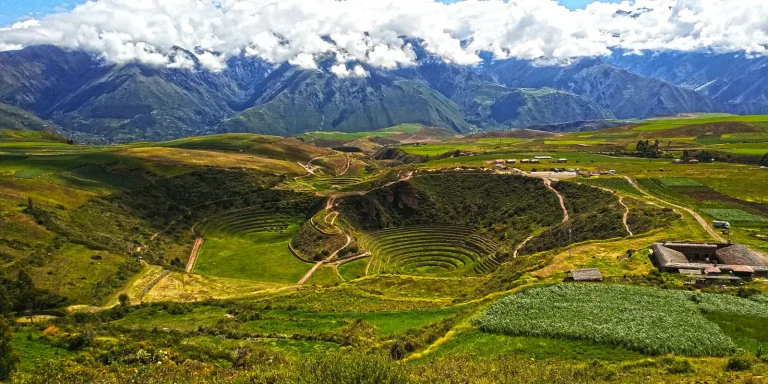
- Continue through the valley: Ollantaytambo is about 58 km further down the valley, and Moray and the Maras salt mines are on the plateau above. See all the stops in things to do in the Sacred Valley.
 Pisac, Ollantaytambo, Maras and Moray in one long day
Sacred Valley Full-Day Tour with Maras and Moray from Cusco
See itinerary & dates →
Frequently asked questions
How far is Pisac from Cusco?
About 33 km by road, according to COSITUC and PromPerú. INGEMMET gives about 50 minutes to the town and 15 more minutes up to the archaeological park.
How much is the entrance to Pisac?
There is no separate ticket: you need the Cusco Tourist Ticket. The partial Circuit III costs S/ 70 for foreign visitors and S/ 40 for Peruvians, is valid for 2 days and also covers Ollantaytambo, Chinchero and Moray. The full ticket costs S/ 130 and is valid for 10 days.
What are the opening hours of the Pisac ruins?
From 07:00 to 16:30, according to the DDC Cusco.
Which day is the Pisac market?
Craft stalls open every day around the main square, but the Sunday market is the best known, with barter between communities and the varayoc at mass in Quechua.
What is the altitude of Pisac?
The town is at 2,986 m (INEI), lower than Cusco. The ruins are at about 3,300 m, according to the Municipality of Pisac.
Can you visit the Intihuatana?
The Intihuatana is the main sector of the park, but the main path to it has been closed since 2016 after rockfalls, according to a 2024 municipal risk study, and we have not found an official reopening notice. Check at the entrance or with us before you go.
Who built Pisac?
The Incas. Archaeologists consider it a royal estate built by the Inca Pachacuti, the same ruler who developed Ollantaytambo.
Sources
- COSITUC, Pisac (description, cemetery and Sunday market) and price list of the Cusco Tourist Ticket.
- Ministry of Culture, DDC Cusco: conservation work in the Intiwatana sector (21 October 2025), notice on the Kallaqasa restrooms (29 August 2026) and opening hours.
- Andina, the archaeological parks of Cusco (12 June 2018), restored Inca trail in Pisac (27 October 2017), Virgen del Carmen in Pisac (26 July 2018) and most visited Tourist Ticket sites (4 July 2025).
- Municipality of Pisac and CENEPRED: risk assessment of the Amaru Punku to Llaqta Qhawarina circuit (2024: path closures, rockfalls and visitor numbers); history of Pisac (altitude of the ruins), the varayoc at Sunday mass (30 September 2024) and the Corpus Andino 2026.
- INGEMMET, Technical Report A7114 (2020): routes, distances and geological hazards on the access road to the park.
- Ministry of Culture, Resolución Viceministerial 006-2014-VMPCIC-MC, El Peruano, 27 January 2014: the Virgen del Carmen festival of Pisac as national cultural heritage.
- PromPerú, Pisac: arte y misticismo en el Valle Sagrado (26 May 2025) and the Pisac market (24 July 2020).
- Susan A. Niles, “Looking for ‘Lost’ Inca Palaces”, Expedition 30(3), Penn Museum, 1988.
- RPP, “Cusco: Pisac o la hacienda real de Pachacútec” (terraces and the Tankanamarka cemetery).
- INEI, Compendio Estadístico Cusco 2025 (altitudes of Pisac and Cusco); map and distances within the valley: © OpenStreetMap contributors.