In this article
- Quick answer
- Map of the historic center
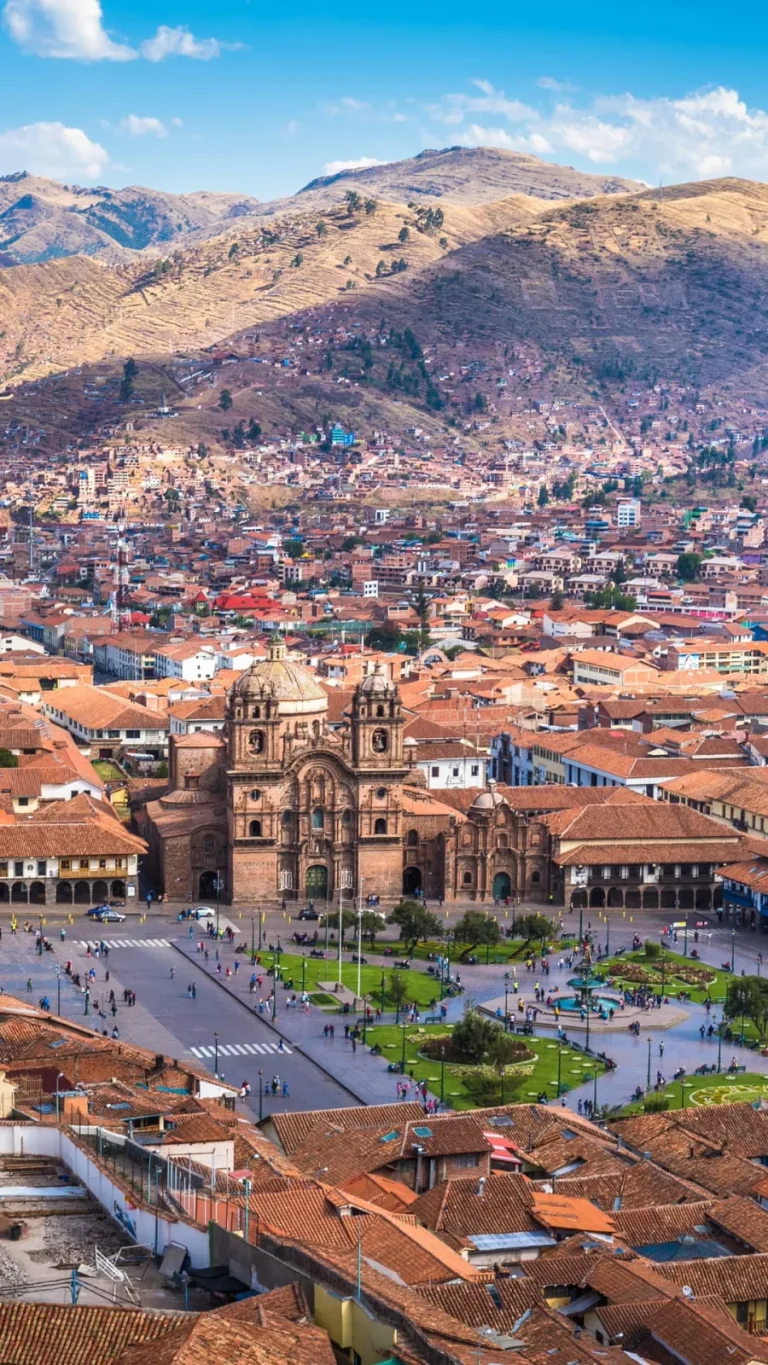
- 1. The Plaza de Armas: the Inca great square
- 2. The Cathedral of Cusco
- 3. La Compañía de Jesús
- 4. Hatun Rumiyoq and the twelve-angled stone
- 5. San Blas, the artisans’ quarter
- 6. The Cristo Blanco
- More in the center
- Visit of Pope Leo XIV (15 November 2026)
- Altitude and safety
- Practical tips
- Frequently asked questions
- Sources
Cusco’s historic center can be explored on foot in a morning: the Plaza de Armas, which was the great square of the Inca capital, the Cathedral, the twelve-angled stone on Hatun Rumiyoq street, the artisans’ quarter of San Blas and, higher up, the Cristo Blanco. UNESCO inscribed the city on its World Heritage List in 1983 as the place where the Inca and Hispanic cultures meet. This guide covers each stop, the walking distances, what is free and what has its own ticket. Data checked on 10 November 2026.
Sources: UNESCO, Peru’s Ministry of Culture (DDC Cusco), the Archdiocese of Cusco, the Constitution of Peru, Andina, El Peruano, the Andean Baroque Route and academic studies on Inca Cusco.
Quick answer
- The classic walk: Plaza de Armas → Cathedral → Hatun Rumiyoq and the twelve-angled stone (about 330 m) → San Blas (300 m more). Add about 1.1 km uphill from San Blas to the Cristo Blanco.
- Free: the Plaza de Armas, the streets with Inca walls, the square of San Blas and the viewpoints.
- Own tickets: the Cathedral and the church of La Compañía (S/ 12, Andean Baroque Route) charge their own entrance; they are not on the Cusco Tourist Ticket, which covers the city’s museums on Circuit II.
- Altitude: Cusco is at 3,439 m (INEI), so walk slowly, above all uphill to San Blas and the Cristo Blanco.
- Heads-up for 15 November 2026: Pope Leo XIV visits the Plaza de Armas; traffic to the center is closed from 00:00 that Sunday (see below).
 The historic center on foot with a guide
Cusco Walking Tour: Historic Center, San Pedro Market and San Blas
See itinerary & dates →
Map of the historic center
| From the Plaza de Armas to | On foot |
|---|---|
| Museo Inka | About 150 m |
| Twelve-angled stone (Hatun Rumiyoq) | About 330 m |
| San Blas | About 630 m |
| Qorikancha | About 640 m |
| San Pedro Market | About 750 m |
| Cristo Blanco (via San Blas) | About 1.7 km, uphill |
Distances calculated with OpenStreetMap data.
1. The Plaza de Armas: the Inca great square
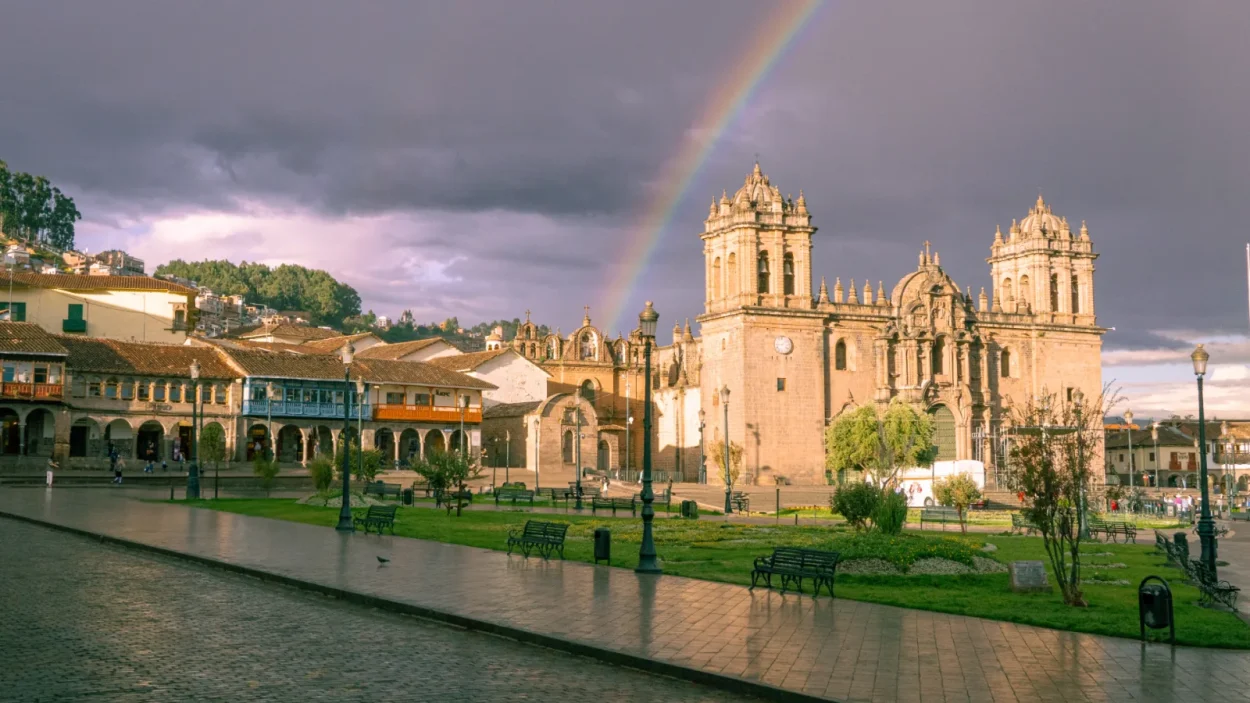
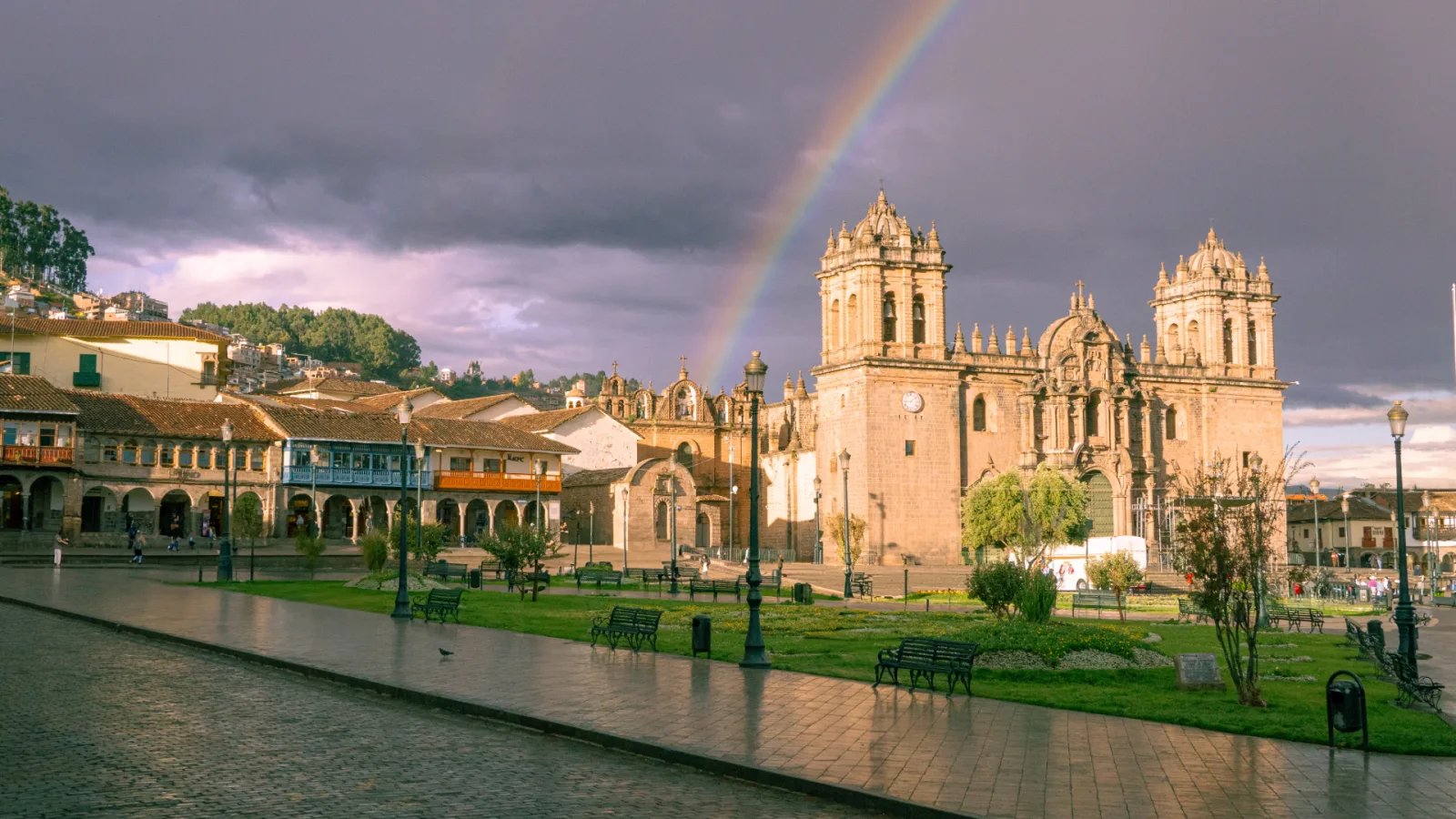
Today’s Plaza de Armas was the heart of the Inca capital. The archaeologist Gonzalo Zecenarro (UNSAAC) explains that the great Inca esplanade, Awkaypata (also written Haukaypata or Huacaypata), was divided in two by the channeled Saphy river: the south-western part was called Kusipata. The chronicler Guaman Poma described the Huacaypata as the “square of the festivities”, and Zecenarro records that the Spanish official Polo de Ondegardo found the whole esplanade covered with sea sand, which he allowed to be used to build the first Cathedral.
- World Heritage: UNESCO inscribed the City of Cuzco in 1983. It explains that under Pachacutec it became a complex urban center and that the Spanish conquerors kept its structure but built churches and palaces on top of the ruins.
- Historic capital: Article 49 of Peru’s 1993 Constitution names Cusco the country’s historic capital.
- Inti Raymi: every 24 June the Inti Raymi ceremony moves from the Qorikancha to the Plaza de Armas and on to Sacsayhuamán, as El Peruano reported in 2026. More in our Inti Raymi guide.
2. The Cathedral of Cusco
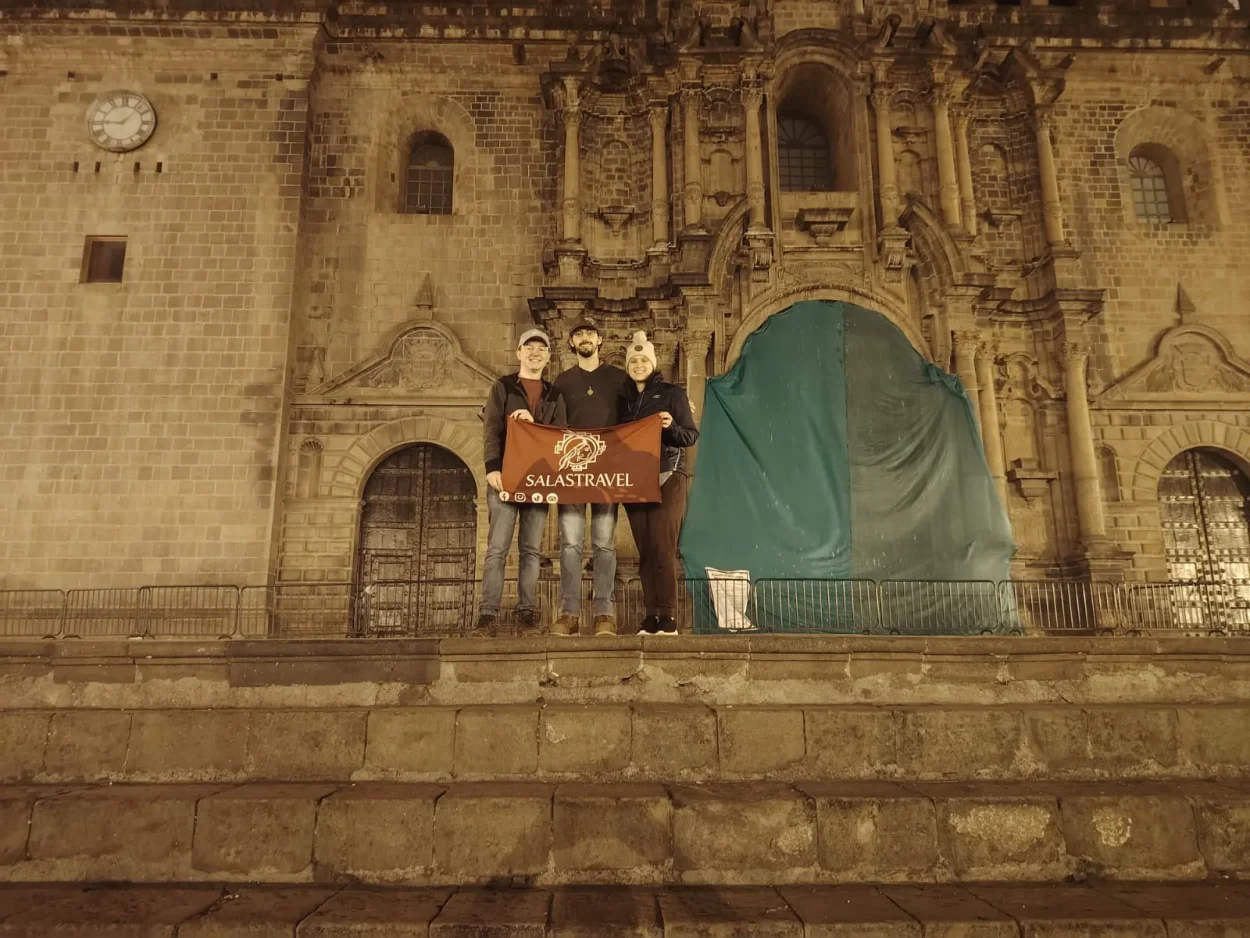
The Archdiocese of Cusco records that Bishop Solano traced the new Cathedral in 1550 and that it was consecrated in 1668, fully finished after 118 years of work; in 1928 it became a minor basilica. Andina says it was raised on the palace of the Inca Wiracocha, while Zecenarro places the Inca buildings of Kiswarkancha and Sunturwasi in that part of the square. In 2018 a ground-radar study detected a possible Inca structure of about 175 m² under its atrium.
- The Last Supper with a guinea pig: its best-known canvas, by the Cusco painter Marcos Zapata, shows Christ and the apostles with a cuy on the table, according to Andina.
- Señor de los Temblores: the chapel of the Lord of the Earthquakes, sworn patron of Cusco, is one of the most visited by local believers.
- Treasures: Andina mentions a 27 kg gold monstrance and more than 400 canvases of the Cusco school.
Ticket: the Cathedral is not on the Cusco Tourist Ticket and charges its own entrance, set by the Archdiocese. We have not found an official current price or opening hours, so check at the door.
3. La Compañía de Jesús
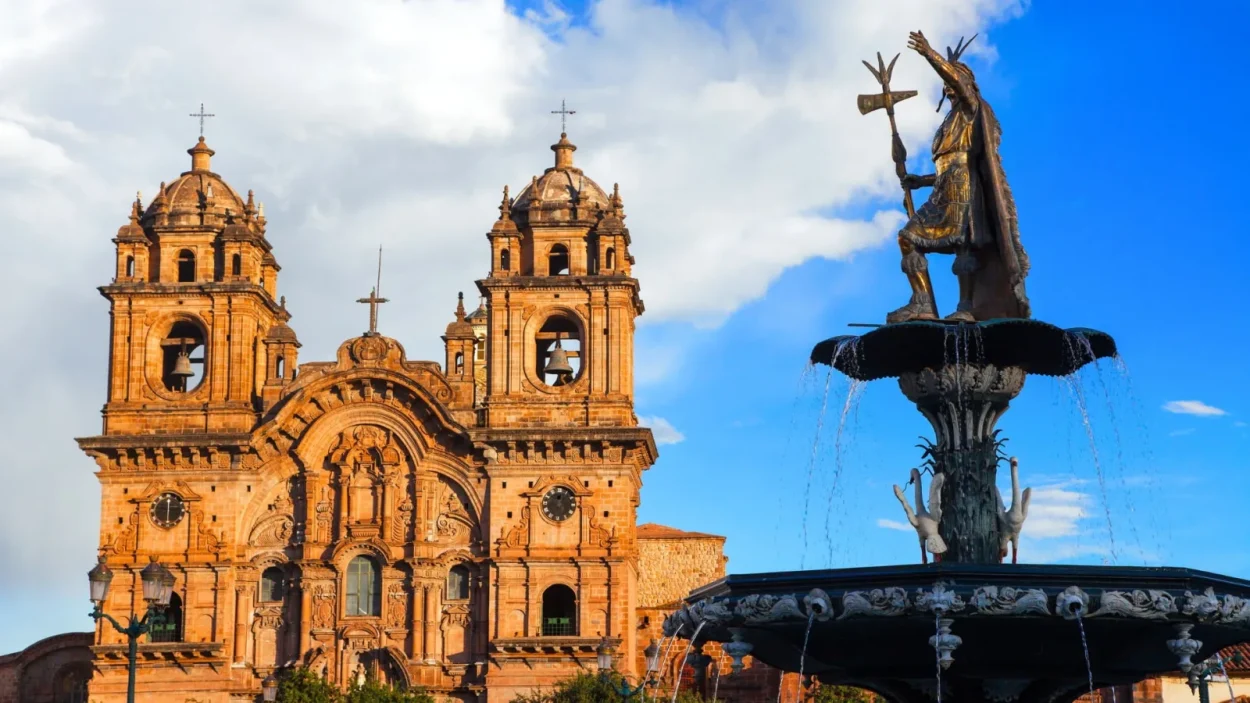
The Jesuit church on the Plaza de Armas was built on the old Inca compound of Amarukancha, according to Zecenarro. It belongs to the Andean Baroque Route, which gives its hours as 09:00 to 11:20 and 13:00 to 17:20 every day and its entrance as S/ 12, or S/ 6 for students and Peruvian visitors. Between July 2025 and July 2026, three canvases attributed to Marcos Zapata were restored and returned to the church, according to Caretas.
4. Hatun Rumiyoq and the twelve-angled stone
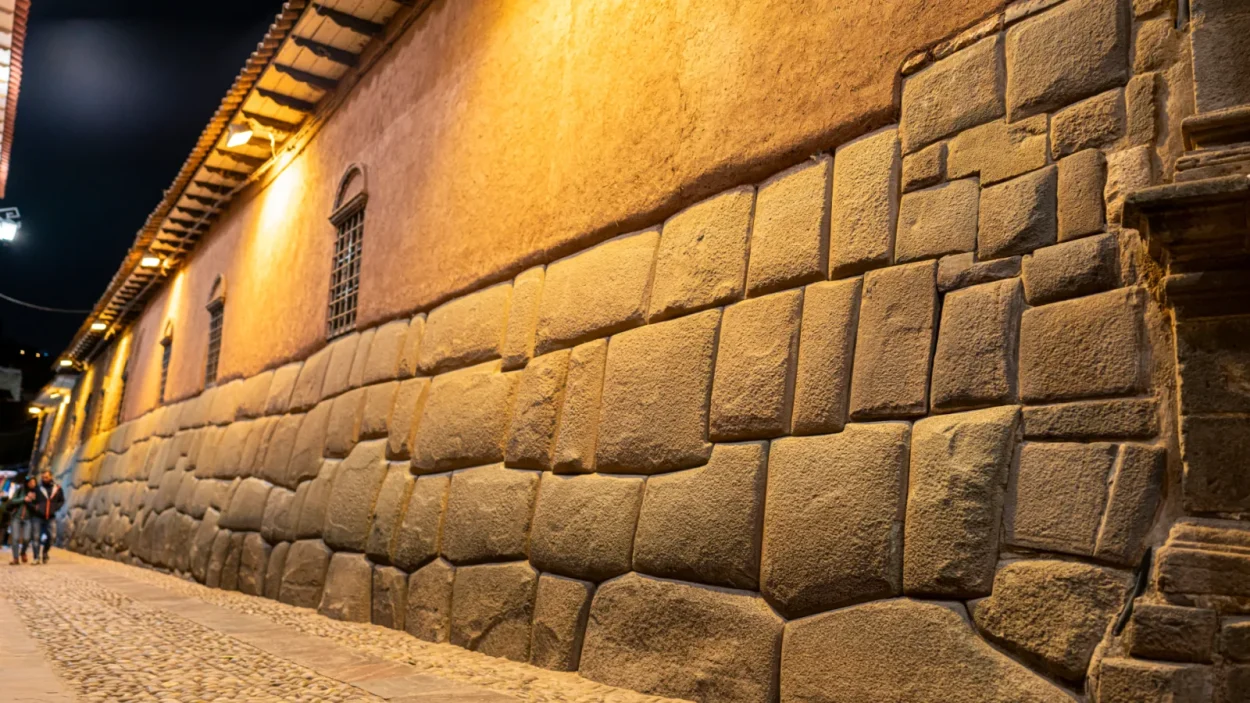
About 200 m from the Plaza de Armas, the street of Hatun Rumiyoq runs along an Inca wall that belonged to the palace of the Inca Roca and is now the base of the Archbishop’s Palace. Its most famous block, the twelve-angled stone, is about 2 m long and weighs around six tonnes, according to Andina; as part of the Archbishop’s Palace it has been a historic monument of Peru since 1972.
In February 2025 a man struck the stone with a tool and left six visible marks; the DDC Cusco called the damage irreversible and he was arrested on the spot. Look and take photos, but do not touch or climb the walls.
5. San Blas, the artisans’ quarter
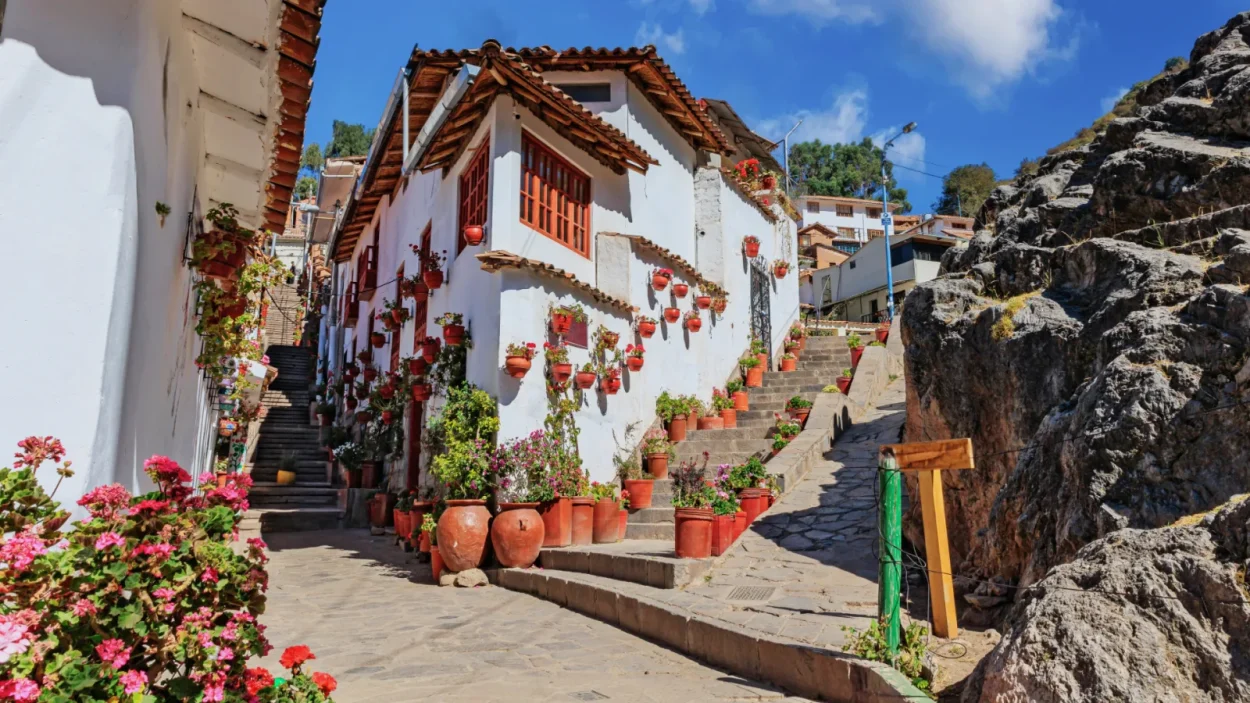
Up the slope from Hatun Rumiyoq, San Blas is a neighborhood of steep streets, white houses and workshops. Its church is famous for its carved wooden pulpit (about 1690), traditionally attributed to Tuyru Túpac, though the catalogue of the exhibition Perú indígena y virreinal notes that this attribution has little evidence behind it.
- Restoration: the Ministry of Culture restored the church between 2020 and 2023, with an investment of more than S/ 5.8 million that included the pulpit, nine altarpieces and 202 m² of mural painting, according to Caretas. In 2022 a 16th-century mural was found behind the canvases of the presbytery, Andina reported.
- Free: the museum-workshop of the Cusco artisan Hilario Mendívil, on the square, can be visited at no cost, and the San Blas viewpoint is about five minutes on foot from the Plaza de Armas, according to Andina.
6. The Cristo Blanco
The white statue of Christ that watches over the city stands on the hill of Pukamuqu, above San Blas and next to Sacsayhuamán, and is about 8 m tall, according to Andina; the DDC Cusco places it within the jurisdiction of the Sacsayhuamán archaeological park. It was a gift from Cusco’s Palestinian community, made by Ernesto Olazo Allende and erected in 1945, according to the Brazil-Arab news agency ANBA.
From San Blas it is about 1.1 km uphill on foot, according to OpenStreetMap. It makes a good stop before or after Sacsayhuamán, which is close by and on the Tourist Ticket.
More in the center
- Qorikancha: the Inca Temple of the Sun, under the convent of Santo Domingo, about 640 m from the Plaza. Read our Qorikancha guide.
- San Pedro Market: Cusco’s big traditional market, about 750 m away. See our San Pedro Market guide.
- Calle Loreto: the old Inca street of the Sun (Intik’ijllu), with the walls of the Aqllawasi, the house of the chosen women, according to Zecenarro.
- Santa Catalina: the convent was built on the Aqllawasi; the Archdiocese dates its foundation to 1605.
- La Merced: a minor basilica since 1941, according to the Archdiocese, famous for a monstrance of solid gold, diamonds and pearls that weighs 22 kg, according to Andina.
- Museums: the Museo Inka (Calle Ataúd 154) and the Museo Machu Picchu in the Casa Concha, with 360 pieces returned by Yale University, both run by the San Antonio Abad University; and the Museo de Arte Precolombino on the Plazoleta Nazarenas. Several city museums are on Circuit II of the Tourist Ticket.
Visit of Pope Leo XIV (15 November 2026)
On Sunday 15 November 2026 Pope Leo XIV will pray the Angelus in the Plaza de Armas at 11:45 and present a shroud to the Señor de los Temblores at the Cathedral, according to Andina. The municipality will restrict public and private transport on the main avenues and in the Plaza de Armas from 00:00 that Sunday until the visit ends. If you are in Cusco that weekend, plan your sightseeing for other days.
Altitude and safety
Cusco is at 3,439 m. On your first day, walk slowly and leave the climb to San Blas and the Cristo Blanco for later; see our guide to altitude sickness in Cusco. Agree the price before taking photos with people in costume or with llamas and alpacas: in August 2026 the city’s Serenazgo had to recover S/ 50 charged to a tourist for photos with an alpaca, Infobae reported. The Tourist Police station (Comisaría PNP de Turismo) is on Plaza Túpac Amaru, in Wanchaq, phone 084-235123.
Practical tips
- Carry cash in soles for church tickets and the artisans’ workshops.
- Tourist Ticket: if you also visit Sacsayhuamán or the Sacred Valley, compare the options in our Cusco Tourist Ticket guide.
- Dress for churches: they are places of worship; keep quiet during mass.
 Qorikancha, Sacsayhuamán and the Inca sites above Cusco
Cusco City Tour: Qorikancha, Sacsayhuamán & 3 Inca Sites
See itinerary & dates →
Frequently asked questions
What is there to see in Cusco’s historic center?
The Plaza de Armas, the Cathedral, the church of La Compañía, the twelve-angled stone on Hatun Rumiyoq, the San Blas quarter, the Qorikancha, San Pedro Market and, above the city, the Cristo Blanco.
Where is the twelve-angled stone?
On Hatun Rumiyoq street, about 200 m from the Plaza de Armas, in the Inca wall of the Archbishop’s Palace.
How much is the entrance to the Cathedral of Cusco?
The Cathedral has its own ticket, set by the Archdiocese and not included in the Tourist Ticket. We have not found an official current price, so check at the door.
How do you get to the Cristo Blanco?
On foot from San Blas, about 1.1 km uphill, according to OpenStreetMap. It stands on the Pukamuqu hill, next to Sacsayhuamán.
What was the Plaza de Armas in Inca times?
The great Inca square, Awkaypata or Haukaypata, the stage of the main ceremonies, divided by the Saphy river into Awkaypata and Kusipata.
Is Cusco a World Heritage Site?
Yes. UNESCO inscribed the City of Cuzco in 1983 for its Inca and Hispanic heritage.
How long do you need for the historic center?
The classic walk from the Plaza de Armas to San Blas fits into a morning; add time for the Cristo Blanco, the Qorikancha and the museums.
Sources
- UNESCO, City of Cuzco (inscription 1983, criteria iii and iv).
- Constitution of Peru (1993), article 49.
- Archdiocese of Cusco, history of the Archdiocese (Cathedral, La Merced, Santa Catalina).
- Gonzalo Zecenarro Benavente, «Awkaypata – Kusipata», Anuario de Espacios Urbanos 24, 2017; Dumbarton Oaks, the plazas of Cusco.
- Andina: the Cathedral (2019), religious routes in Cusco (November 2026), the twelve-angled stone and the damage of February 2025, places to visit in Cusco (2023), the Cristo Blanco and Sacsayhuamán (2021), and the visit of Pope Leo XIV (route and traffic, November 2026).
- Caretas: restoration of the church of San Blas (December 2023) and the restored canvases of La Compañía (July 2026); Perú indígena y virreinal, exhibition catalogue, p. 294 (pulpit of San Blas).
- ANBA, The White Christ of Cuzco; El Peruano, Inti Raymi 2026; Infobae, photos with an alpaca (August 2026); National Police of Peru (Tourist Police station address).
- Andean Baroque Route, useful information (La Compañía); INEI, Compendio Estadístico Cusco 2025 (altitude); map and walking distances: © OpenStreetMap contributors.